Branding Vs. Marketing

In today's world, your brand is more than just a word. It is something that people associate with. It can refer to certain things and people. If you are looking to build a brand, you need to think about who your brand is and its impact on the business business. Branding is one of the best ways to market your business and create a brand identity.

Branding Vs. Marketing
Published on
4/20/2022
Written by
Anthony Dutcher

What is Branding?

Branding is the process of actively creating, conveying, and maintaining a brand that is recognizable, distinctive, and carries positive connotations. There are many ways to brand a company or product. You can brand a company by using its name or logo on products or services. You can also brand a product by creating a branded package that contains information about the product and product information about the company.

Components of a Great Brand

The brand name is the name of your business or product. It should be memorable and easy to spell, pronounce and remember. Creating a great logo. A logo is a visual representation of your brand that shows potential customers what you are all about. It can be an image, a word, or both. A good logo must have these qualities. A good logo should have the following qualities. It must be unique and it must be memorable. The point where someone says, "I saw that logo somewhere before," and they realize they were looking at your brand name or product. It must be easy to spell and say. This is important because if people do not know how to pronounce your company's name, it will hurt its ability to build market share. When people can't say your company's name, they won't use it. When people don't use it, you won't make money.

Minimalist pink cup on vibrant background

What is Marketing?

To market a product, you must know its target market. The target market for a new product can be discovered through market research or computerized marketplaces. To sell a product or service, you must create an Identification Object. An Identification Object is a word or image that defines your brand and establishes a connection with your customers. The Identification Object for a brand should be unique and highly recognizable. For example, a shoe brand with a special logo and name should be able to identify the shoe in a crowd and make the customer feel as if they are shopping with family or friends.

The Difference Between Branding and Marketing

Although both Branding and marketing are essential, there are some significant differences between the two. Here are some of the main differences between Branding and marketing: Branding - Achieves a more permanent and tangible impact on people's minds than marketing techniques Marketing - More focused on getting customers to choose your brand rather than creating a long-term relationship with them.

The Benefits of Branding

Branding can be a good thing. It can be a great way to generate interest and excitement for your product or service. Brand awareness is the degree to which certain products or brands are recognized and remembered by the general population. If people are not necessarily purchasing your products or services, but they know them, you have achieved some success. Boosting your brand equity. Equity is the feeling that a brand creates in the people who use it. If people associate a brand with trust, confidence, or quality, that is a two-fold benefit for the brand and its users. Creating a long-term relationship with customers. When someone purchases a product or service from you, you need to be prepared for a long-term relationship. This is the best-case scenario and the one that matters.

The Benefits of Marketing

Marketing is done before you take a chance on Branding. It is a process of ongoing promotion and marketing that gets your name out there and starts the conversation with potential customers. It can also help you create brand equity. Boosting your market reach. Businesses that use Branding need to either increase the reach of their marketing efforts or find new ways to brand their business. If someone is interested in your product or service but does not yet know about it, you have a reach gap.

Written by Anthony Dutcher
Founding Partner
Disclaimer: The information in these resources may lead to unprecedented online growth, massive engagement, and an overwhelming surge in your business success. Proceed with caution, as we cannot be held responsible for any sudden increase in sales, followers, or popularity. Read at your own risk of becoming wildly successful.

Ready to Turn Insights Into Action?

Reading about strategy is one thing — putting it into practice is where the growth happens. Partner with Vix Media Group to align your marketing with your business goals and start seeing measurable results.

Table of Contents

  1. Underlying Motivators
Related resources
A 90-day launch workbench reviews instrumentation and tracking exceptions without promising payback inside the horizon.
What a Realistic First 90-Day Marketing ROI Plan Should Measure Before It Promises Payback

Our first 90-day marketing plan prioritizes instrumentation, learning, and scaling decisions, with explicit costs and conversion delays—not a promise of payback by day 90.

A synthetic record reaches a won CRM stage while its source remains unresolved, separating outcome from attribution completeness.
Form Fill to Sale Attribution: How We Trace Every Step Without Pretending the Record Is Complete

We trace the evidence from form acceptance through CRM handoffs and sales outcomes, keeping missing identifiers, incomplete records, and reconciliation gaps visible.

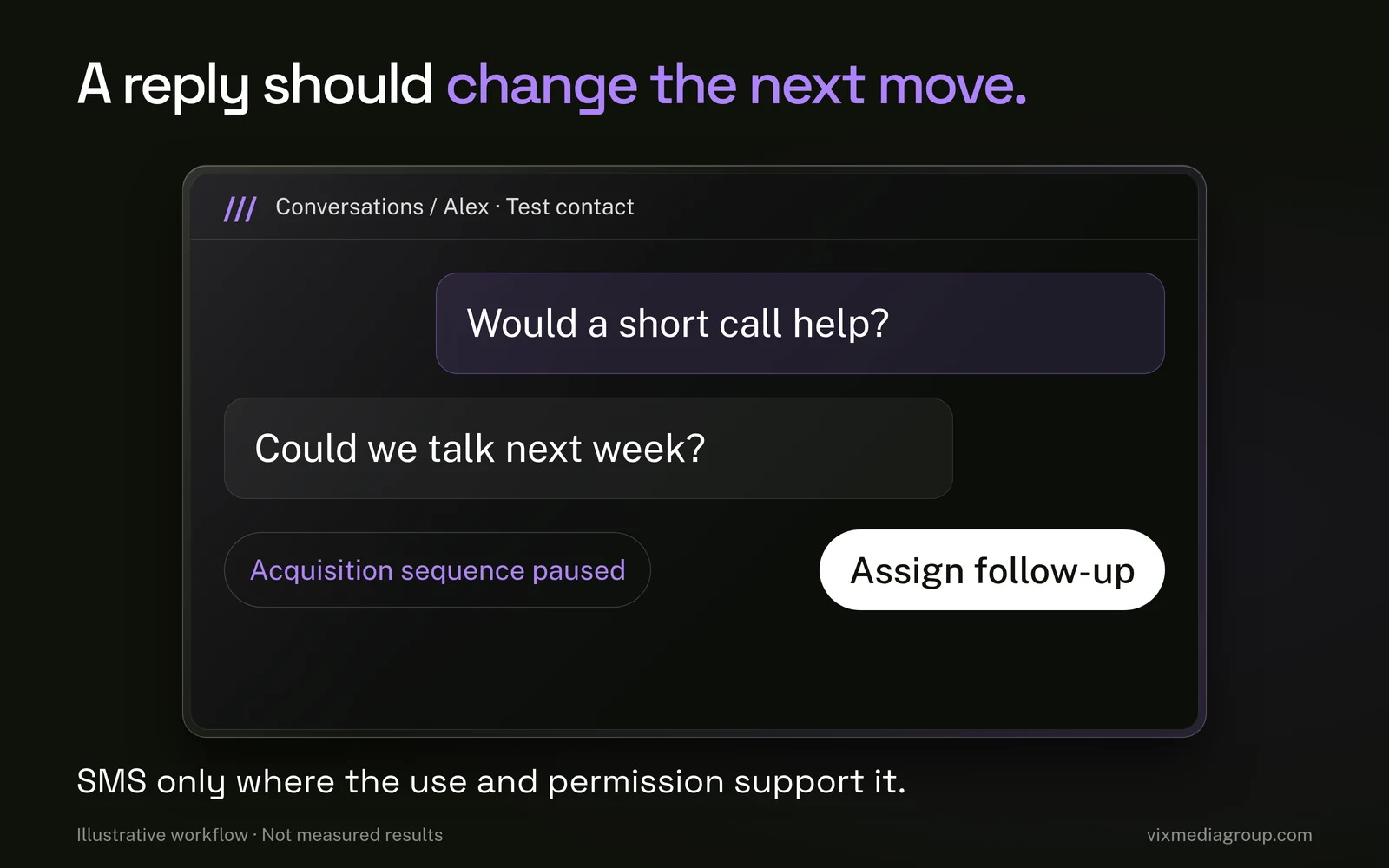
A fictional two-way nurture conversation pauses acquisition messaging after a reply and assigns human follow-up.
The Seven Follow-Up Systems We Use Before Scaling Paid Traffic for a New Brand

Our seven-part follow-up framework tests capture, ownership, nurture, suppression, and recovery before paid traffic scales, keeping lead activity distinct from sales outcomes.

An illustrative customer-list audience is held because source evidence is missing; activation is disabled.
Before We Used AI Audience Data, We Checked Rights, Sensitive Categories, and Platform Rules

Before activating AI audience data, we examine provenance, permitted use, sensitivity, and platform eligibility. Technical compatibility does not establish data rights.

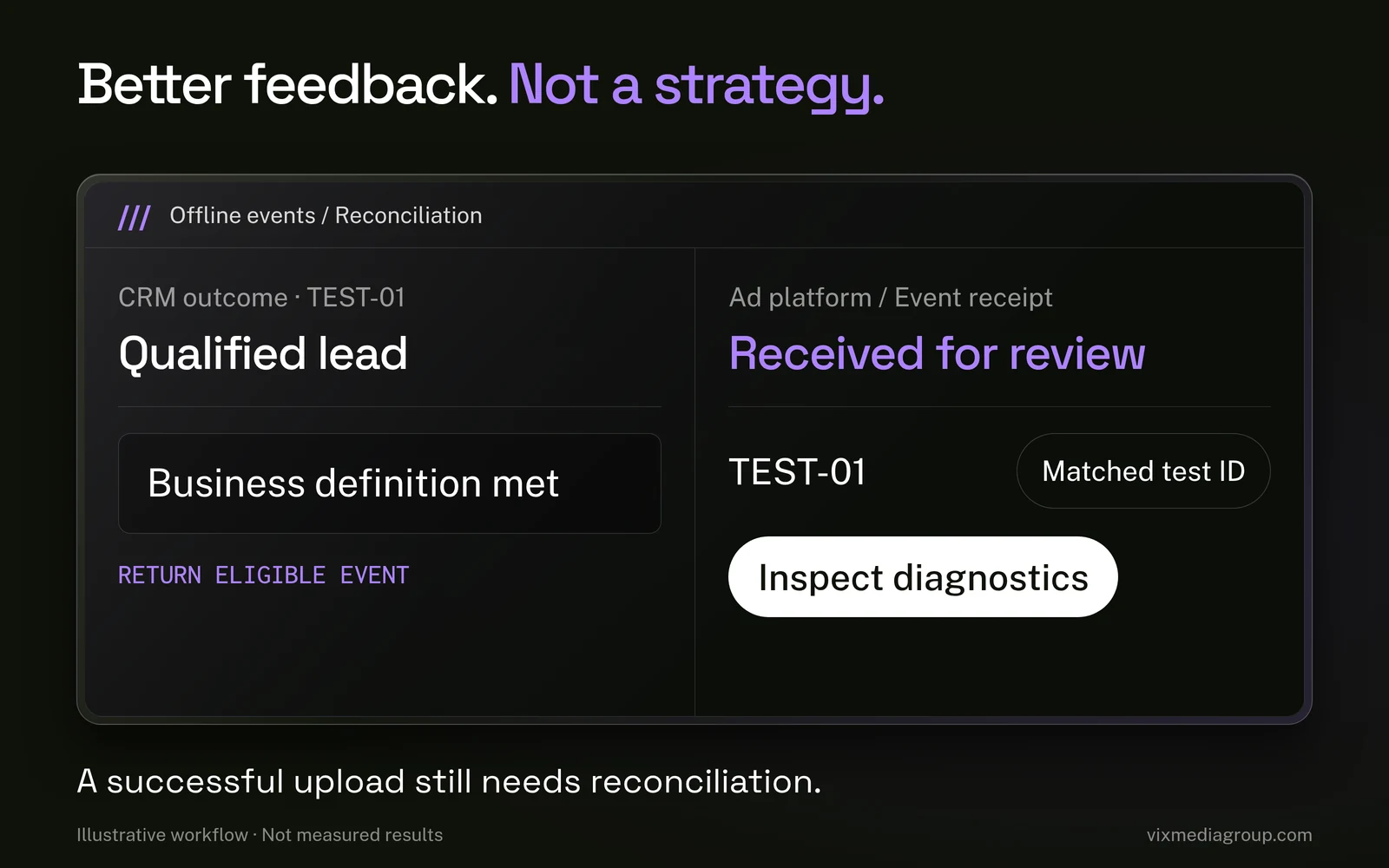
A synthetic qualified CRM event returns to an ad-platform receipt, where diagnostics still require reconciliation.
Offline Conversion Tracking Is Valuable. It Is Not an AI Advertising Strategy

Offline conversion tracking connects later CRM outcomes to advertising. It improves measurement and feedback without replacing decisions about the offer, market, or sales process.

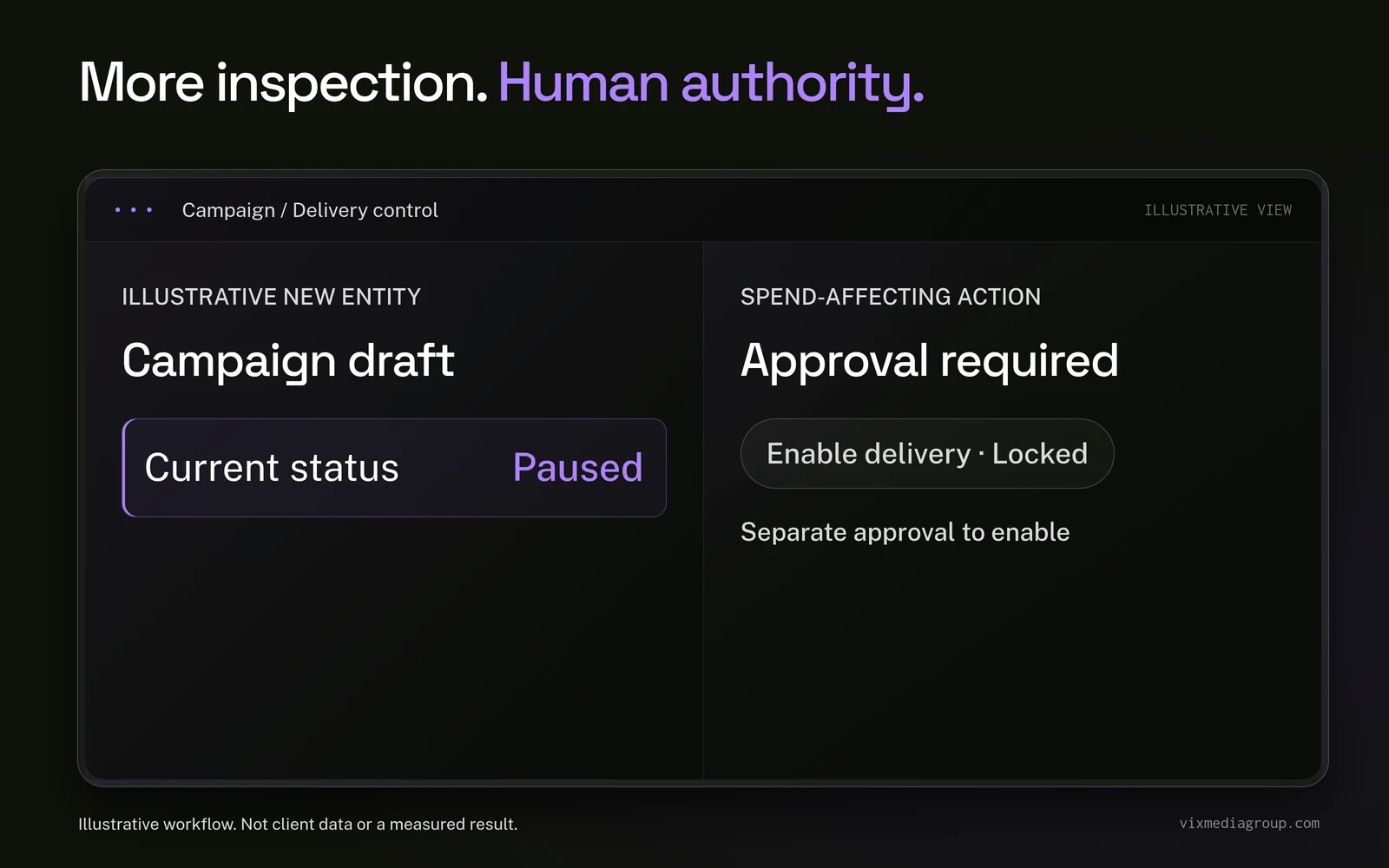
An illustrative new campaign remains paused; enabling delivery is locked behind a separate human approval.
Agentic Ad Management Did Not Reduce Our Work. It Expanded What We Could Inspect

Our agentic ad workflow expands bounded inspection while keeping strategy and approval with people. Each authorized action is followed by a check of the resulting state.

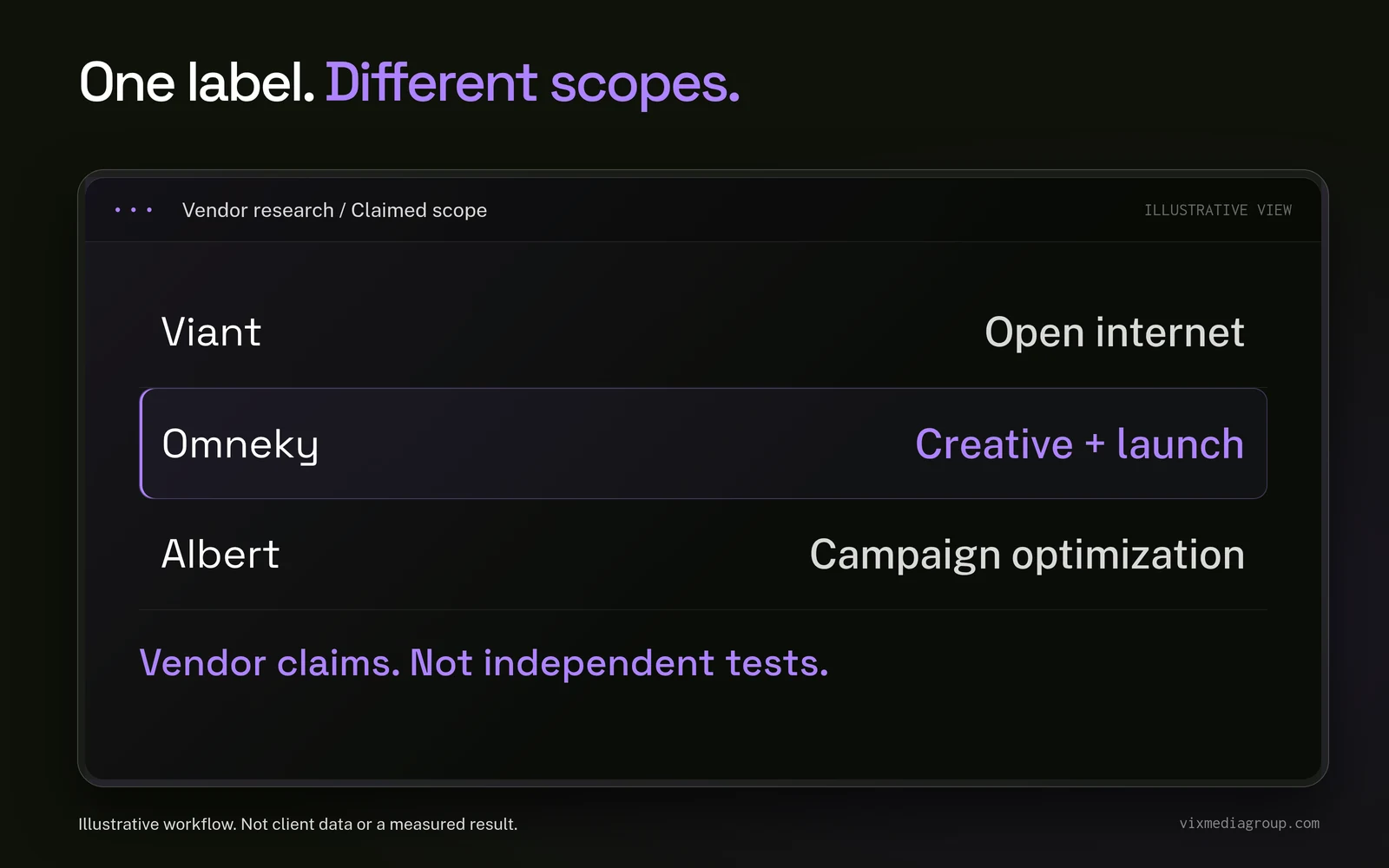
A research workbench compares Viant open-internet advertising, Omneky creative and launch, and Albert campaign optimization as vendor claims.
Three Autonomous Ad Platforms, Three Operating Models: What AI Ad Management Actually Automates

We compared three autonomous ad platforms by operating model, separating vendor capabilities, advertiser authority, and native automation rather than assuming equal autonomy.

The planned GA4 ratio divides identifiable AI referral sessions by Organic Search sessions, not Search Console clicks.
AI Referral Traffic and Organic Search Need Different Measurement Rules

AI referrals and organic search follow different measurement rules. We explain why a credible comparison needs verified access, consistent scope, and clear limitations.

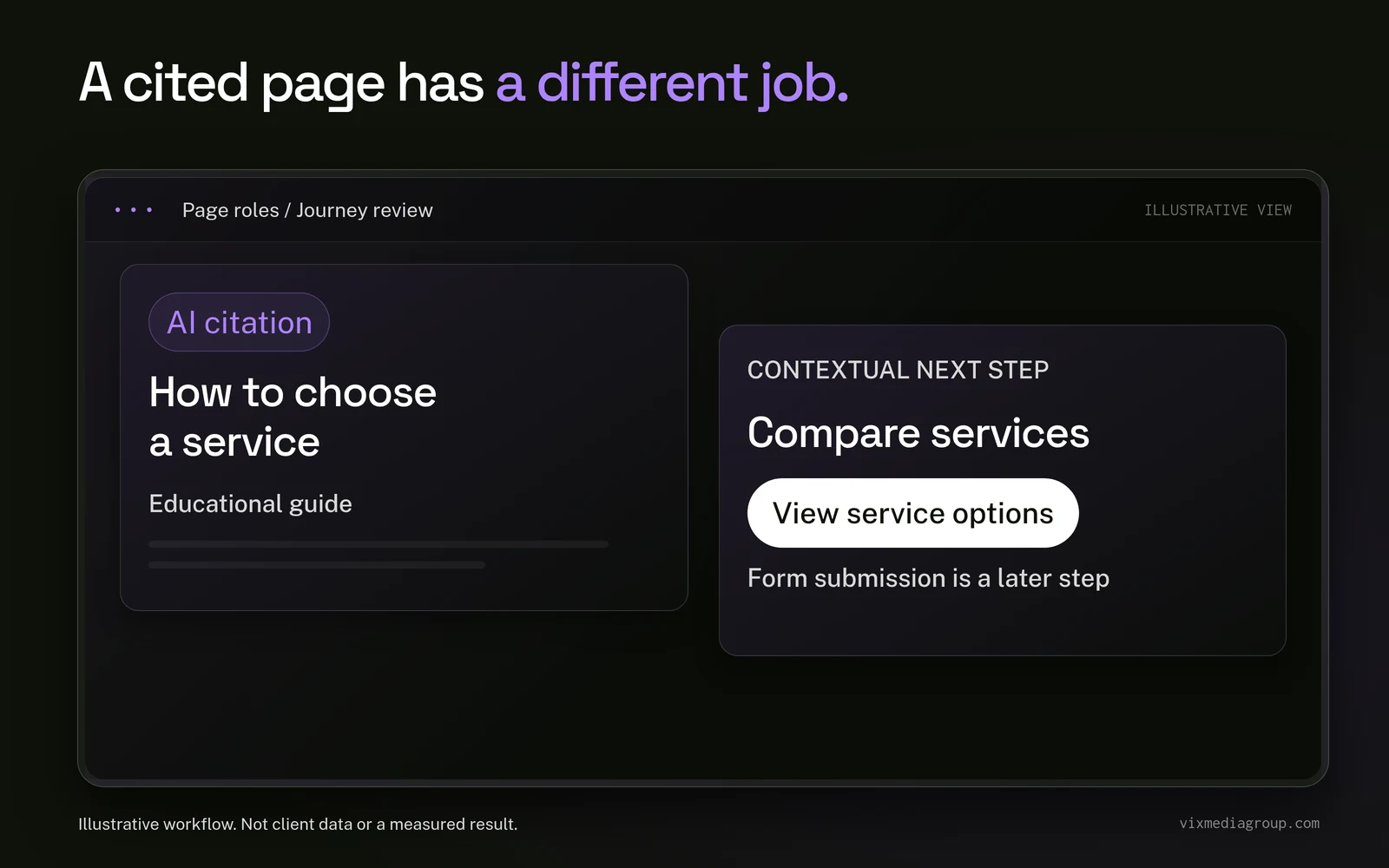
An illustrative AI-cited educational guide hands readers to a service comparison; a later form is a separate page role.
AI Citations and Customer Visits: How We Would Test Whether the Surfaced Page Matches the Visited Page

We outline a test comparing AI-surfaced pages with customer visits, explaining why an overlap percentage needs matched evidence rather than an assumed shared journey.

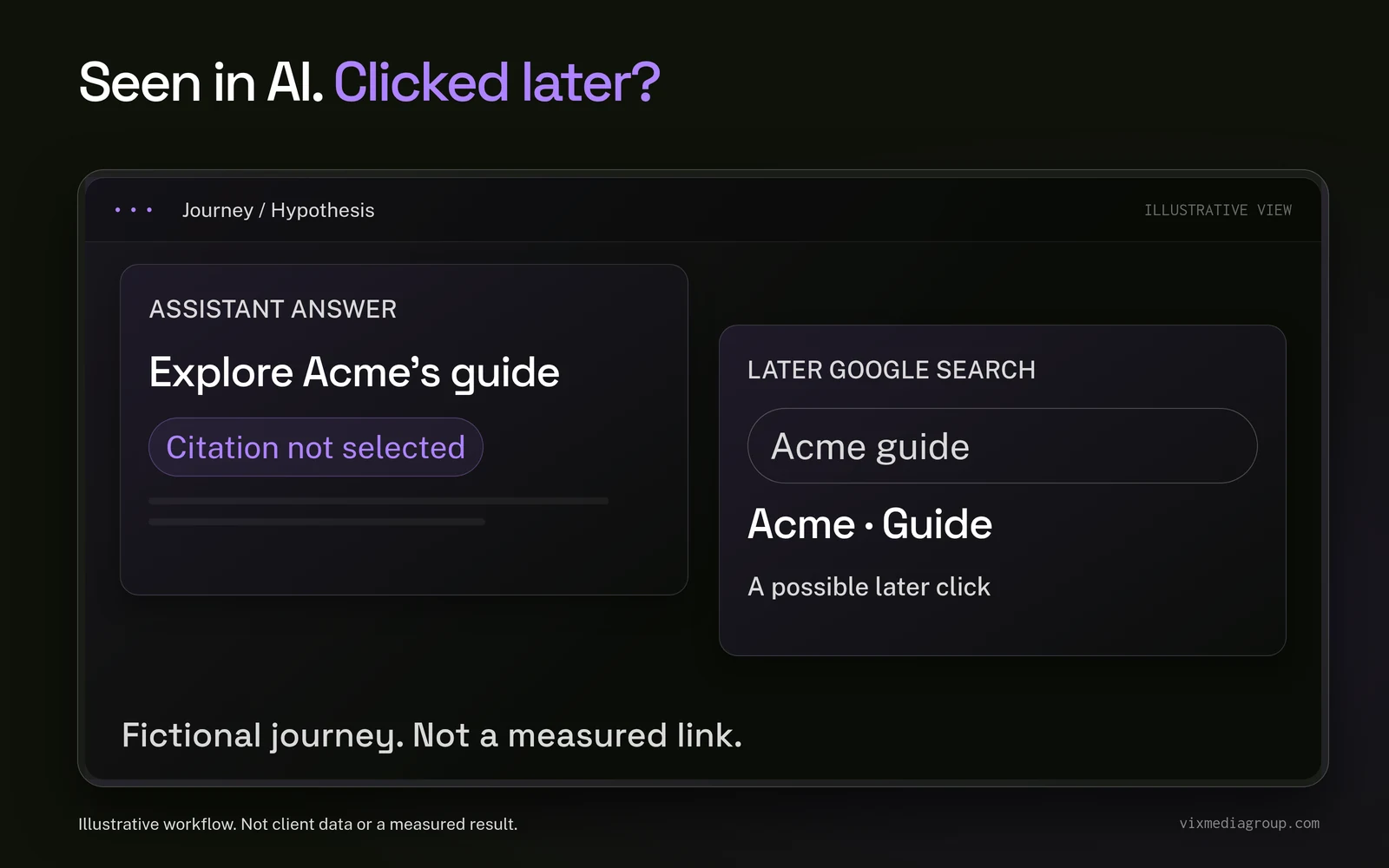
A fictional journey moves from an unselected AI citation to a later branded Google search; the causal link is unproven.
AI Search Measurement: How We Would Test Whether AI Visibility Preceded a Google Click

We outline how to test whether AI visibility precedes a Google click, while keeping observed search activity separate from unverified claims about earlier influence.

Start Growing Your Dental Practice with SEO

Take the first step toward transforming your marketing. Whether you’re looking to boost engagement, improve your online presence, or grow your business, our team at Vix Media Group is here to help.
Let’s craft a strategy tailored to your goals.