How to Use Retail Bots for Sales and Customer Service
If you aren't familiar with retail bots, they speak directly to the customers on your behalf and offer an employee's recorded response. Retail bots may also be referred to as employee chatbots. Bots can help customers find the best retailers to shop at as well as the best products by providing them with different comparison options.

This software stands in for customer service representatives that would otherwise be needed in house to answer questions or complete sales transactions in an online store or e-commerce environment. You can use bots to help guests with product information. When it comes to retail, bots can help guests with product information and answers to common questions. They can also help customers find out about the latest in-store promotions and deals, so they get more out of their shopping experience. Bots are especially useful when you have a lot of products in your store. By using a bot, you will be able to provide customers with the information they need quickly and easily. Bots can also help you keep track of your inventory and make sure that everything is in stock before allowing customers to purchase items from your store.
Bots can handle basic customer service issues 24/7
Bots are already being used in retail to help customers with returns, refunds, and other queries. The advantage here is that they can handle basic customer service issues 24/7. Bots are also able to answer questions that have a finite number of answers, such as what is your store return policy, or what are your hours? These bots can be programmed to answer these questions so that humans don't have to deal with them, freeing up their time for more complicated issues.
This is particularly important in an omnichannel retail environment where you might have online stores, physical stores, and even mobile stores. Since the same products may be sold across all three channels, it's important to have the same return policy for all three channels. Having a bot on each channel answer questions about returns saves a lot of time for people working in customer service.
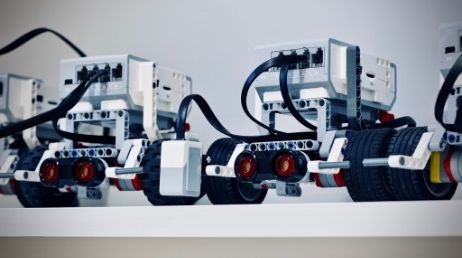
Bots can provide promotional details on special sales events
Bots can be used to create a unique and engaging shopping experience. Bots can create a unique and engaging shopping experience by providing product recommendations and personalized deals that match a customer's preferences. This can help reduce the number of subscriptions needed for different channels such as email marketing, text message marketing, or web push notifications. You'll also save time on email campaigns since customers will automatically receive information about upcoming sales events without having to manually opt-in.
Handle check-out and payment processing
Bots can handle check-out and payment processing. Bots have the ability to remember past sales transactions and other data. This means that they can use past transactions to identify the customer who is attempting a new sale or transaction. They can also remember customer shipping and billing addresses, which makes it possible to make check-out a much smoother process.
Bots don't have to remember all this information on their own. Retailers can integrate bots into their existing point of sale (POS) systems so that customers can access their profiles in order to complete orders. Bots could even be integrated with third-party POS systems like Stripe's Relay or Shopify's Mobile Buy SDK. Retailers can choose whether they want bots to process payments themselves or whether they want the bot to hand off payment processing to the retailer's own POS system. Either way, bots can streamline payment processing, making it easier for customers to complete purchases quickly and easily.

Provide shipping information based on purchase status
E-commerce bots can help shoppers with questions about their orders, such as whether the item has shipped, when it will arrive, and where it is in transit. Bots can also let shoppers know when their items are ready to be picked up (if they've been purchased online and are ready for in-store pickup). Retail bots can also provide shipping information based on purchase status, including the ability to schedule deliveries and reroutes if necessary. Another way that e-commerce bots can boost sales is by allowing customers to return items via chatbots. For example, a shopper could ask a bot to process a return request. That could include specifying the reason for the return, uploading an image of the receipt, or entering other relevant details.
Retail bots can be of great value to a retail store and your customers. You'll have the potential to expand your market reach and add a unique, human touch to your marketing efforts. Using future technology may sound intimidating, but by knowing what you can get from retail bots and taking into consideration some of the drawbacks, you can make a better decision as to whether or not you want to integrate them into your business in the future.




Start Growing Your Dental Practice with SEO
Take the first step toward transforming your marketing. Whether you’re looking to boost engagement, improve your online presence, or grow your business, our team at Vix Media Group is here to help.
Let’s craft a strategy tailored to your goals.