The Impact of Cybersecurity on your SEO
SEO ensures your website is visible to search engines: it’s how you drive organic traffic and potential customers to your website. Cybersecurity measures, on the other hand, protect your site from malicious attacks, safeguard sensitive data, and maintain the trust of your visitors.

Search engine optimization (SEO) and cybersecurity are critical components for any business with an online presence, no matter how small.
SEO ensures your website is visible to search engines: it’s how you drive organic traffic and potential customers to your website. Cybersecurity measures, on the other hand, protect your site from malicious attacks, safeguard sensitive data, and maintain the trust of your visitors.
The link between website security and SEO performance is a significant one.
A secure website protects your business and customers and positively impacts your search engine rankings. That’s because Google and other search engines prioritize secure websites over less secure ones, making cybersecurity an essential aspect of your overall SEO strategy.
The Impact of Cybersecurity on SEO
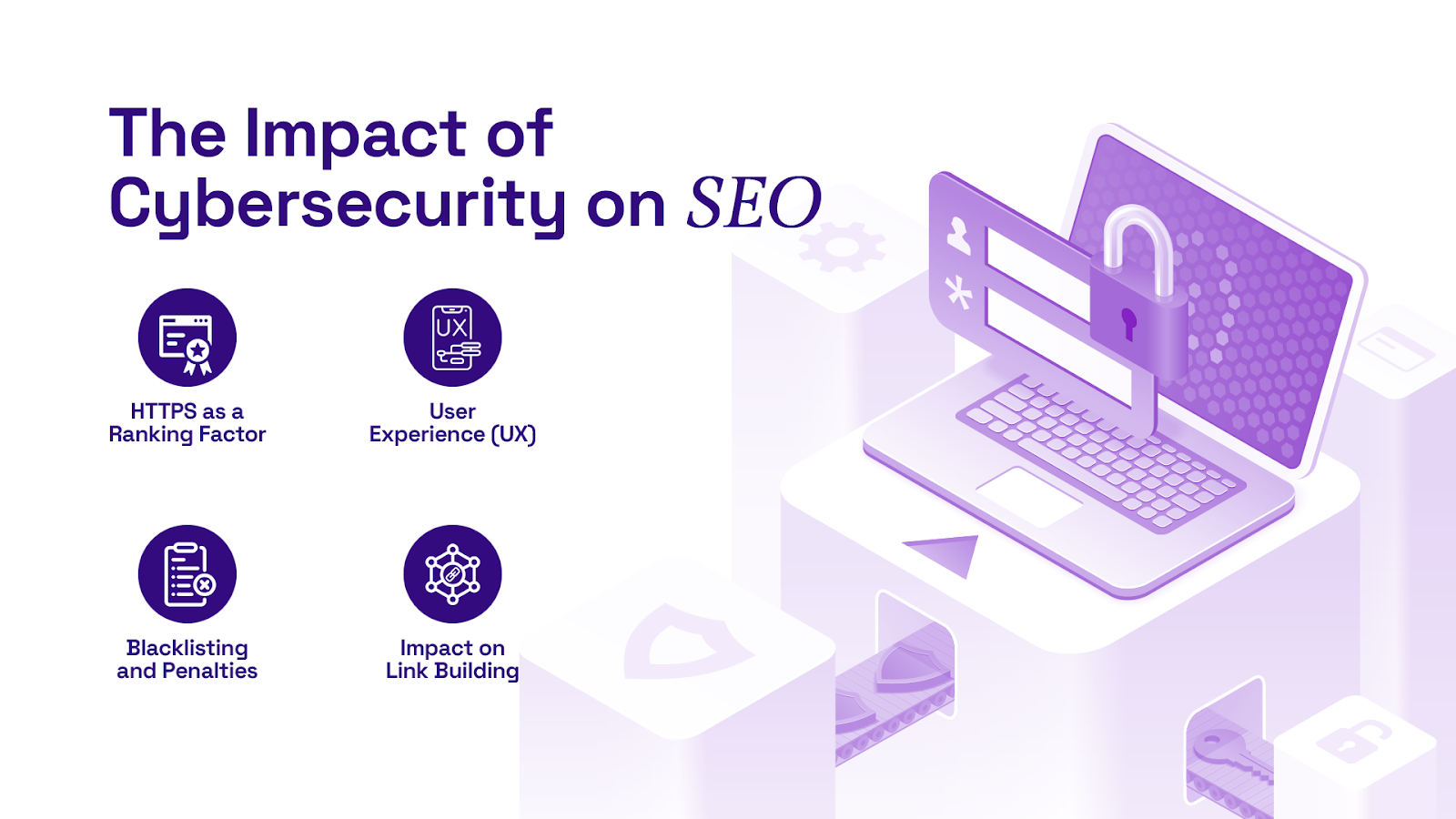
Understanding the impact of cybersecurity on SEO is crucial for maintaining a solid online presence. Security issues can jeopardize your data and impact search engine rankings. Prioritizing cybersecurity enables you to protect your website while simultaneously improving its visibility in organic searches.
HTTPS as a Ranking Factor
Google has used HTTPS as a ranking signal since 2014. SSL certification means data transmissions between the server and the user are encrypted. Encryption reassures visitors that their information is safe and increases the likelihood of their staying on your website and engaging with your content.
On the whole, SSL certification enhances user trust and boosts SEO rankings.
User Experience (UX)
Security breaches such as malware infections and phishing attacks severely degrade the user experience. They can slow your website, break pages, and cause data loss. Users encountering such issues are more likely to leave your website immediately, resulting in higher bounce rates. High bounce rates negatively impact search engine rankings because that is interpreted as a sign of poor user experience.
Blacklisting and Penalties
Search engines like Google actively remove websites that have security issues from their search results. If your site gets hacked or infected with malware, it can be blacklisted and made invisible to potential visitors. Regular security audits are therefore essential to identify and address any vulnerabilities before they become significant problems.
Impact on Link Building
Malicious link injections can damage your website’s SEO efforts. Cyber attackers can insert harmful links into your content, leading to penalties from search engines. These spammy links degrade your site’s authority by redirecting users to malicious sites and damaging your online reputation.
Key Cybersecurity Trends in 2024
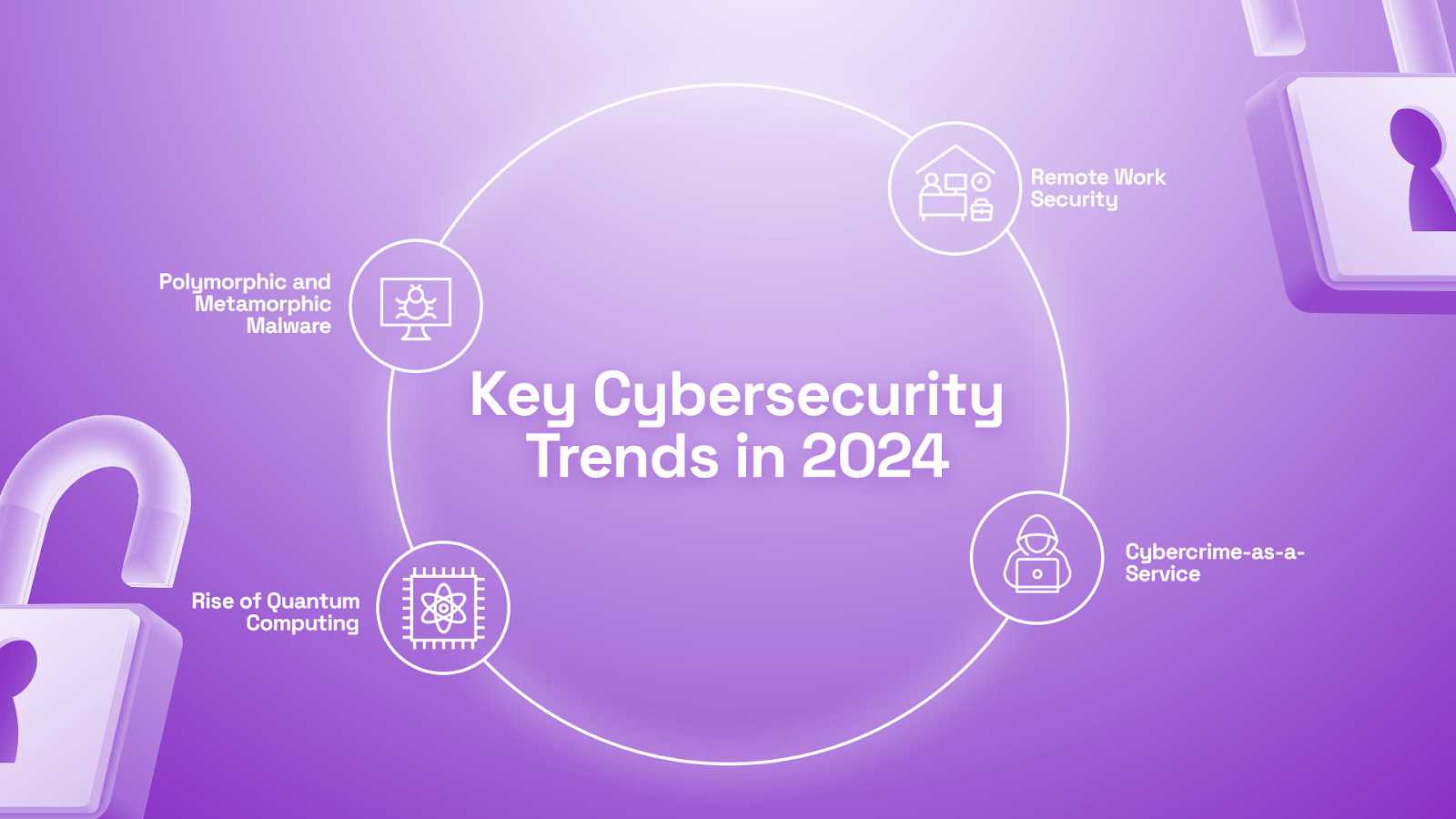
Staying ahead of cybersecurity trends is vital to protecting your website and maintaining a strong SEO performance. Multiple emerging trends in 2024 will impact cybersecurity and, by extension, your SEO strategy.
Rise of Quantum Computing
Quantum computing relies on the principles of quantum mechanics to solve problems that are too complex for regular computers. It is poised to revolutionize cybersecurity by taking it to an altogether new level of threats and solutions.
Unlike traditional computers, quantum computers use qubits (the basic units of data in quantum computing) to process information at unprecedented speeds. This capability can potentially break encryption and make many existing security protocols obsolete. Counteracting this emerging threat calls for the development and implementation of quantum-resistant encryption.
Polymorphic and Metamorphic Malware
Polymorphic and metamorphic malware represents a significant evolution in cyber threats. These types of malware can alter their code to evade detection by traditional security systems. Polymorphic malware changes its appearance while keeping its underlying function the same, while metamorphic malware can rewrite its own code. Leveraging AI and machine learning-based security solutions is critical to combat these sophisticated threats.
Remote Work Security
The shift towards remote work has increased the cybersecurity risks for many organizations. Remote access to work environments presents numerous vulnerabilities that cybercriminals can exploit. To mitigate these risks, it is important to implement robust encryption protocols and multi-factor authentication (MFA). These measures add an extra layer of security by requiring multiple verification forms before granting access.
Cybercrime-as-a-Service
Cybercrime-as-a-Service (CaaS) is changing the landscape of online security by making sophisticated cybercrime more accessible. This model allows cybercriminals to purchase advanced tools and services to conduct attacks. Ransomware attacks facilitated by CaaS, for instance, are becoming more prevalent and sophisticated.
To defend against these threats, businesses must adopt advanced threat detection systems, robust backup and recovery solutions, and suspicious activity monitoring.
Best Practices for Cybersecurity and SEO
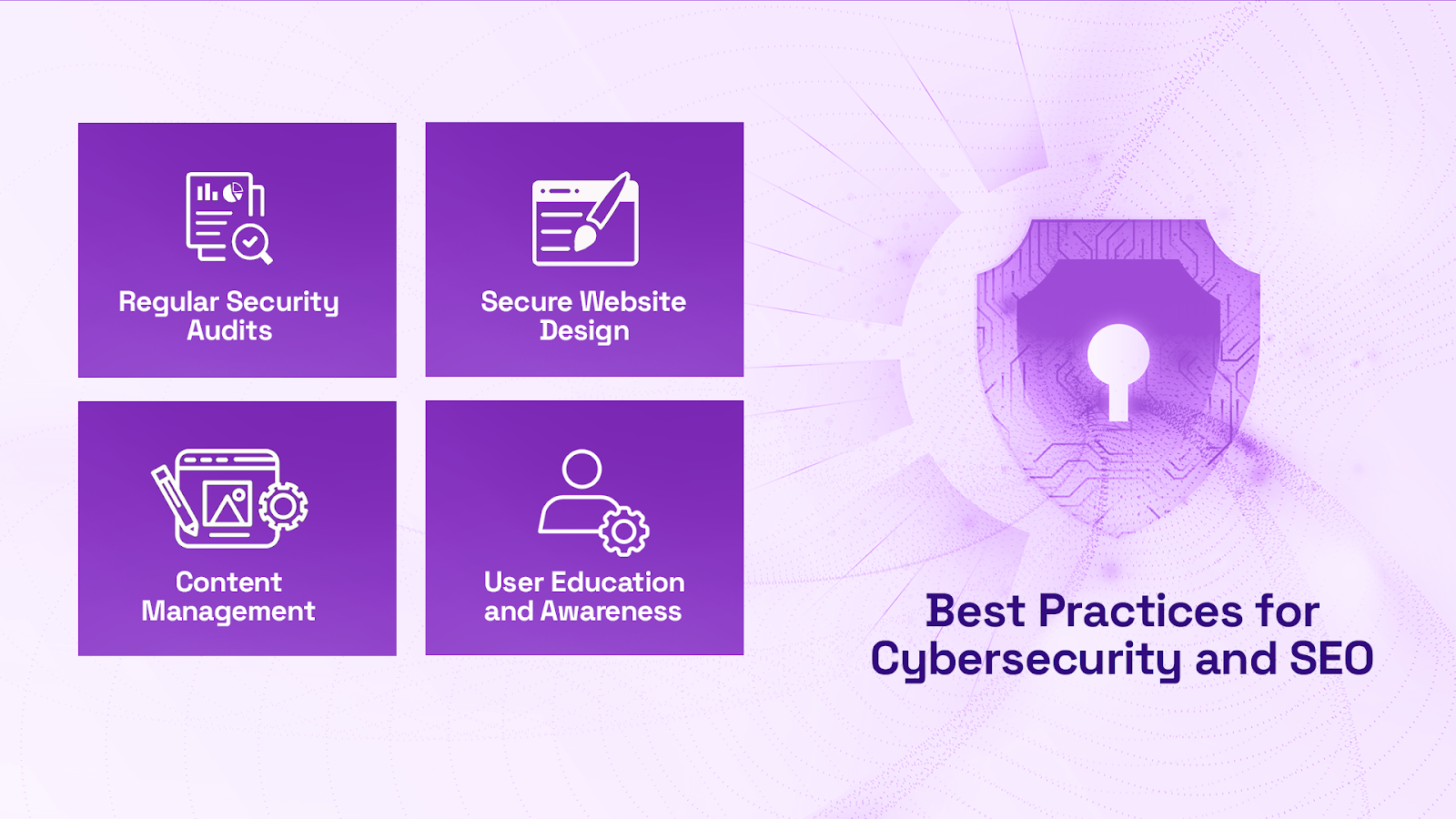
Implementing best practices for cybersecurity is crucial to maintaining your website's SEO performance. Securing your site enables you to protect your data, maintain privacy, and boost search engine rankings.
Here are four actionable steps you can take to enhance cybersecurity and SEO.
Regular Security Audits
Conducting frequent security audits is essential for identifying and addressing vulnerabilities. Tools like Sucuri SiteCheck and Web Inspector help scan your website for malware and other security issues. Regular audits allow you to detect threats early and take corrective actions before they impact your SEO. Proactive security measures protect your data while ensuring your website remains trustworthy and ranks well on search results.
Secure Website Design
Building security into your website from the ground up is vital in the new threat landscape. Start with a secure hosting provider and ensure your site has SSL certification for encrypted data transmission. Secure hosting provides additional layers of protection, such as DDoS protection and automated backups, which help maintain your website's integrity and performance.
Content Management
Regular updates and backups are crucial for content management. Keeping your website's software, plugins, and themes up-to-date prevents security vulnerabilities. Regular backups also ensure you can quickly restore your site in case of a data breach or malware attack.
Make sure to focus on effective keyword research and avoid black hat SEO practices like keyword stuffing and cloaking, which can lead to search engine penalties. Remember, high-quality and relevant content improves your SEO and enhances user trust.
User Education and Awareness
Educating your users, employees, and other stakeholders about cybersecurity is a critical aspect of protecting your website. Regular training sessions can help users recognize common phishing tactics and cyber threats. For instance, phishing emails often contain links leading to malicious sites; teaching employees to verify the authenticity of emails and avoid clicking on suspicious links can prevent security breaches.
Awareness and vigilance among your team are also essential for maintaining a secure and SEO-friendly website.
Strengthening Your SEO with Robust Cybersecurity
The connection between cybersecurity and SEO is obvious yet subtle. A secure website protects your data and is crucial to enhancing and maintaining high search engine rankings. Implementing strong cybersecurity measures safeguards your SEO efforts and provides a safe and trustworthy user experience.
Staying proactive in your cybersecurity efforts is vital as digital threats continue to evolve. It is key to ensuring your website remains resilient against cyberattacks while maintaining its integrity and reputation.
Secure your website, boost your SEO, and build trust with your audience to achieve sustained online success.
Strengthen Your Site's Security and SEO with Vix Media Group
At Vix Media Group, we understand the critical connection between cybersecurity and SEO. That’s why our comprehensive digital marketing services are designed to enhance your online presence while ensuring top-notch security.
Why Choose Vix Media Group?
- Integrated SEO and Cybersecurity Solutions: We offer a holistic approach that integrates SEO best practices with robust cybersecurity measures.
- Expertise in Advanced Security Protocols: We implement advanced encryption protocols, conduct regular security audits, and provide continuous monitoring to keep your site safe.
- Enhanced User Experience: A secure and user-friendly site builds trust and boosts your SEO rankings.
- Comprehensive Digital Marketing: Beyond cybersecurity and SEO, we offer a full range of digital marketing services, including content creation, social media management, and PPC advertising.
Partner with Vix Media Group for a strategic approach that combines the power of SEO with advanced cybersecurity. Contact us today to learn how we can protect and enhance your online presence.




Start Growing Your Dental Practice with SEO
Take the first step toward transforming your marketing. Whether you’re looking to boost engagement, improve your online presence, or grow your business, our team at Vix Media Group is here to help.
Let’s craft a strategy tailored to your goals.