The Power of Statistical Link Building: How to Drive Traffic and Boost Your SEO
Are you struggling to build high-quality backlinks for your website? Discover the secret strategy top brands use to dominate search rankings: statistical link building. Learn how to create data-rich resources that attract organic links and boost traffic.

What if your website could generate high-quality backlinks on autopilot? Imagine a single resource on your site consistently attracting organic traffic and links without the need for constant promotion.
This is the power of statistical link building, a strategy that leverages data-rich, evergreen content to enhance your site’s visibility, credibility, and link profile. Leading brands like HubSpot use this technique to dominate search engine results pages with shareable resources like “The Ultimate List of Marketing Statistics.”
What Is Statistical Link Building?
Statistical link building uses data, tools, and insights to find opportunities to acquire high-quality backlinks that can increase a website’s authority and search engine results.
The goal isn’t just about collecting numbers, it’s about creating and presenting content that is a valuable resource for industry professionals. For example, a digital marketing agency could publish an annual report on social media trends; becoming the go-to source for businesses looking for accurate, up-to-date insights.
In Google’s eyes, this data-driven content bolsters EEAT which is a key factor for improving your rankings. According to a study from Backlinko, websites that rank highest on Google have 3.8 times more backlinks than sites that rank between 2 and 10.
Why Statistical Link Building Works
Data-driven content acts as an "entry ramp" for backlinks to enter your content portfolio and is one of the best types of content for generating links and accelerating organic growth across the board as they boost search engine rankings.
Let’s say your goal is to generate links from publications with a high domain rating. When you do this it increases the page rating of your data-driven content, which is then passed down to your content hub and blog articles, further boosting your authority. Take HubSpot’s “Ultimate List of Marketing Statistics” as an example—it’s cited by thousands of articles because it’s a comprehensive, trusted source. By crafting well-rounded data-driven content like a statistics page, it has the potential to remain relevant for years to come; by periodically updating the stats, you’ll extend its shelf life and SEO value indefinitely.
How to Create a Successful Statistical Link-Building Asset
Choose a Relevant Topic
To generate high-authority links as well as social shares you’ll need to ensure your content is relevant and well-timed. When planning a data-driven piece, you can find a suitable topic in a number of ways; competitor analysis, social media trends, keyword research and identifying long-tail keywords with recent popularity.
Gather Accurate and Comprehensive Data
Rely on trusted sources like government reports, industry surveys, and reputable research publications. Ensure the data is credible and up to date, as outdated information can harm your EEAT.
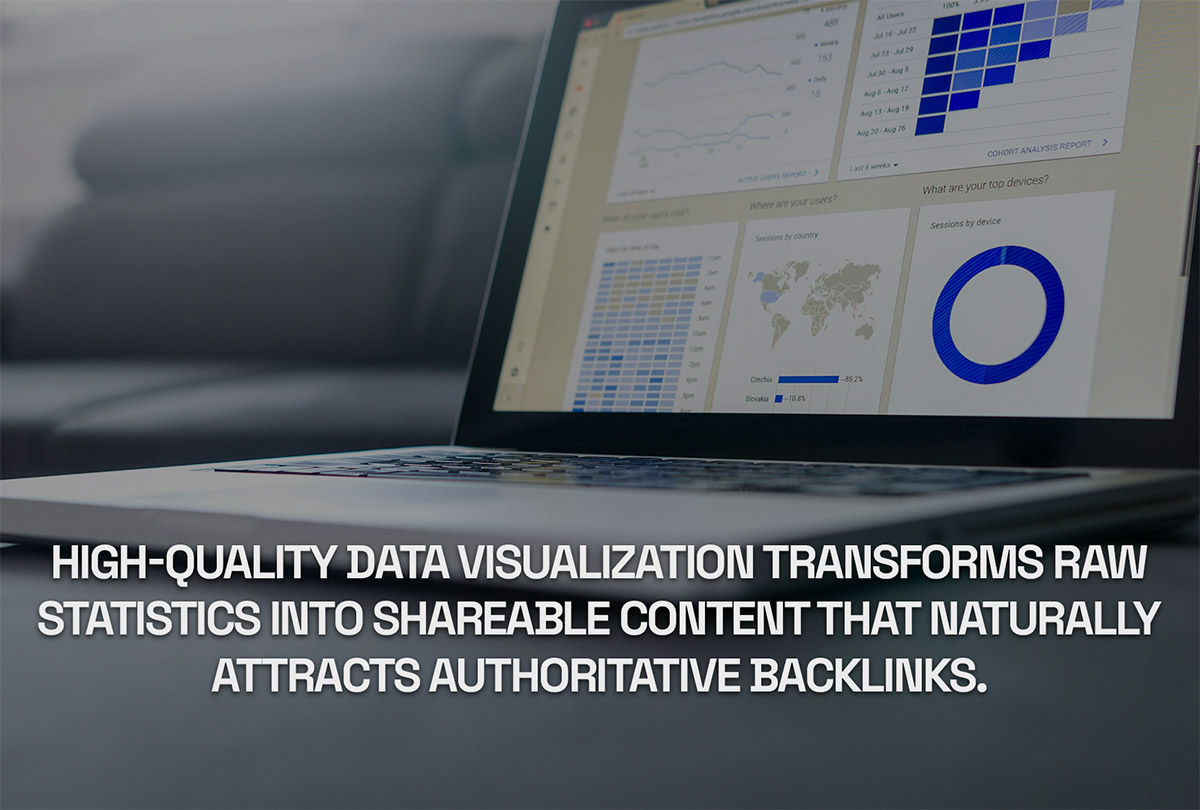
Make It Visually Engaging
Presenting raw numbers isn’t enough—your content should be easy to digest. Here’s a few ways you can make your content more engaging:
- Infographics make facts and figures easy to absorb in a short amount of time.
- Producing your own short explainer videos with engaging animations.
- Bullet points and quick summaries to improve scannability.
Just take a look at “A Day in the Life of Americans” to see what’s possible with data visualization.
Keep It Evergreen
Plan regular updates to maintain your content’s relevance—a yearly refresh with the latest statistics will ensure that your content continues to get referenced.
Optimize for SEO
Optimize your content by incorporating targeted keywords, for example; “statistical link building” and “evergreen SEO strategies” into your title and meta description, as well as your subheadings and image captions
Promote Through Outreach
Being proactive about promoting your content is key—you need to have a solid distribution plan in place that targets the channels where your audience spends time. There are numerous ways you can go about this:
- Reach out to blogs and websites related to your industry.
- Share your content on publications or news sites like Forbes, CNN, The Washington Post etc.
- Collaborate with other voices in your industry for additional exposure
- Release your content on social media and forums

Data-driven and creative content has been consistently proven to generate links. So, if your goal is to boost organic growth then focus on the formats with a high link acquisition velocity. Build out your topics and produce content that link creators need, and don't forget to utilize internal linking to create a content portfolio that ranks for even the most competitive keywords.
Ready to scale your link-building efforts with data-driven content? Partner with Vix Media Group for expert SEO solutions that deliver results.





Start Growing Your Dental Practice with SEO
Take the first step toward transforming your marketing. Whether you’re looking to boost engagement, improve your online presence, or grow your business, our team at Vix Media Group is here to help.
Let’s craft a strategy tailored to your goals.