5 Tips to Maximize your SEO

Boosting your website's visibility in search engine results is essential for driving organic traffic and achieving business success. By focusing on your SEO you will gain valuable data about your ideal customer’s behavior and preferences, informing marketing strategies that are essential for establishing a strong online presence and driving sustainable growth year after year.

5 Tips to Maximize your SEO
Published on
7/23/2022
Written by
Anthony Dutcher

Here are five actionable SEO tips, supported by real-world case studies, that will help you enhance your rankings and connect more effectively with your target audience.
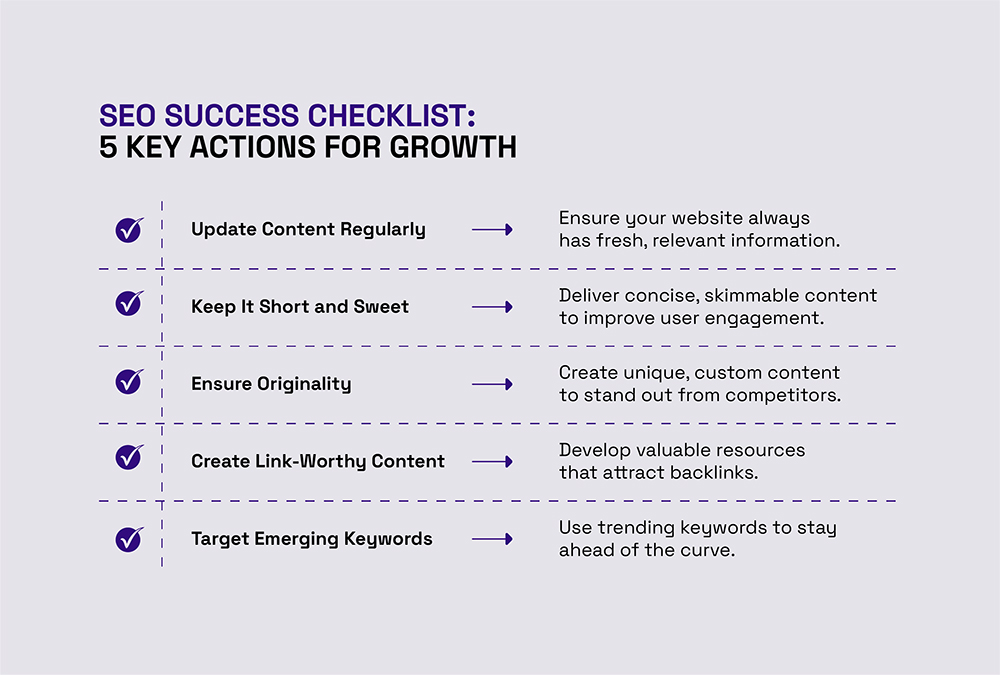
SEO success checklist graphic with key actions

1. Update Your Content Regularly

Keeping your video content fresh is one of the most effective strategies for maximizing SEO. Search engines continuously update their algorithms to prioritize sites that provide up-to-date, relevant information. A study by HubSpot found that companies that updated their blog content regularly saw a 55% increase in organic traffic.

Case Study:

‍
A leading travel blog, "Nomadic Matt," regularly revises its articles to reflect current travel restrictions and recommendations. After implementing a consistent update schedule, they experienced a 30% boost in organic traffic over six months, illustrating the importance of fresh content for maintaining relevance in search results.

2. Keep It Short and Sweet

Concise content is key for both user engagement and SEO. A study by the Nielsen Norman Group found that users often skim through content, focusing on headers and key points. If your content is too lengthy or convoluted, it risks being truncated in search results.

Case Study:

"Buffer," a social media management platform, transformed their lengthy blog posts into shorter, more focused articles. This change led to a 50% increase in time spent on page and a significant drop in bounce rates, demonstrating that brevity can enhance user experience and search visibility.
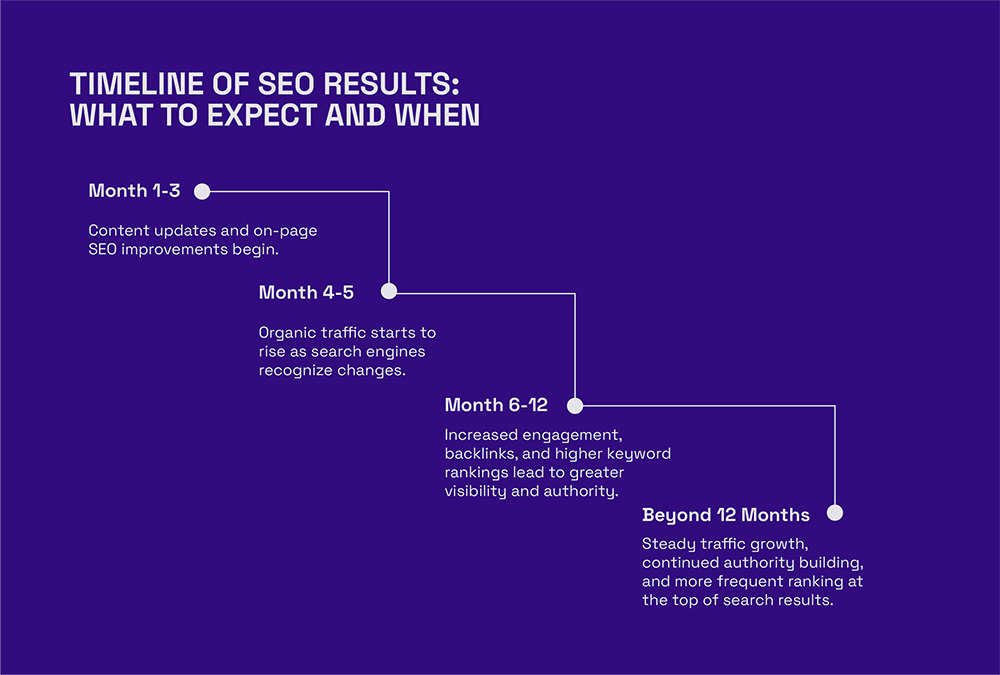
Timeline of SEO results infographic

3. Ensure Your Content Is Unique and Original

Search engines prioritize unique content. Originality not only helps improve your rankings but also sets your site apart from competitors. A study by the Content Marketing Institute found that 78% of consumers believe that organizations providing custom content are interested in building good relationships with them.

Case Study:

"Crazy Egg," a website optimization tool, created unique case studies showcasing how clients improved their conversion rates. This original content led to a 65% increase in organic traffic over a year, emphasizing the value of unique insights in attracting and retaining visitors.

4. Create a Link-Worthy Site

To improve your rankings, focus on creating a link-worthy site filled with valuable content. A strong domain name combined with high-quality resources increases your chances of attracting backlinks, which are vital for boosting domain authority.

Case Study:

"Backlinko," a popular SEO blog, produced an in-depth guide on link building that was widely referenced in the industry. This guide garnered over 1,000 backlinks within three months, illustrating how comprehensive, helpful content can attract organic links and improve search rankings.
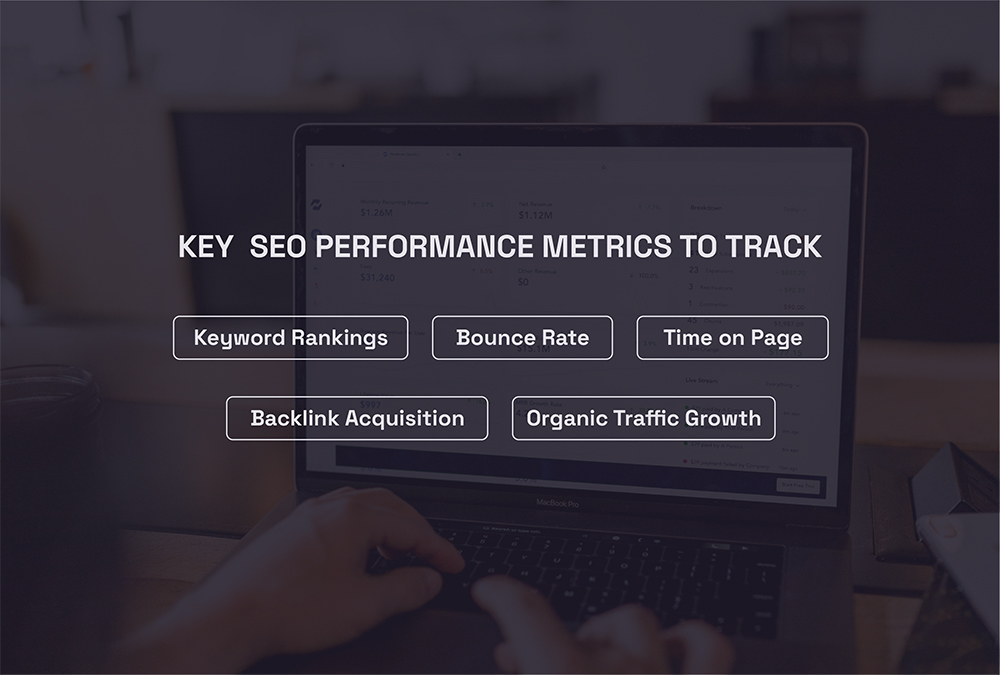
Key SEO performance metrics infographic on laptop screen

5. Target Emerging Keywords

Incorporating relevant keywords is crucial for any SEO strategy, especially when promoting new products or services. Research and target emerging keywords that potential customers are likely to use in their searches.

Case Study:
‍

"Glossier," a beauty brand, utilized Google Trends to identify rising keywords in the skincare market. By optimizing their product pages with these trending keywords, they saw a 40% increase in organic search traffic within just two months, demonstrating the power of timely keyword targeting.

By implementing these five SEO tips—updating content regularly, keeping it concise, ensuring originality, creating a link-worthy site, and targeting emerging keywords—you can significantly improve your website's search engine rankings. The case studies highlighted above provide real-world evidence of the effectiveness of these strategies. Start applying these insights today to see tangible results in your SEO efforts. 

For expert assistance, explore Vix Media Group's SEO services!

Written by Anthony Dutcher
Founding Partner
Disclaimer: The information in these resources may lead to unprecedented online growth, massive engagement, and an overwhelming surge in your business success. Proceed with caution, as we cannot be held responsible for any sudden increase in sales, followers, or popularity. Read at your own risk of becoming wildly successful.

Ready to Turn Insights Into Action?

Reading about strategy is one thing — putting it into practice is where the growth happens. Partner with Vix Media Group to align your marketing with your business goals and start seeing measurable results.

Table of Contents

  1. Underlying Motivators
Related resources
A 90-day launch workbench reviews instrumentation and tracking exceptions without promising payback inside the horizon.
What a Realistic First 90-Day Marketing ROI Plan Should Measure Before It Promises Payback

Our first 90-day marketing plan prioritizes instrumentation, learning, and scaling decisions, with explicit costs and conversion delays—not a promise of payback by day 90.

A synthetic record reaches a won CRM stage while its source remains unresolved, separating outcome from attribution completeness.
Form Fill to Sale Attribution: How We Trace Every Step Without Pretending the Record Is Complete

We trace the evidence from form acceptance through CRM handoffs and sales outcomes, keeping missing identifiers, incomplete records, and reconciliation gaps visible.

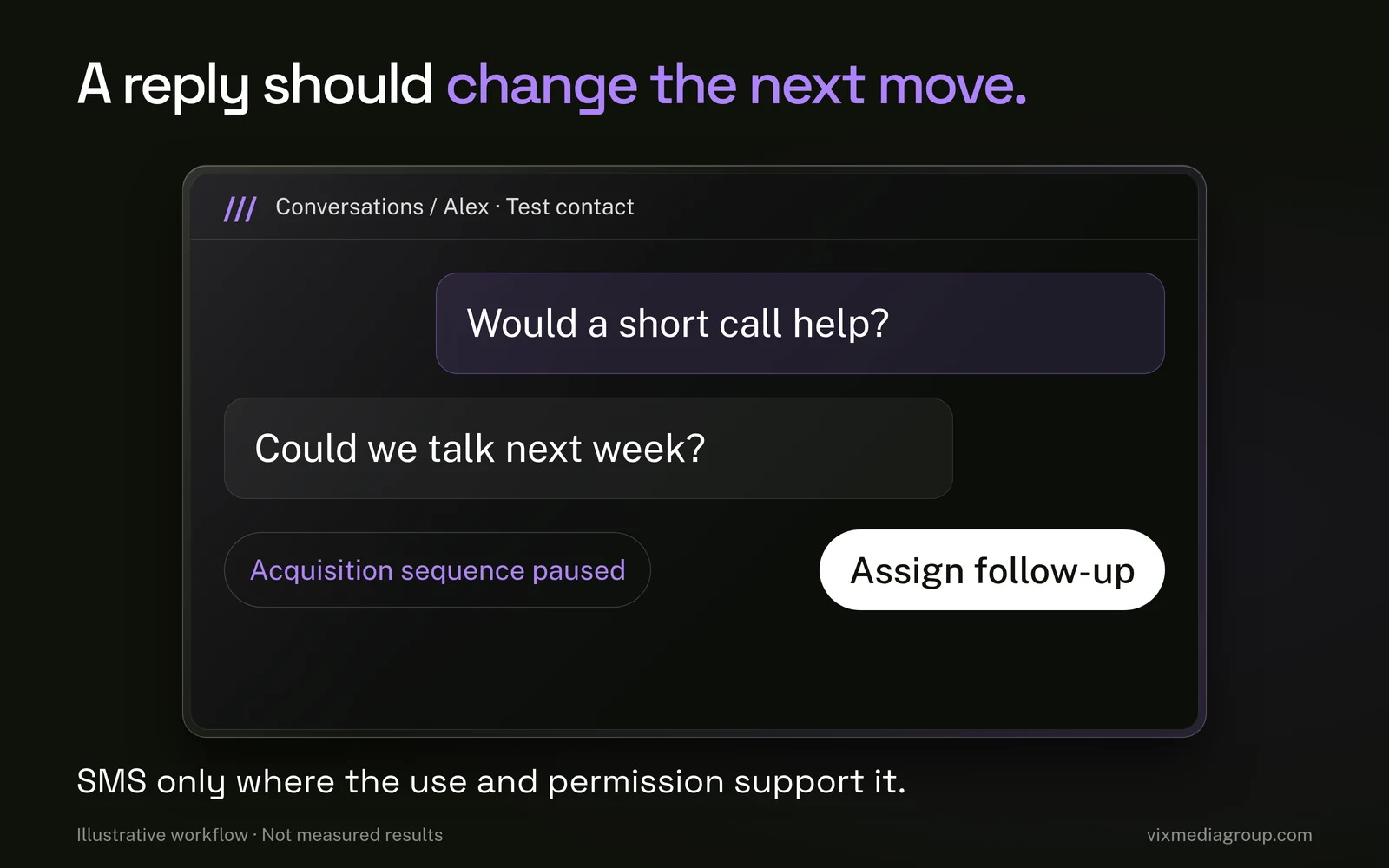
A fictional two-way nurture conversation pauses acquisition messaging after a reply and assigns human follow-up.
The Seven Follow-Up Systems We Use Before Scaling Paid Traffic for a New Brand

Our seven-part follow-up framework tests capture, ownership, nurture, suppression, and recovery before paid traffic scales, keeping lead activity distinct from sales outcomes.

An illustrative customer-list audience is held because source evidence is missing; activation is disabled.
Before We Used AI Audience Data, We Checked Rights, Sensitive Categories, and Platform Rules

Before activating AI audience data, we examine provenance, permitted use, sensitivity, and platform eligibility. Technical compatibility does not establish data rights.

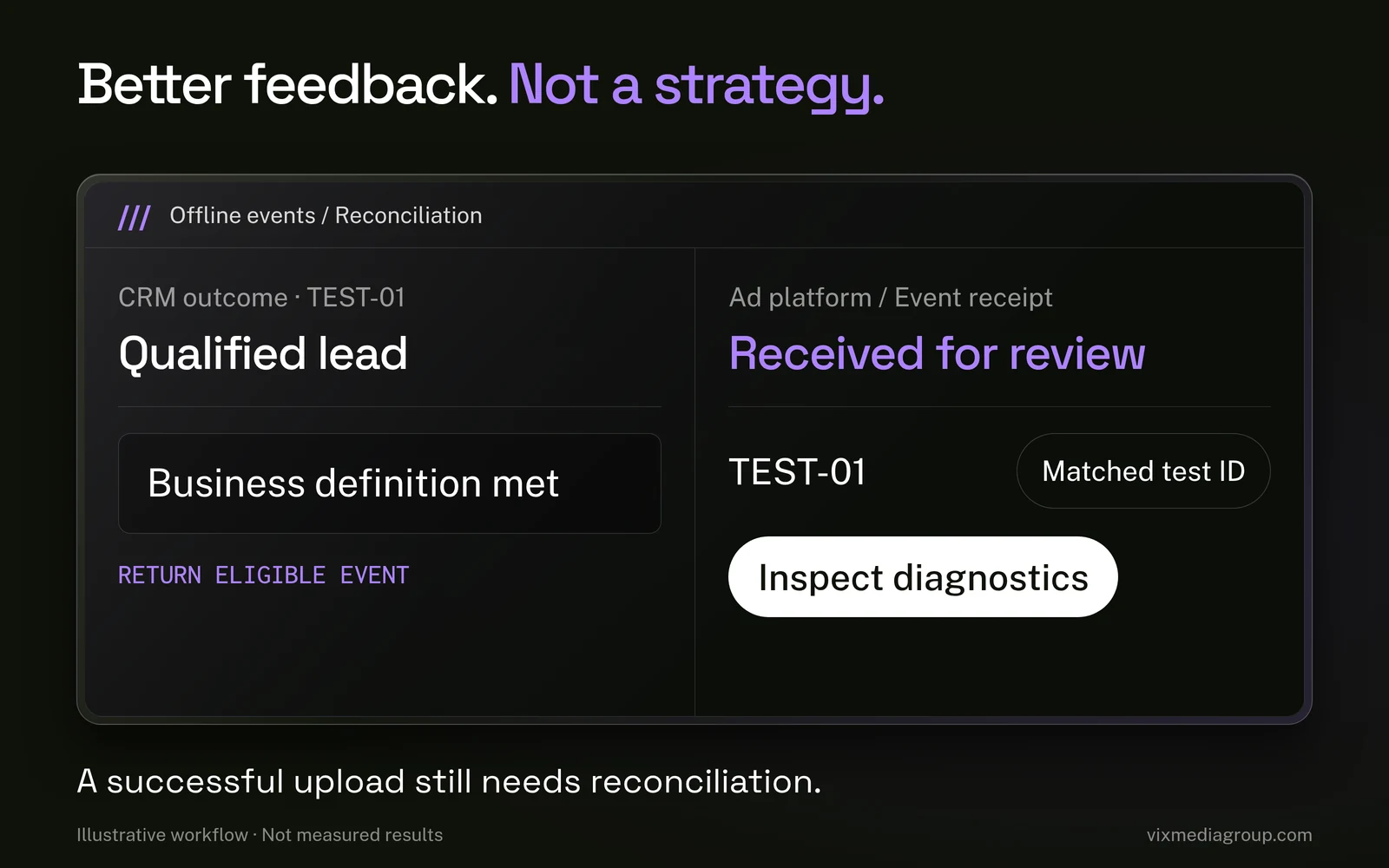
A synthetic qualified CRM event returns to an ad-platform receipt, where diagnostics still require reconciliation.
Offline Conversion Tracking Is Valuable. It Is Not an AI Advertising Strategy

Offline conversion tracking connects later CRM outcomes to advertising. It improves measurement and feedback without replacing decisions about the offer, market, or sales process.

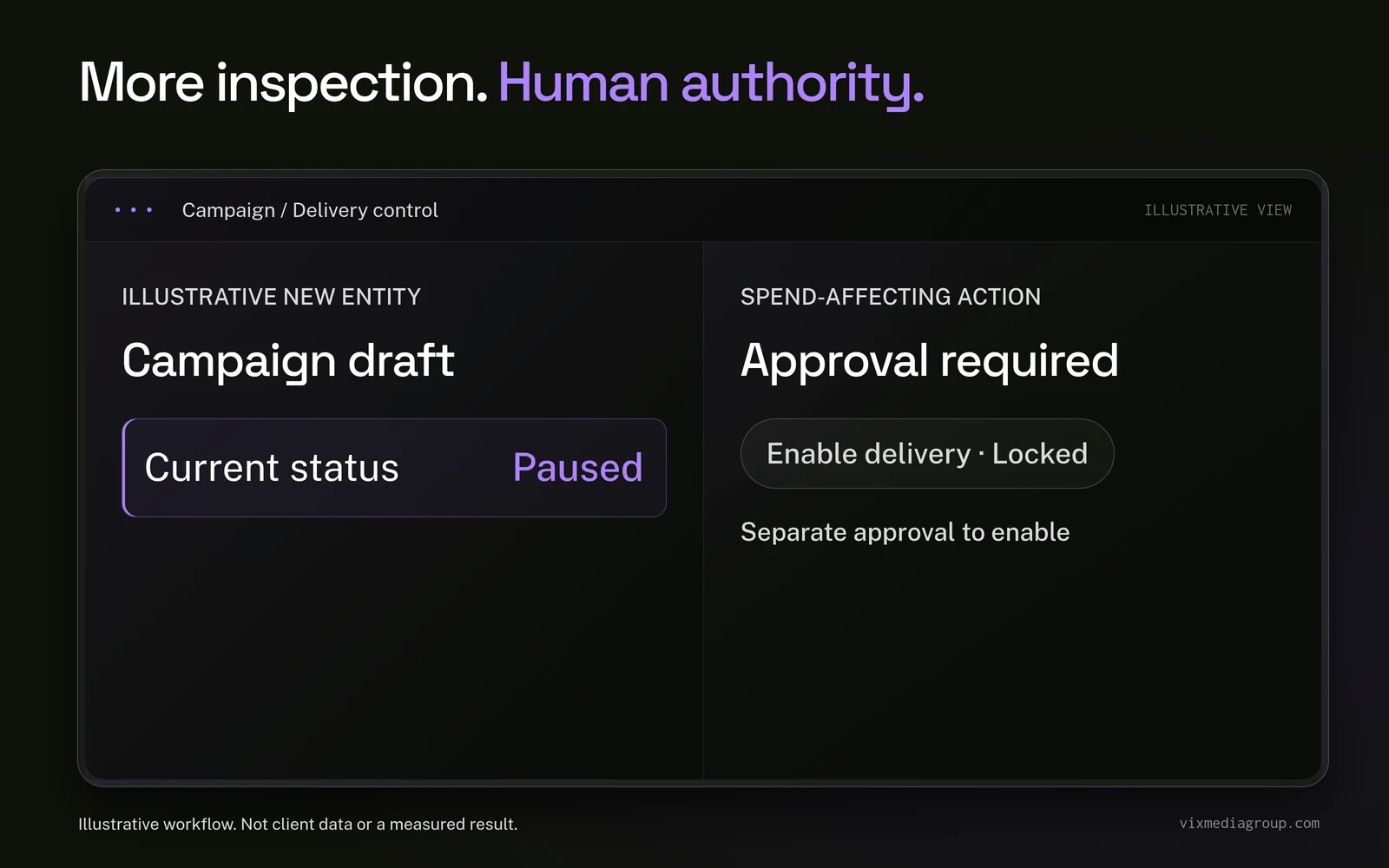
An illustrative new campaign remains paused; enabling delivery is locked behind a separate human approval.
Agentic Ad Management Did Not Reduce Our Work. It Expanded What We Could Inspect

Our agentic ad workflow expands bounded inspection while keeping strategy and approval with people. Each authorized action is followed by a check of the resulting state.

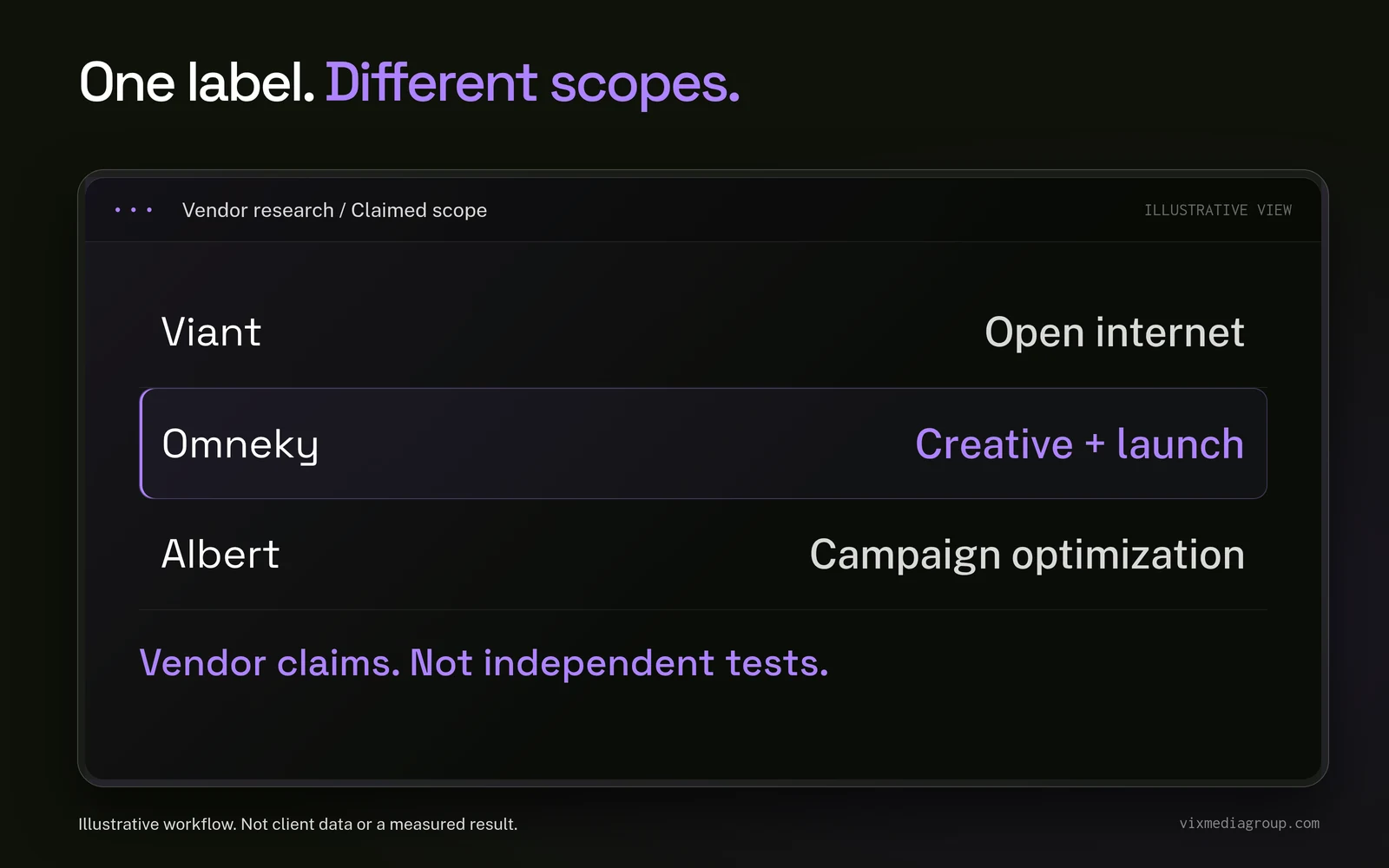
A research workbench compares Viant open-internet advertising, Omneky creative and launch, and Albert campaign optimization as vendor claims.
Three Autonomous Ad Platforms, Three Operating Models: What AI Ad Management Actually Automates

We compared three autonomous ad platforms by operating model, separating vendor capabilities, advertiser authority, and native automation rather than assuming equal autonomy.

The planned GA4 ratio divides identifiable AI referral sessions by Organic Search sessions, not Search Console clicks.
AI Referral Traffic and Organic Search Need Different Measurement Rules

AI referrals and organic search follow different measurement rules. We explain why a credible comparison needs verified access, consistent scope, and clear limitations.

An illustrative AI-cited educational guide hands readers to a service comparison; a later form is a separate page role.
AI Citations and Customer Visits: How We Would Test Whether the Surfaced Page Matches the Visited Page

We outline a test comparing AI-surfaced pages with customer visits, explaining why an overlap percentage needs matched evidence rather than an assumed shared journey.

A fictional journey moves from an unselected AI citation to a later branded Google search; the causal link is unproven.
AI Search Measurement: How We Would Test Whether AI Visibility Preceded a Google Click

We outline how to test whether AI visibility precedes a Google click, while keeping observed search activity separate from unverified claims about earlier influence.

Start Growing Your Dental Practice with SEO

Take the first step toward transforming your marketing. Whether you’re looking to boost engagement, improve your online presence, or grow your business, our team at Vix Media Group is here to help.
Let’s craft a strategy tailored to your goals.