.svg)
Clarifying the Differences Between Advertising and Marketing
The terms advertising and marketing are often thrown around as if they mean the same thing. However, equating the two can lead to misunderstandings that may hinder your company’s growth. Let's explore the distinct roles of both and why a complete marketing plan isn’t just an add-on; it’s essential.

There’s a common assumption that a well-placed ad campaign can be a game-changer for business growth. But here’s the reality: while ads can bring quick attention, they’re just one piece of a larger strategy, one that needs a strong foundation to keep a business moving forward.
Think of marketing as the big picture. It’s not just about selling products; it’s about creating connections. Marketing involves researching the market, understanding what people need, building a brand that resonates, and ensuring everything from product design to customer experience aligns with that brand. It’s long-term. Advertising, on the other hand, is more like a spotlight. It’s focused on creating attention and prompting action, with specific messages designed to catch a customer’s eye. While marketing aims for a deep connection, advertising is about visibility and persuasion.
Understanding the Need for a Full Marketing Plan
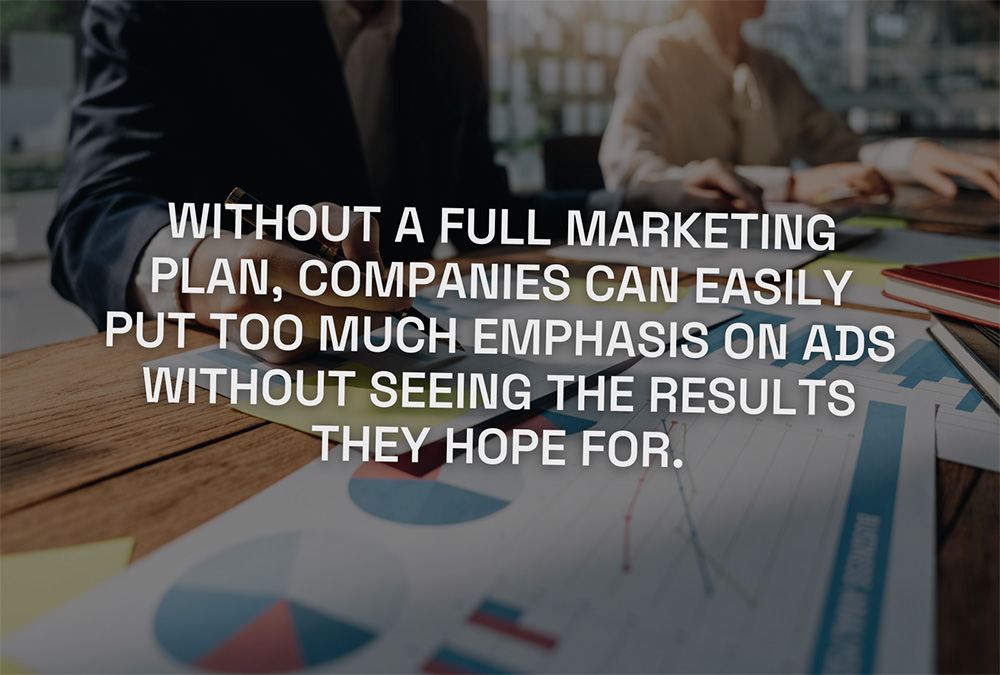
Many businesses rush into advertising campaigns, thinking they can quickly fix their marketing challenges. However, a good marketing plan ties everything together, helping every part of your business work toward the same goals. Without a full plan, it’s easy for companies to put too much emphasis on ads without seeing the results they hope for.
For example, Dove initially relied on ads for brand visibility but shifted its focus to a broader marketing strategy with the “Real Beauty” campaign. Instead of just selling personal care products, Dove’s brand message began promoting self-confidence and inclusivity, resonating deeply with its target audience. This approach transformed Dove from a "soap" brand to a global symbol of beauty empowerment, showcasing how a strategic marketing shift can redefine a brand.
The Role of Branding
Strong and consistent branding is what differentiates your product, it makes your business recognizable and relatable. Your brand identity is more than just a tagline and a logo; it's what you stand for and hope to instil in your customers' minds. With branding as a foundation, advertising becomes an extension of your identity rather than just a sales tactic.
Defining the Target Audience
Knowing who you’re speaking to is critical for both marketing and advertising success. Imagine trying to advertise a high-end skincare line without knowing if your audience values organic ingredients, affordability, or luxury branding. When businesses define their target audience, they can tailor their messaging and select the right channels to reach the people who are most likely to buy.
Market research is another important component of a marketing plan, that assists organizations to have a deeper insight into their target audience, allowing you to strategize and implement advertisements sensibly. Regardless if it’s a social media outlet, email, or magazine, understanding the audience is key in every communication.
Differences in Scope and Functionality
Think of marketing as the big picture, encompassing a whole range of activities from product development and pricing strategies to distribution and promotion. Advertising on the other hand is a tactical part of promotion, focused specifically on messaging and visibility.
This becomes very critical to understand, as a business is not about advertising, it is about marketing, which advertising is part of, ensuring that the advertising is relevant to the business target and goal and worthwhile to the audience.
Metrics and Measurement
In order to drive results, marketing and advertising utilize different metrics. Usually, marketing is concerned with customer retention and purchasing power as indicators of performance. Advertising metrics on the other hand will focus on the results of specific campaigns, i.e. the rate of clicks obtained, number of consumers who made purchases, post an ad and return on ad spend. Both sets of metrics are equally required but are used for different objectives. Considering both sets of metrics allows for an analysis of pre-existing short-term campaign effects and the brand’s long-term effects.
Real-World Example: Transforming Apple’s Brand Identity
Early on, Apple’s marketing efforts focused heavily on advertising to differentiate its products but what really transformed Apple’s brand identity was the shift to a holistic marketing strategy, beginning with the “Think Different” campaign in 1997. The campaign connected Apple’s brand with a creative lifestyle, something their target audience valued. This didn’t just sell products; it built a community of customers who felt they belonged. Today, Apple’s marketing and branding are closely intertwined, giving them loyal fans instead of just customers.
In summary, many successful businesses involve multifaceted advertising strategies into their overall marketing plan. Especially global companies, where a marketing strategy and an advertising placement have to consider customers worldwide. Not to say that this strategy shouldn't also apply to all other levels of businesses, especially with the affordability of digital advertising through search engines and social media.
There are, however, situations where advertising is likely to be less valuable than marketing. In the case of brand-new companies or startups, the priority should always be developing a marketing plan. Spending too much on advertising at the beginning, without a marketing plan could result in disaster. By focusing your marketing plan on your customer's wants and needs will ensure any future marketing or advertising efforts will have a defined approach and a better chance of success.
Are you ready to see the impact of a marketing plan on your advertising efforts? Get in touch with us today and we can explore a marketing strategy that fits your business goals!

.svg)





Do you remember the last caption you read on Instagram last night? What was the last reel you watched on Facebook about? If you cannot answer one of these questions, you’re not alone. There's plenty of content online, from Google search results to social media posts and how-to videos and articles.

Start Growing Your Dental Practice with SEO
Take the first step toward transforming your marketing. Whether you’re looking to boost engagement, improve your online presence, or grow your business, our team at Vix Media Group is here to help.
Let’s craft a strategy tailored to your goals.