SEO vs Ads: Which Marketing Strategy Delivers the Best Results?
SEO (Search Engine Optimization) and paid ads are two of the most sought-after marketing strategies businesses resort to in hopes of driving traffic and improving lead generation. While both deliver increased growth for your business online, the type of traffic each offers varies drastically between the two and helps tackle completely different marketing objectives.

In order to determine which kind of strategy is best for you, it’s important to consider which type of traffic is going to be the most effective for your business. Whether you’re looking for long-term sustained organic growth, achievable with SEO, or the quicker, more costly, results realized with paid ads, each of these strategies come with their own distinct advantages and limitations. Sustainability, time to see results, cost, and scalability are just a few of the factors that need to be evaluated when making your choice—ultimately leaving the decision down to your business's unique needs.
SEO: A Long-Term Investment in Organic Growth
Simply put, the goal with SEO is to get your website ranking higher on search engines across the web, gaining more and more organic traffic over time. Although it takes time and effort to build the foundation for SEO success and create the content to sustain it, the advantages make the wait all worth the while. Overtime SEO will require less of an on-going, increasing marketing budget, but leans on a larger upfront commitment to website architecture, written content, and data analysis.
Reduced Customer Acquisition Costs (CAC)
Unlike paid ads, where you have to pay for each click, SEO helps in attracting warm leads who are already interested in what you have to offer, thus lowering the cost. Overtime, your website will grow as a driving force in your niche, giving you the upper hand when it comes to appearing in search results for your target demographic, who are already actively searching for your product or service.
Sustainable Traffic
If you do your SEO correctly, that traffic never stops flowing and doesn't require as much of an on-going investment as paid ads, which only works for as long as you are paying into it. As your website continues to rank for relevant keywords and valuable content, customers will start flocking to you naturally, rather than you hunting for them with paid ads.
Competitive Moat
A solid SEO strategy puts your business in an untouchable position. Your competitors can always copy your ads and target the same audiences, but they cannot duplicate the powerful SEO structure that would have taken you years to construct and the breadth of content that’s grown as an authority in the space for so long.
Paid Ads: Fast Results but at a Price
Paid ads come with a different overall goal all together. Attractive as they are, with the immediate visibility they provide and how fast you can drive visitors to your website with them, it does have a number of caveats. From continuous ad dollar investments to on going maintenance, paid ads should be looked at as more of a short-term solution or testing ground for what you should be targeting through your SEO.
Rising Customer Acquisition Costs (CAC)
While paid ads can pay off quickly to start out, leaning on them exclusively will generally result in higher CAC as the ad outreach becomes more cold. The longer you run your ads for, the more you are exhausting your audiences, meaning that you need to keep extending your targeting pool which can result in much higher costs overtime.
Ongoing Maintenance
Any good ad campaign needs to be optimize regularly. Yes, your SEO will also need continuous updates and changes based on what’s working, but with ads you need to constantly refresh your creatives and adjust targeting on a regular basis in order to keep performance at its best and leads flowing. When running ads you also need to understand the frequency at which you’re targeting audiences, the more times you need to show them your ads before you get a conversion, the more ads you need to create and test (which all costs more money) to get them interested.
Short-Term Strategy
Ads are the easy way to drive traffic in the short-term, but they aren't ideal for an on-going solution. The biggest issue of all is, once you stop paying, the traffic will also stop instantly. Whereas with SEO, a good strategy can sustain months of traffic without making any new changes or additional monetary investments.
SEO vs. Paid Ads: A Cost-Benefit Analysis
From a monetary standpoint, it is straightforward when comparing SEO vs. paid ads:
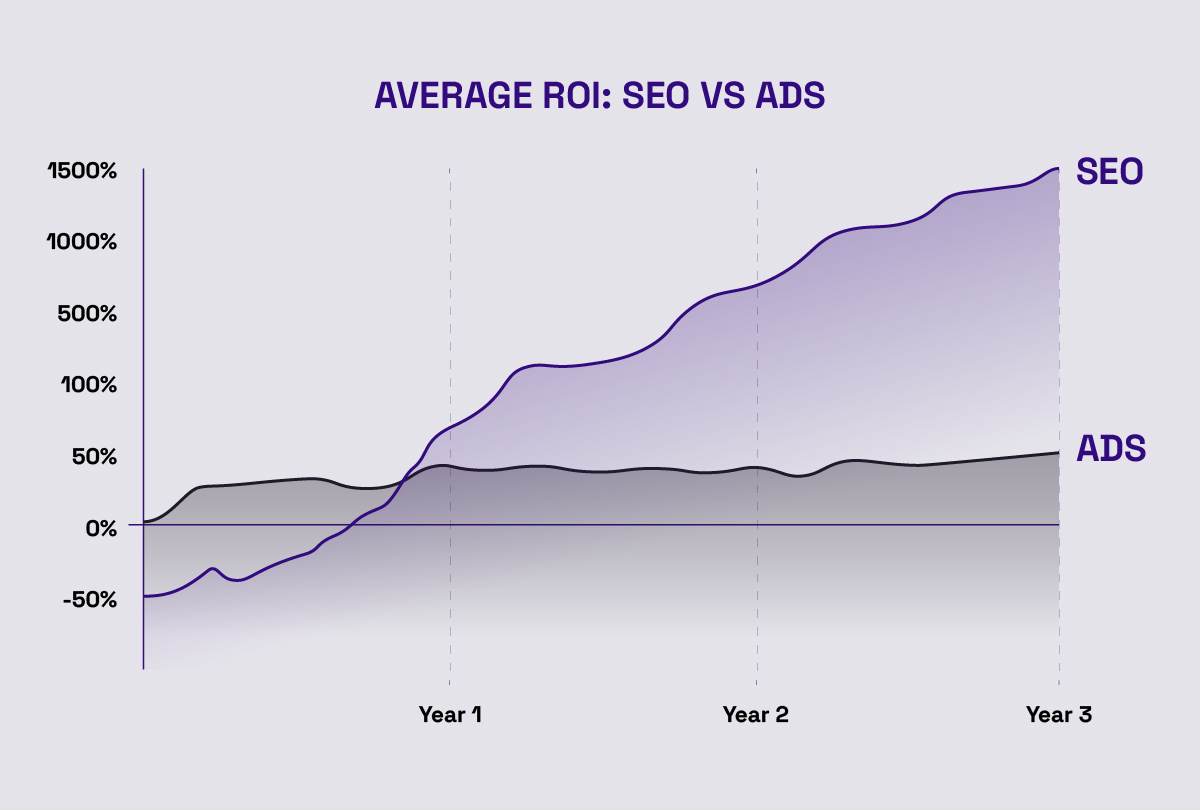
SEO Builds Over Time
Think of SEO as a long-term investment for your blog or website. The effort snowballs to regular, recyclable traffic at no additional costs.
Paid Ads Require Continuous Spend
Permanent results can't be achieved from short-term campaigns, paid ads can drive immediate returns but they demand a constant budget!
The Hybrid Approach
In most cases fusing both paid ads and SEO together to create a hybrid approach is what will drive the best overall results for any business. Combining both forces serve as a powerful tool to achieving success online.
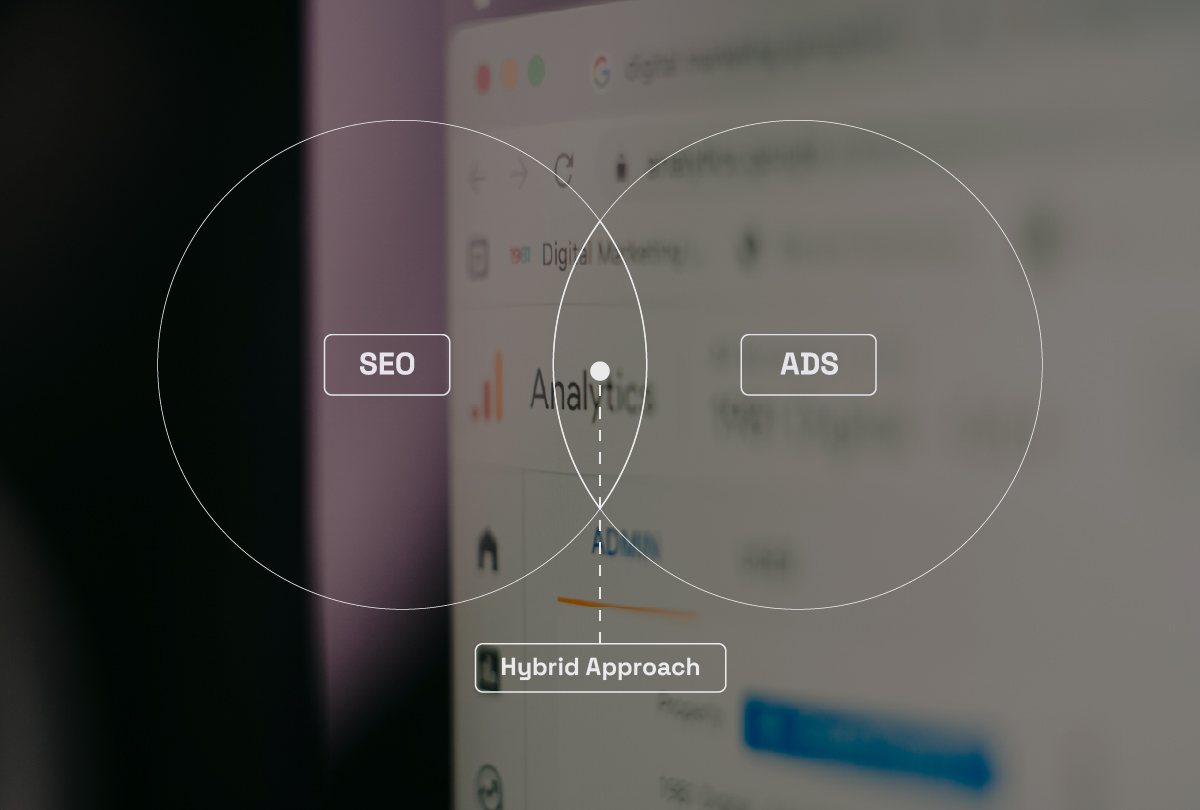
SEO as the Foundation
Use your SEO as a basis for gaining authority and organic positioning from the get-go. This translates into the most consistent source of traffic so overtime you can lower your PPC (pay-per-click) reliance without compromising site visitors. Furthermore, through your SEO you are able to gather free data on your target demographic, which you can later use in retargeting campaigns that you run with paid ads.
Targeted Paid Ads
Paid ads do well for quick two-week campaigns such as a new product launch or ten-day deals. They are also perfect for reaching the target audience faster and testing new keywords that can improve your SEO strategy in future.
Combining Forces
The two can work simultaneously to improve the other. Paid ads provide immediate traffic to high-converting landing pages while SEO takes root in the background building a stream of cost-effective leads. Imagine a company launching a new product. They can leverage paid ads to get the ball rolling, initially creating excitement and buzz around their content while fine-tuning it for SEO. This double-pronged approach ensures that you capture ongoing interest long after the launch excitement fades.
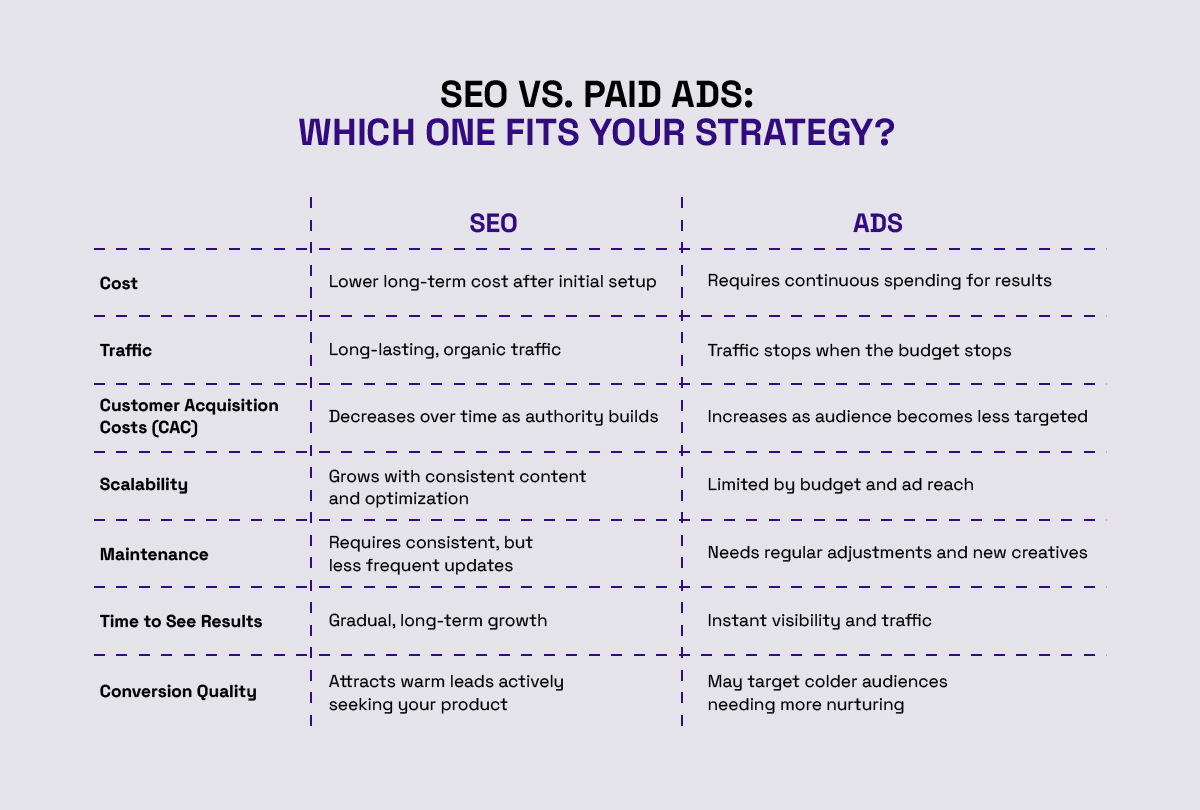
We understand that SEO vs Paid Ads is not a simple choice and you have to choose according to the goals and ambition of your business. While both strategies have their advantages, we’ve found that a hybrid approach is often the most effective way to balance immediate needs with long-term growth.
Are you ready to implement a winning digital marketing strategy? If you want to rank higher on search engines, optimize your ad campaigns to drive faster results, or build an unbeatable co-marketing plan get in touch.
Contact us today to discover how we can transform your digital presence and maximize your ROI!





Start Growing Your Dental Practice with SEO
Take the first step toward transforming your marketing. Whether you’re looking to boost engagement, improve your online presence, or grow your business, our team at Vix Media Group is here to help.
Let’s craft a strategy tailored to your goals.