The Power of Strategic Partnerships: Creating Win-Win Deals

In business, the right partnership has the potential to take you further, faster. Building a strategic partnership rooted in trust, transparency and a shared commitment to growth could be the key you need to unlock long-term success.

The Power of Strategic Partnerships: Creating Win-Win Deals
Published on
11/11/2024
Written by
Anthony Dutcher


Success often depends on collaboration, not competition—which is where a strategic partnership comes in. These partnerships involve companies working together, combining resources and combining each other's strengths to drive mutual growth. So, what does it take to create a successful and mutually beneficial partnership?

Building Trust Through Transparency

Strategic partnerships aren’t just about sharing resources though—they’re about building long-term, trustworthy relationships that benefit everyone involved. The best way to begin gaining trust in a partnership is through transparency.

__wf_reserved_inherit

By being transparent, such as setting mutually beneficial terms and expectations, you’ll avoid conflicts that could arise and break down trust, for example, if one partner begins to believe that the other is taking advantage or reaping more benefits. Being transparent about expectations and the terms of the agreement can nip this conflict in the bud.

Long-Term Goals

Agreeing on long-term goals will further your goal to a transparent and trustworthy partnership. Businesses may share common goals to begin with but it is important to have a strategy to make sure that those goals remain aligned; it’s best to allow for a contingency plan if goals happen to change.

It is also important to ensure that the culture of the partnership stays aligned. Being transparent when it comes to major growth, changes in CEO or even a shift of business values, is key to keeping a trusting culture.

Leveraging Strategic Partners for Growth

__wf_reserved_inherit

To maximize the benefits of the partnership it’s essential to leverage the strengths of each partner. When you align with a partner whose strengths match your own you’ll find that it opens doors to new markets and can accelerate your growth trajectory, especially when is open access to each other’s customer base. By joining resources and playing into strengths, you’ll be more likely to bring to the table (and customers) a unique product or service that otherwise could not be created.

When Performance-Based Deals Make Sense

Performance-based partnership are dependent on the performance of your website or product. For example, when the performance of your website or product improves, your partner also shares in that success. Which means that compensation is linked directly to results, or how a specific metric performs, making this a particularly appealing partnership for goal-driven projects. By setting up realistic ROI expectations and agreeing on clearly defined metrics for success it can result in a mutually beneficial partnership.

Performance-based partnerships usually work exceptionally well in digital marketing industries, where tangible results—such as lead generation or conversion rates—can be measured. While this might sound like a great partnership to dive into, it’s crucial to evaluate whether this structure aligns with your goals and resources. Both parties need to agree on terms and be realistic, especially when it comes to adjusting expectations as you gain further insights.

__wf_reserved_inherit

In conclusion, by carefully selecting partners that share the same commitment to transparency, it will lay the groundwork for trust and collaboration. This transparency will ensure that all parties are aware of each other’s goals, expectations and any challenges that may arise. This open flow of communication only strengthens the relationship and minimizes the risk of misunderstandings.

When you leverage each partner’s unique strengths, it accelerates growth and opens doors to new opportunities that might otherwise be impossible to achieve alone. So, whether it’s pooling resources, broadening customer bases or innovating together—partnerships provide a competitive edge.

Looking to find the right partner to help your business grow? Contact us to learn how we can create win-win solutions together!

Written by Anthony Dutcher
Founding Partner
Disclaimer: The information in these resources may lead to unprecedented online growth, massive engagement, and an overwhelming surge in your business success. Proceed with caution, as we cannot be held responsible for any sudden increase in sales, followers, or popularity. Read at your own risk of becoming wildly successful.

Ready to Turn Insights Into Action?

Reading about strategy is one thing — putting it into practice is where the growth happens. Partner with Vix Media Group to align your marketing with your business goals and start seeing measurable results.

Table of Contents

  1. Underlying Motivators
Related resources
A 90-day launch workbench reviews instrumentation and tracking exceptions without promising payback inside the horizon.
What a Realistic First 90-Day Marketing ROI Plan Should Measure Before It Promises Payback

Our first 90-day marketing plan prioritizes instrumentation, learning, and scaling decisions, with explicit costs and conversion delays—not a promise of payback by day 90.

A synthetic record reaches a won CRM stage while its source remains unresolved, separating outcome from attribution completeness.
Form Fill to Sale Attribution: How We Trace Every Step Without Pretending the Record Is Complete

We trace the evidence from form acceptance through CRM handoffs and sales outcomes, keeping missing identifiers, incomplete records, and reconciliation gaps visible.

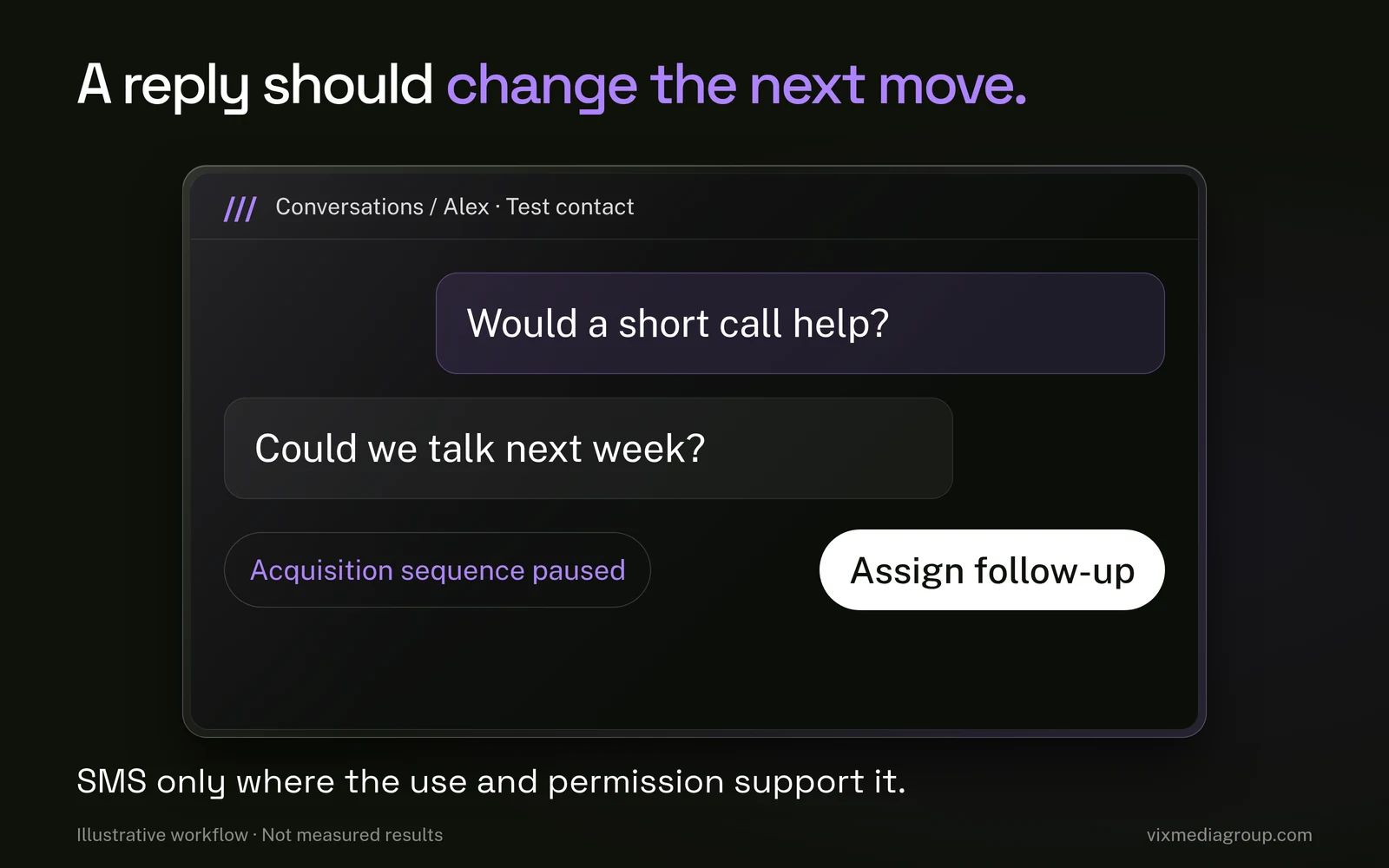
A fictional two-way nurture conversation pauses acquisition messaging after a reply and assigns human follow-up.
The Seven Follow-Up Systems We Use Before Scaling Paid Traffic for a New Brand

Our seven-part follow-up framework tests capture, ownership, nurture, suppression, and recovery before paid traffic scales, keeping lead activity distinct from sales outcomes.

An illustrative customer-list audience is held because source evidence is missing; activation is disabled.
Before We Used AI Audience Data, We Checked Rights, Sensitive Categories, and Platform Rules

Before activating AI audience data, we examine provenance, permitted use, sensitivity, and platform eligibility. Technical compatibility does not establish data rights.

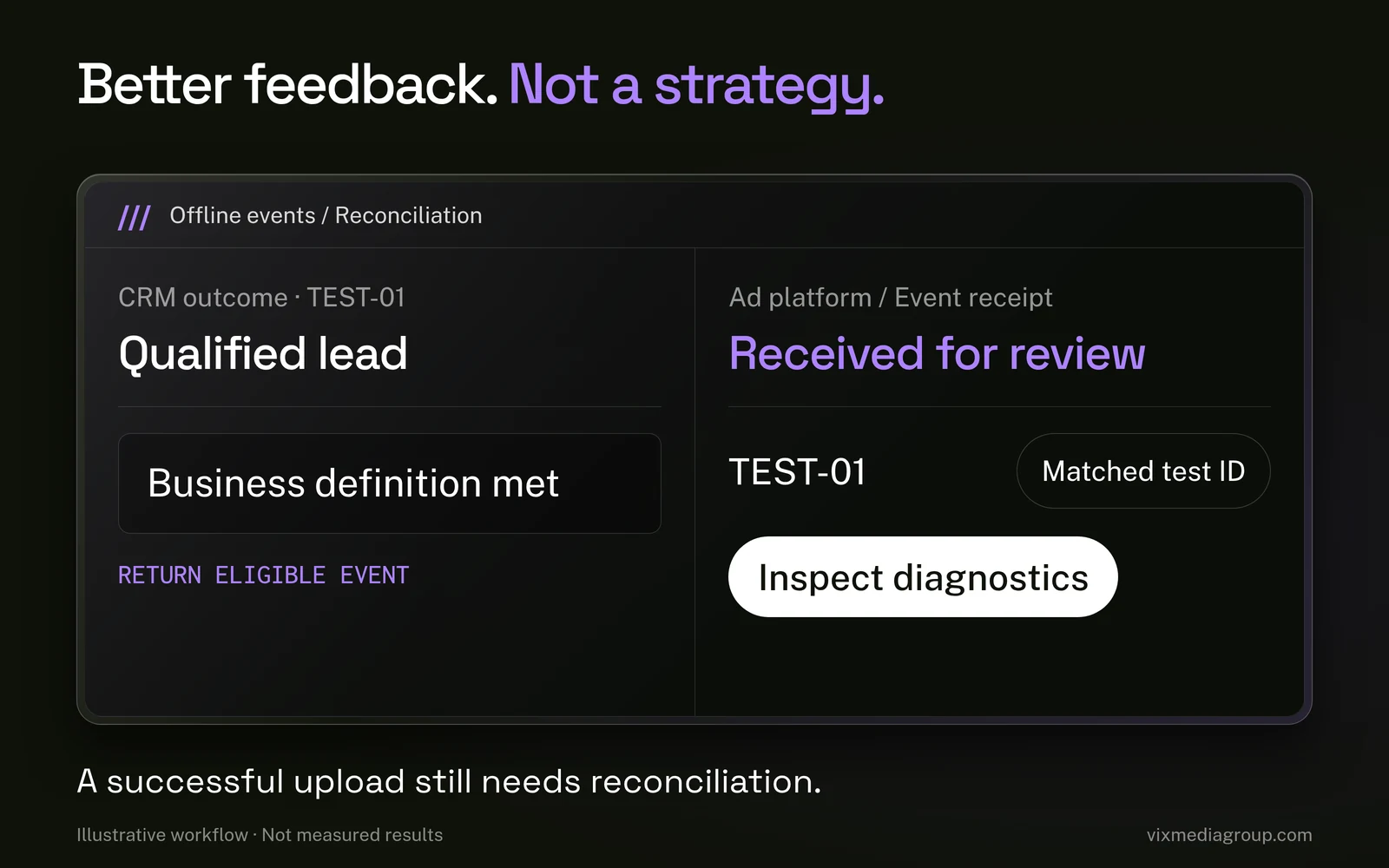
A synthetic qualified CRM event returns to an ad-platform receipt, where diagnostics still require reconciliation.
Offline Conversion Tracking Is Valuable. It Is Not an AI Advertising Strategy

Offline conversion tracking connects later CRM outcomes to advertising. It improves measurement and feedback without replacing decisions about the offer, market, or sales process.

An illustrative new campaign remains paused; enabling delivery is locked behind a separate human approval.
Agentic Ad Management Did Not Reduce Our Work. It Expanded What We Could Inspect

Our agentic ad workflow expands bounded inspection while keeping strategy and approval with people. Each authorized action is followed by a check of the resulting state.

A research workbench compares Viant open-internet advertising, Omneky creative and launch, and Albert campaign optimization as vendor claims.
Three Autonomous Ad Platforms, Three Operating Models: What AI Ad Management Actually Automates

We compared three autonomous ad platforms by operating model, separating vendor capabilities, advertiser authority, and native automation rather than assuming equal autonomy.

The planned GA4 ratio divides identifiable AI referral sessions by Organic Search sessions, not Search Console clicks.
AI Referral Traffic and Organic Search Need Different Measurement Rules

AI referrals and organic search follow different measurement rules. We explain why a credible comparison needs verified access, consistent scope, and clear limitations.

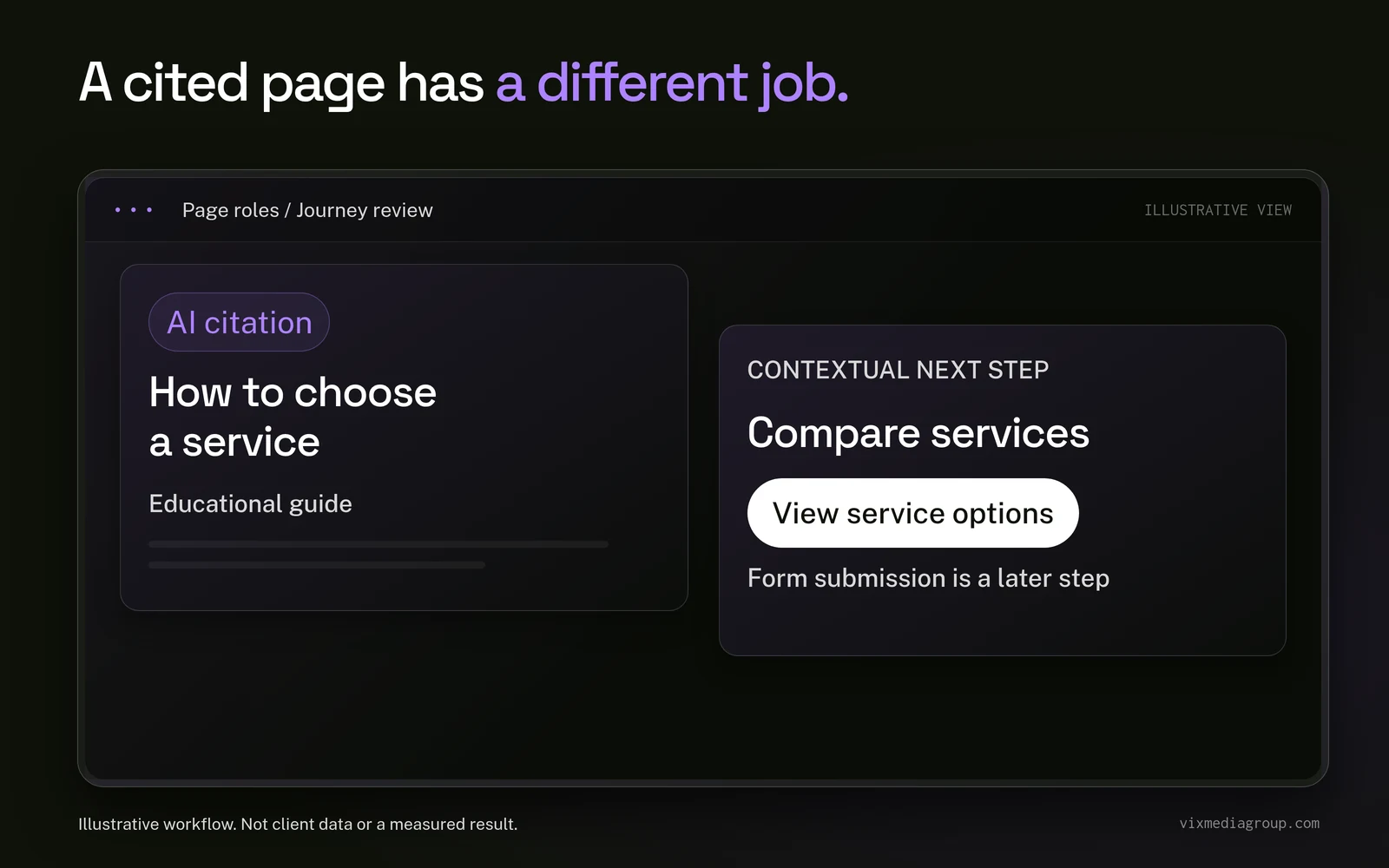
An illustrative AI-cited educational guide hands readers to a service comparison; a later form is a separate page role.
AI Citations and Customer Visits: How We Would Test Whether the Surfaced Page Matches the Visited Page

We outline a test comparing AI-surfaced pages with customer visits, explaining why an overlap percentage needs matched evidence rather than an assumed shared journey.

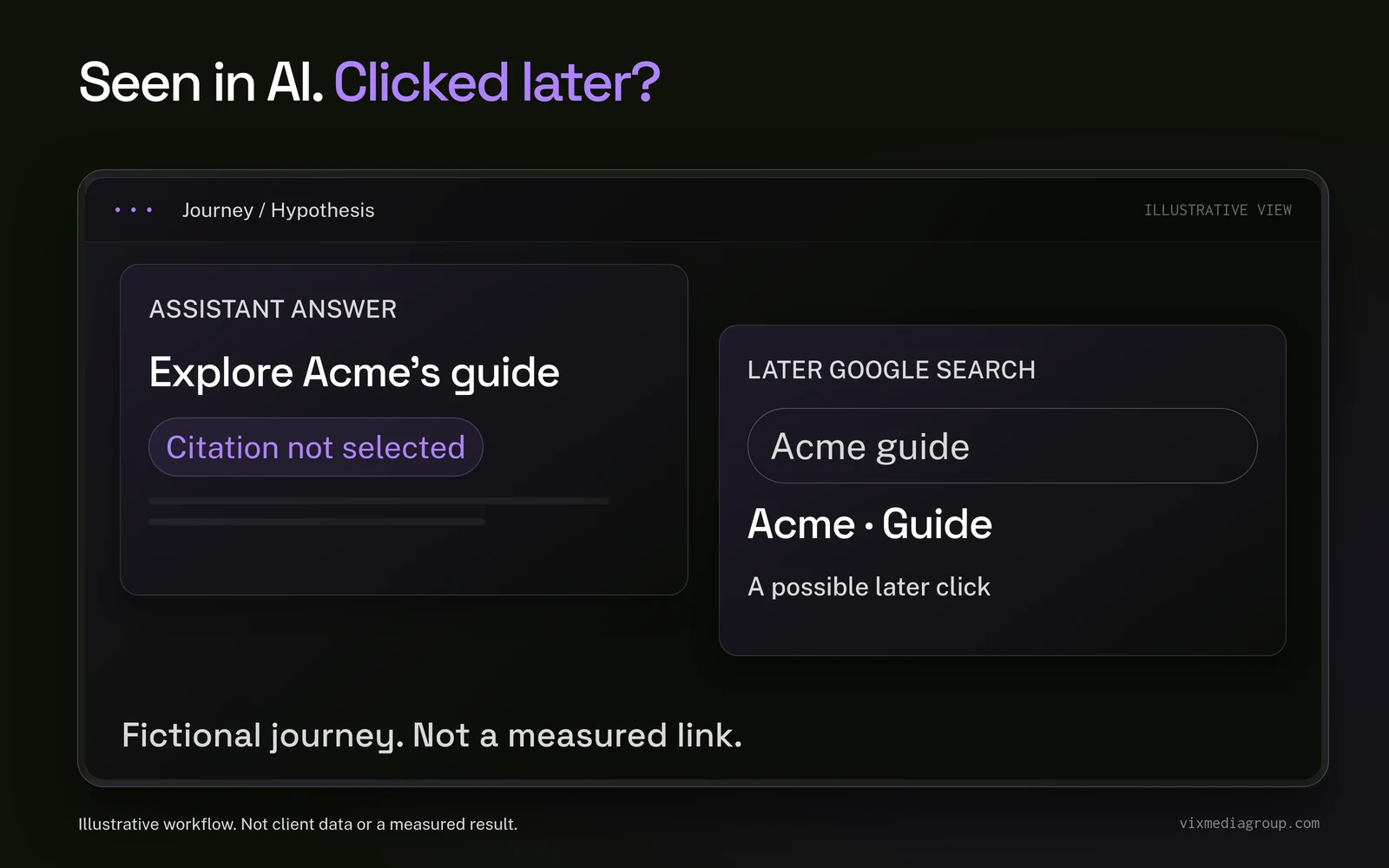
A fictional journey moves from an unselected AI citation to a later branded Google search; the causal link is unproven.
AI Search Measurement: How We Would Test Whether AI Visibility Preceded a Google Click

We outline how to test whether AI visibility precedes a Google click, while keeping observed search activity separate from unverified claims about earlier influence.

Start Growing Your Dental Practice with SEO

Take the first step toward transforming your marketing. Whether you’re looking to boost engagement, improve your online presence, or grow your business, our team at Vix Media Group is here to help.
Let’s craft a strategy tailored to your goals.