.svg)
AI Referral Traffic and Organic Search Need Different Measurement Rules
AI referrals and organic search follow different measurement rules. We explain why a credible comparison needs verified access, consistent scope, and clear limitations.

We refused to compare AI referrals with an incomplete denominator
The comparison sounded simple: divide identifiable AI referral sessions by Organic Search sessions across every client property. Our access audit showed why that ratio would be premature.
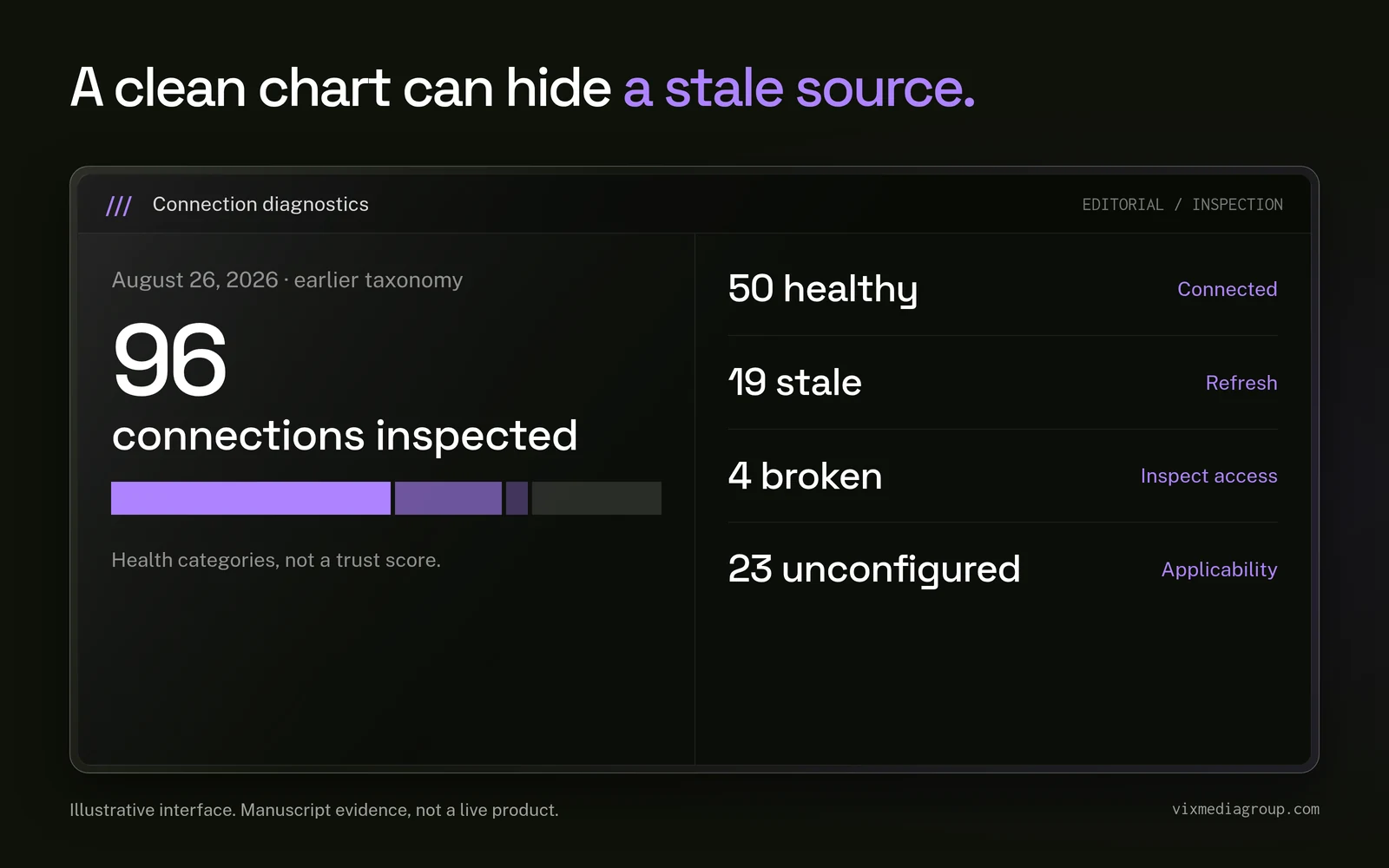
The Google OAuth principal available to Vix could see 95 GA4 properties. Only 22 GA4 identifiers were configured in Vix Command Center, which represented an onboarded reporting subset rather than the active-client master. Our search engine optimization services operate across production websites, not account-summary rows, so neither count could become the denominator without reconciliation.
We needed a complete acquisition pull and one frozen production-property manifest before we could say how large AI referral traffic was relative to Organic Search.
The first source sample did not prove zero AI traffic
We successfully ran the read-only production sample route across all 22 configured GA4 properties for a 90-day request. It returned three source and medium rows per property, or 66 rows in total, without a query failure.
Version 1.0.0 of our classifier found no clearly identifiable assistant hostname among those returned rows. That was not a zero-traffic result. A three-row sample is not a complete source report, and a non-observed source cannot supply a zero numerator.
The test proved that the route could query the configured properties and return inspectable source fields. It also proved that we needed a complete extraction before comparing channels.
Identifiable AI referral traffic is a lower bound
Google’s GA4 traffic-source documentation explains that document referrer can inform traffic-source dimensions when stronger campaign information is absent. It also says traffic can be processed as Direct when referral-source information is unavailable or configured to be ignored.
Our classifier therefore recognizes only verified assistant hosts such as ChatGPT, Perplexity, Claude, Gemini, Bard, and Meta AI. It does not reclassify every Google, Bing, or Direct session as AI traffic.
Ambiguous referrers stay ambiguous
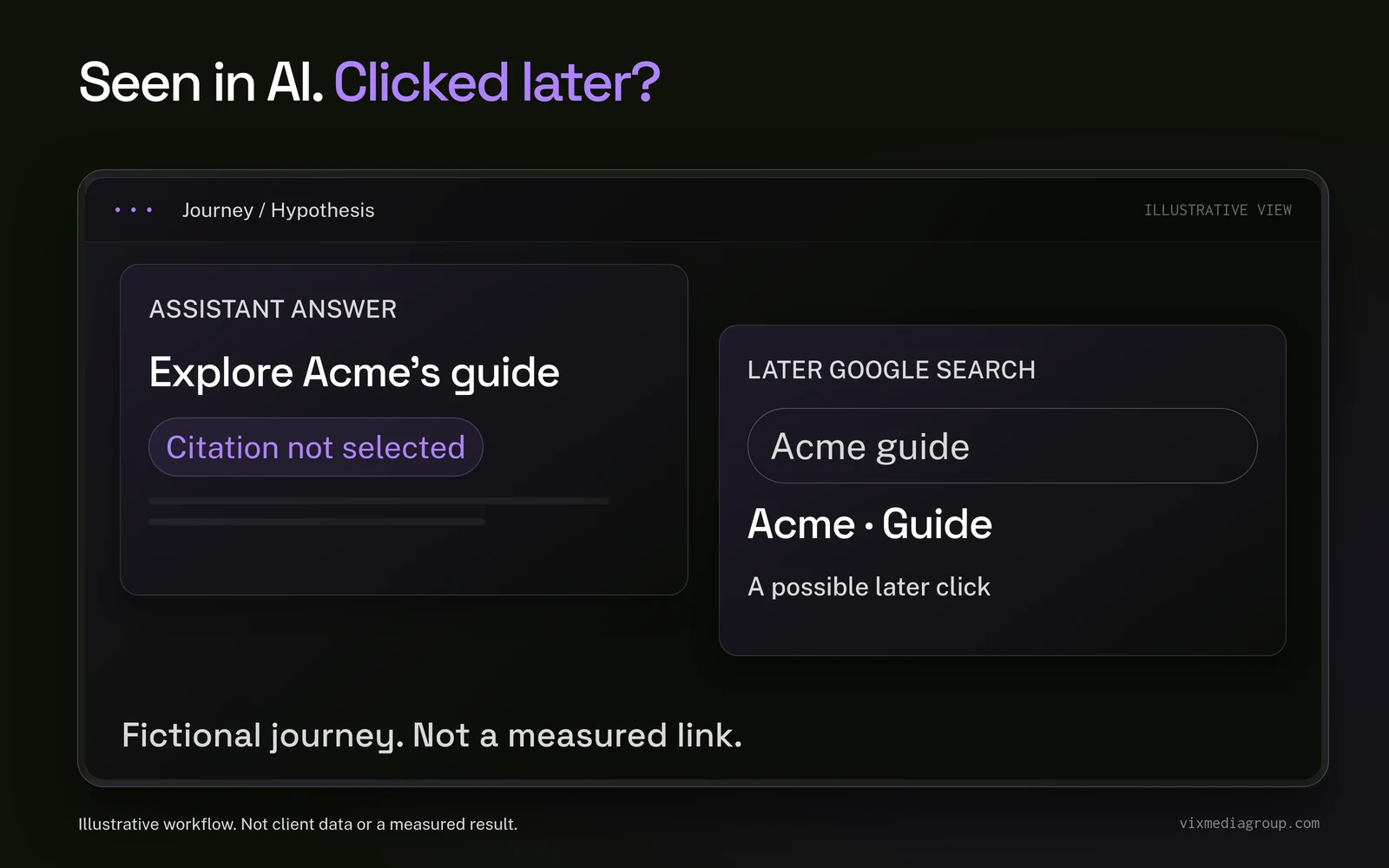
Some assistants may send a recognizable hostname. Other AI-influenced journeys can lose the referrer, use a conventional search surface, cross devices, or continue in a later session. Source-level GA4 data cannot reconstruct every one of those paths.
We preserve unknown and ambiguous values instead of forcing them into an AI bucket. The identifiable referral count is a measured floor, not an estimate of all AI-influenced demand.

Our AI referral access audit documents the property-discovery and classifier controls that have to precede any portfolio percentage.
GA4 Organic Search sessions are not Search Console clicks
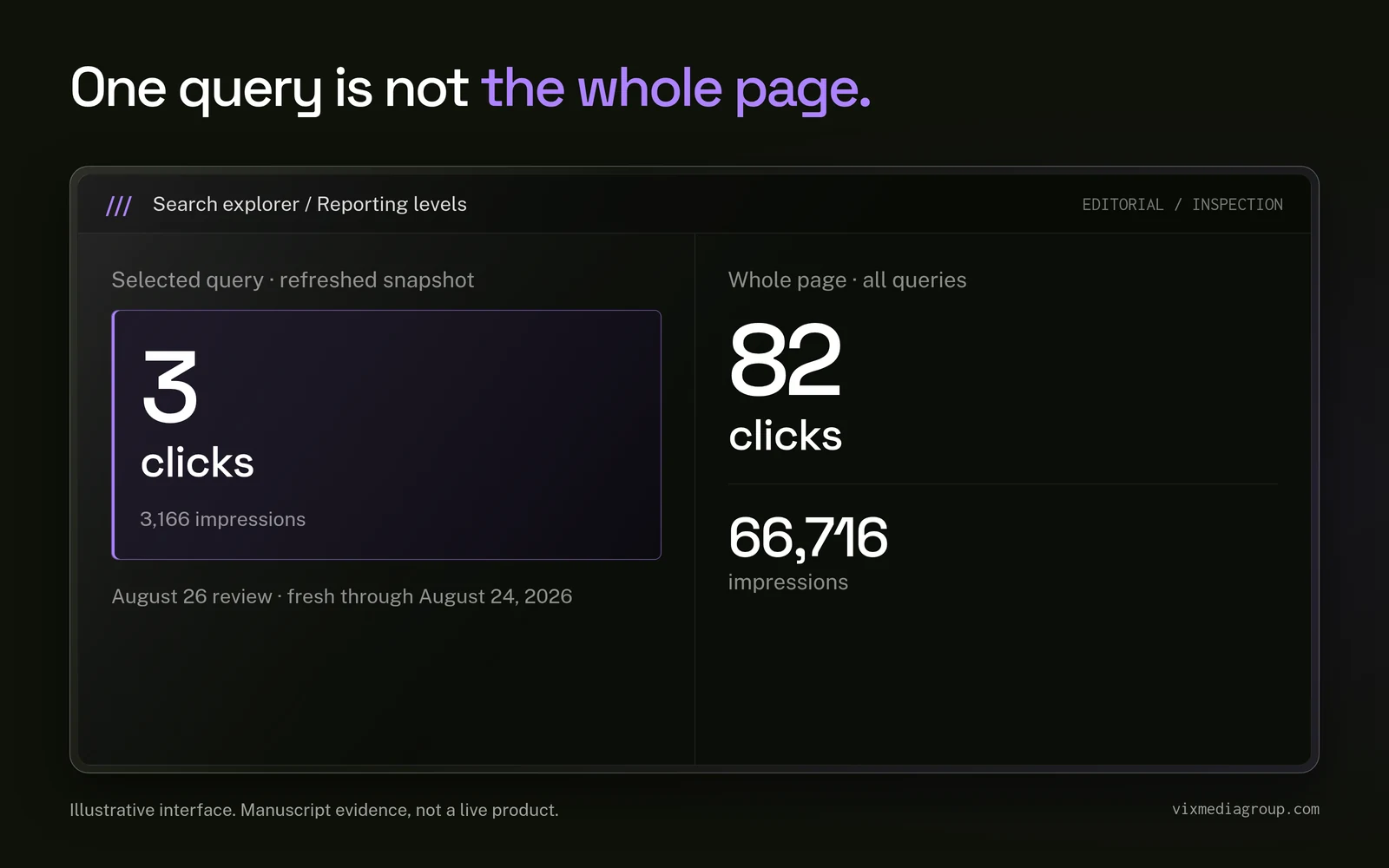
GA4 Organic Search sessions are analytics sessions assigned to a default channel group. Search Console clicks are actions recorded by Google Search. They can move together, but they are different units collected by different systems.
We will use GA4 Organic Search sessions as the primary channel comparison because the numerator is also a GA4 session measure. Search Console clicks can provide a secondary search-specific context layer, but they cannot replace the denominator or be added to it.
We maintain four separate outcome planes
Every report will preserve the distance between the following records:
- AI visibility, measured as platform-specific impressions or citations.
- Visits, measured as GA4 sessions or Search Console clicks.
- Conversions, measured as audited key events or qualified leads.
- Revenue, measured as verified transaction or CRM-linked value.
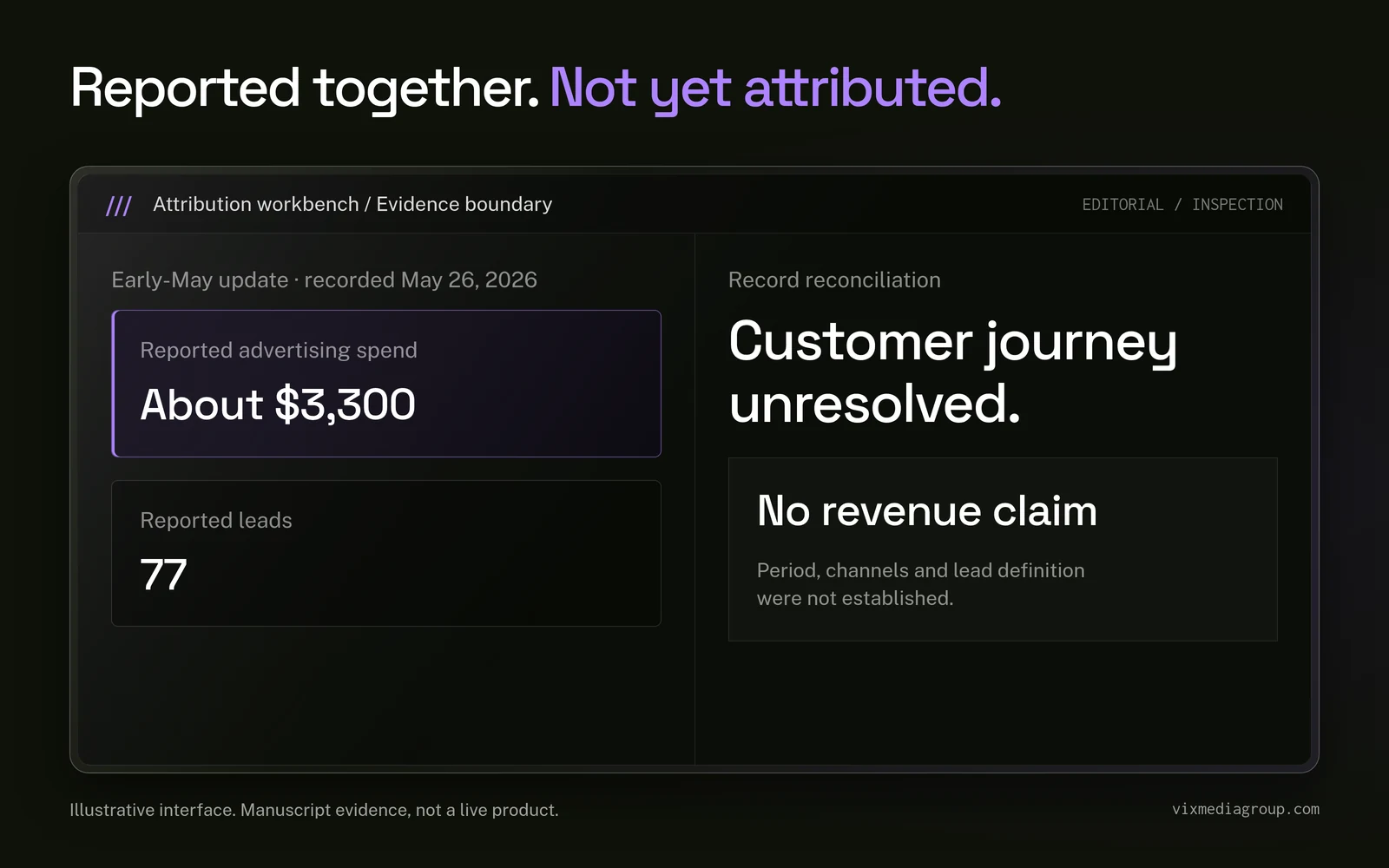
An identifiable referral session is not a lead, and neither is revenue. Citation data sits even earlier in the chain. A conversion can occur in a later session, and revenue can remain unavailable even when a key event fires.
Those boundaries prevent a channel ratio from being presented as a business-outcome ratio.
We designed the cohort around stable production properties
The complete comparison begins with direct GA4 estate discovery. For every visible property, we will list web streams, resolve the production hostname, and reconcile that hostname against the authoritative active-client roster.
Eligible properties need complete data for the analysis and comparison windows, stable channel configuration, nonzero Organic Search sessions, and no material tracking break. Internal sites, staging environments, applications, duplicate rollups, empty properties, and former clients outside the approved period will receive explicit exclusion reasons.
The manifest will freeze the denominator before analysis
Each row will preserve the GA4 identifier, normalized hostname, timezone, client status, launch date, tracking notes, key-event definitions, and inclusion decision. The manifest will be locked before any AI-to-organic ratio is calculated.
That sequencing matters. If we change the cohort after seeing the output, we can unintentionally select for a stronger or cleaner story.
We will compare property-level distributions before pooled totals
For each eligible property, we will pull daily session source and medium plus the default channel group for a fixed period. We will calculate:
- Identifiable AI referral sessions.
- GA4 Organic Search sessions.
- The AI-to-organic session ratio.
- Engagement-rate and engaged-session differences.
- New-user share by channel.
- Landing-page overlap.
- Change from a prespecified comparison period.
Property-level medians and distributions will appear before pooled totals. A single high-traffic website can dominate a pooled ratio even when the typical property shows a different pattern.
Conversion and revenue comparisons need narrower cohorts
Key events differ across properties. A form start, phone click, completed form, scheduled appointment, qualified lead, and purchase are not equivalent conversions.
We will include conversion-rate comparisons only where event definitions are documented and materially comparable. Revenue analysis will include only properties with consistent ecommerce value or verified CRM-linked value. Missing instrumentation will be reported as unavailable rather than estimated.
Our marketing analytics dashboard audit shows why a complete-looking interface cannot replace inspection of the data source, metric definition, and reporting boundary.
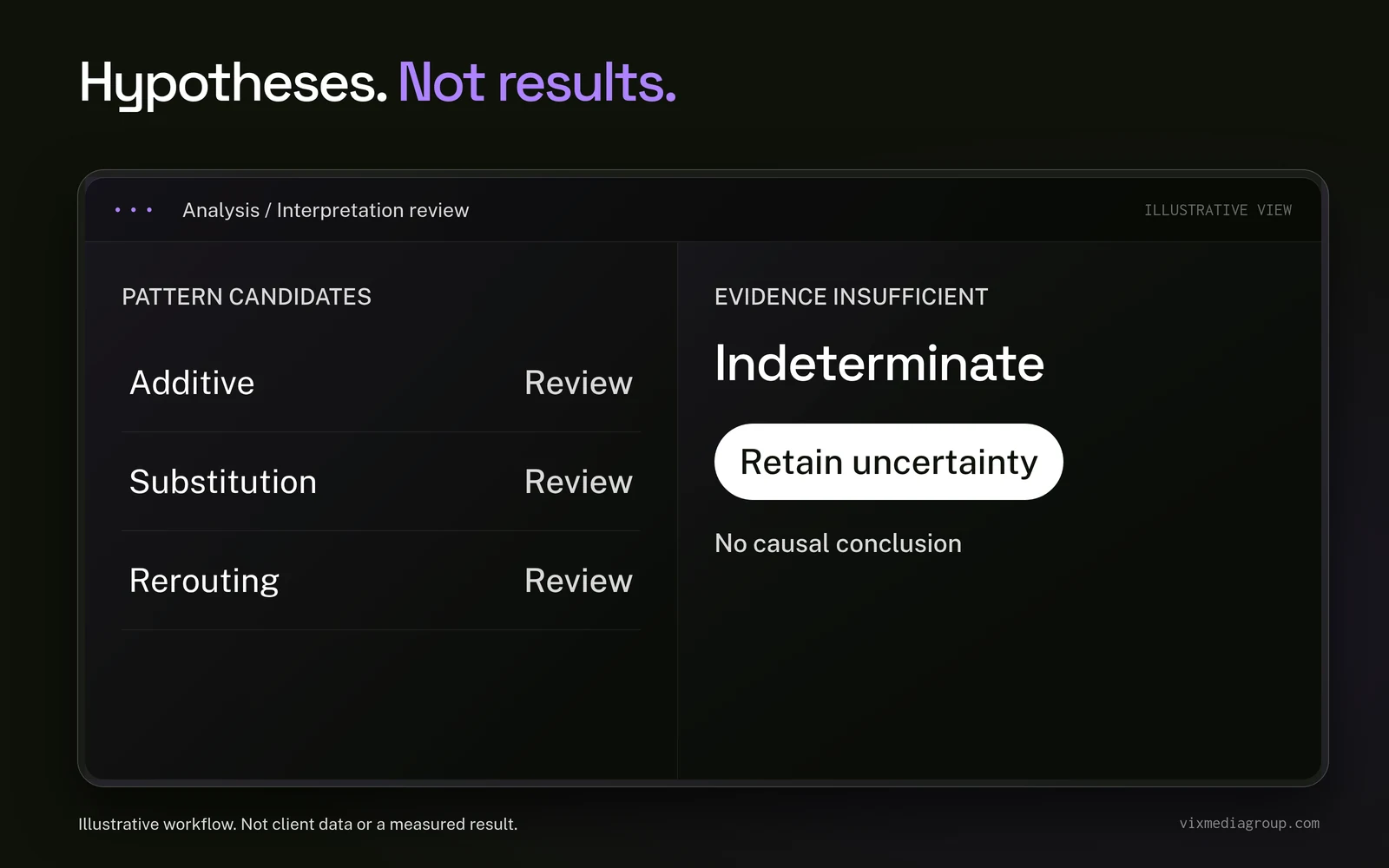
Additive, substitution, and rerouting are hypotheses
A rise in AI referrals alongside stable Organic Search sessions may look additive. A rise in AI referrals alongside a decline in Organic Search may look like substitution. A shift in sources that preserves similar landing behavior may look like rerouting.
Those labels describe observed patterns only after thresholds are defined. They do not prove that one channel caused movement in the other.
Launches, migrations, paid campaigns, public relations, seasonality, tracking changes, and competitive demand can affect both channels. Cross-device behavior and later sessions also sit outside a simple session comparison.
Direct traffic can be tested but not claimed as AI
We can place Direct sessions beside the channel trends as a demand-plane signal. We cannot count Direct as AI traffic because GA4 uses Direct whenever usable referral information is absent for several possible reasons.
The report will retain “indeterminate” as a valid conclusion. A measurement framework that forces every property into a confident story is less useful than one that exposes when the data cannot distinguish competing explanations.
Every published statistic will carry its lineage
A portfolio number will include its numerator, denominator, reporting period, source file, classifier version, and analysis code version. We will also preserve the leading observed source values and every source assigned to the AI class.
Any newly observed hostname will receive manual review before it enters the classifier. A taxonomy change will create a new version rather than silently modifying a prior result.
Our AI search measurement framework keeps native visibility, identifiable referrals, branded search, and Direct sessions in separate ledgers before testing any time relationship.
What we would do differently before the next channel benchmark
We would build the full property manifest and complete acquisition exports before drafting a comparative headline. The initial sample route was valuable for access verification, but it was not designed to supply a channel numerator.
Our revised workflow is:
- Enumerate every visible GA4 web property and stream.
- Match production hostnames to the authoritative active-client roster.
- Freeze eligibility and exclusion reasons before analysis.
- Pull complete daily source and channel records.
- Audit observed sources before locking the classifier.
- Compare site-level distributions before portfolio totals.
- Narrow conversion and revenue cohorts to consistent instrumentation.
- Publish ambiguous and unavailable results without estimation.
The same discipline applies after a visit. Our form fill to sale attribution framework keeps the web event, qualified lead, sales stage, and revenue record from becoming one unsupported conversion claim.
How Vix operationalizes AI referral measurement
Vix connects channel analysis to the systems that create and capture demand. Our attribution tracking work protects source definitions, and our CRM configuration work follows qualified records beyond the analytics session.
The value is not a larger AI number. It is a measurement system that can tell us which part of the journey was observed, which part remains ambiguous, and which business outcome was actually verified.
We have the direct access path required to run the complete comparison. We are delaying the portfolio ratio until production-host mapping, complete source pulls, and active-client reconciliation make the numerator and denominator defensible.
AI referrals and Organic Search can be compared. They just cannot be compared responsibly with a truncated source sample and an unfrozen property estate.

.svg)


Start Growing Your Dental Practice with SEO
Take the first step toward transforming your marketing. Whether you’re looking to boost engagement, improve your online presence, or grow your business, our team at Vix Media Group is here to help.
Let’s craft a strategy tailored to your goals.