.svg)
AI Search Measurement: How We Would Test Whether AI Visibility Preceded a Google Click
We outline how to test whether AI visibility precedes a Google click, while keeping observed search activity separate from unverified claims about earlier influence.
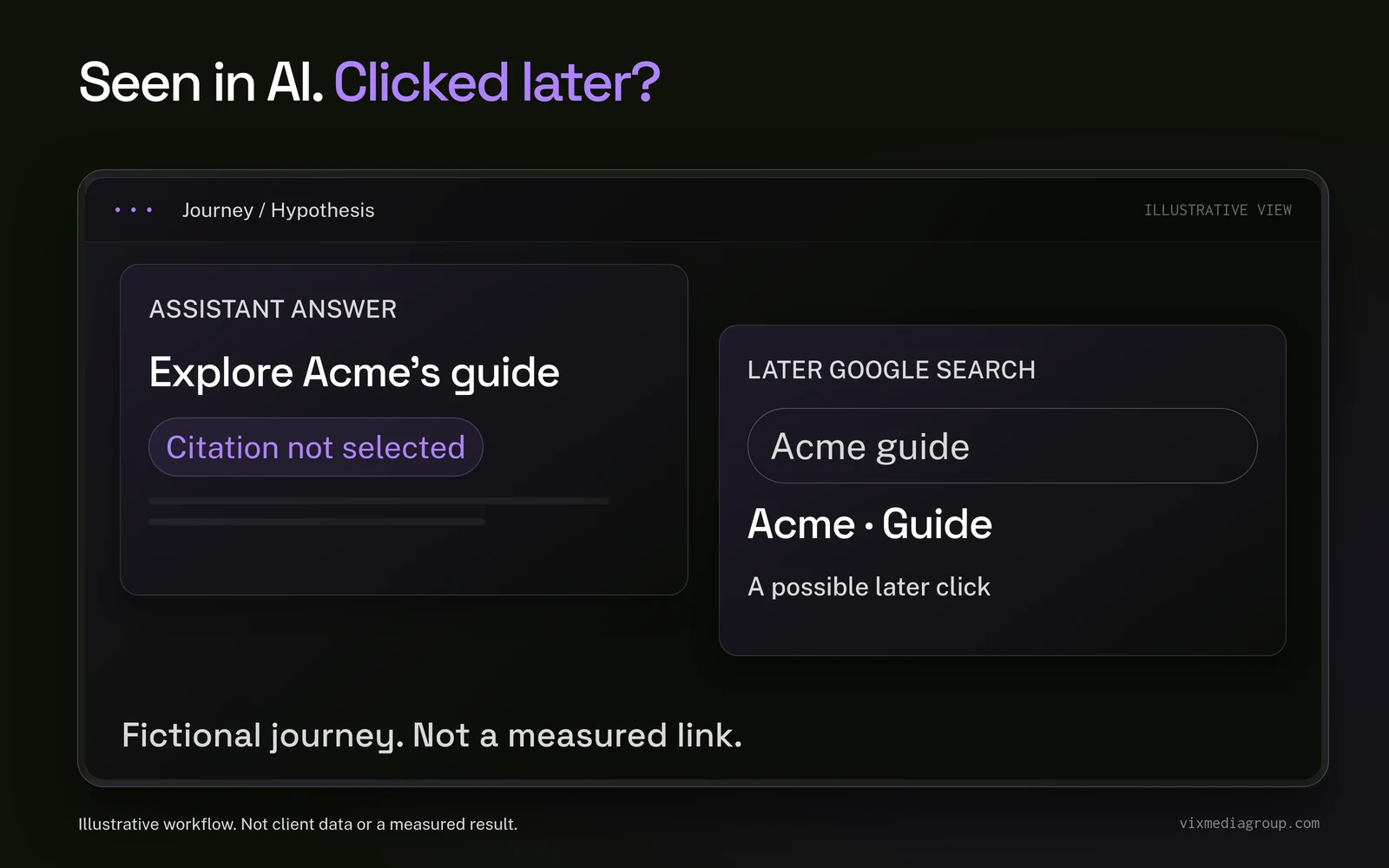
We treated AI search measurement as a hypothesis, not a result
Our AI search measurement question began with a journey that current reports make difficult to see. An AI system can surface a brand or page, a person can absorb the answer without selecting a citation, and that person can later search the brand on Google. The visible click belongs to Google even if the earlier AI exposure influenced the decision.
That sequence is plausible. We cannot claim it happened across the Vix portfolio without matched evidence. Our search engine optimization services may create the authority that search and AI systems surface, but visibility does not identify the next action or prove why it occurred.
We therefore kept the title as a question. The job was to design a study that could distinguish an AI impression from a later visit, lead, or revenue event without inventing the connection between them.
The obvious report was not available across the portfolio
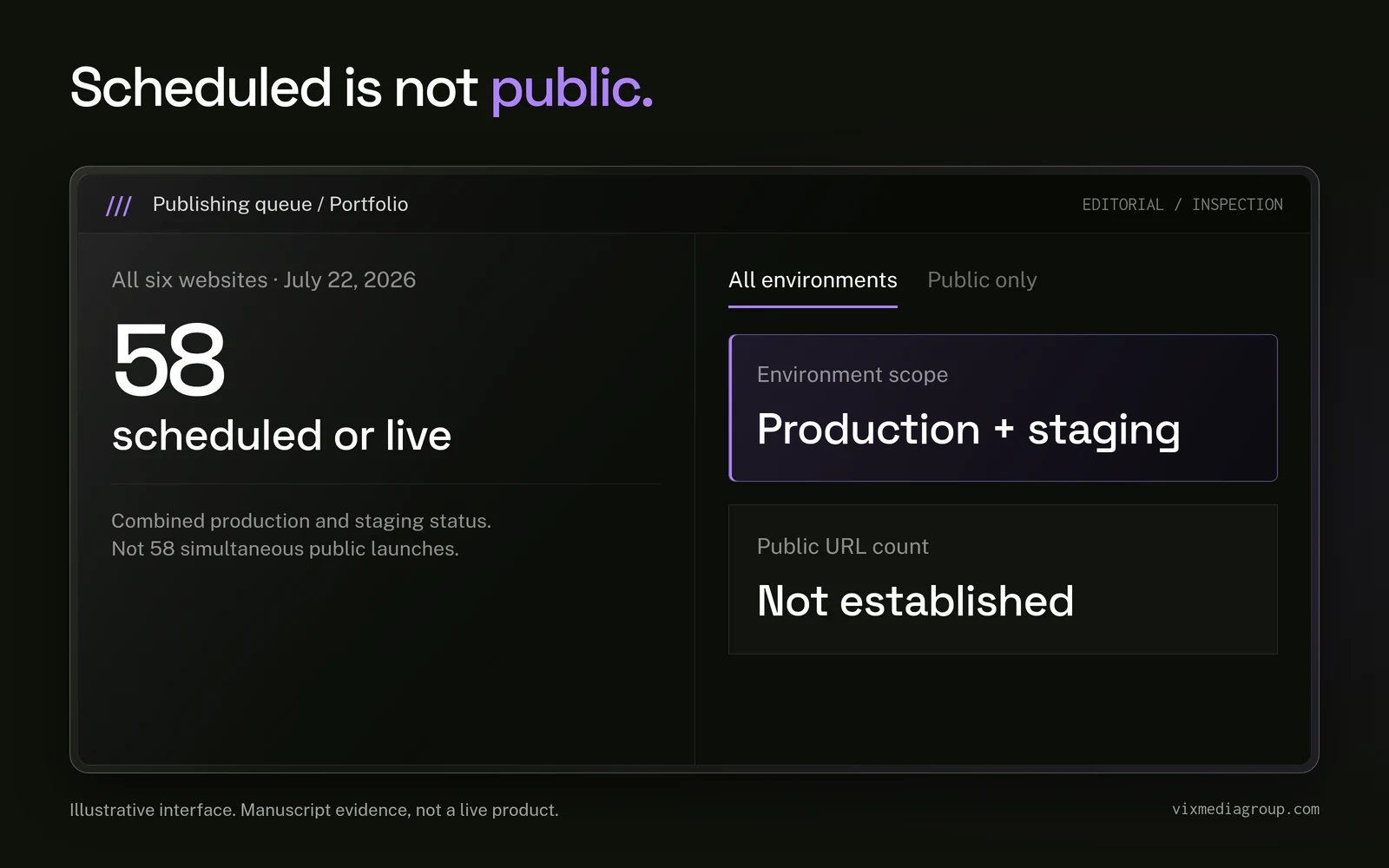
The Google OAuth principal available to Vix could see 60 Search Console properties and 95 GA4 properties during the access review. Those counts describe what the principal could see. They do not establish a matched group of active production websites, and they do not prove that every property had a native generative AI report.
Command Center represented a smaller configured subset. That subset was useful for operational reporting but could not define the research cohort because direct platform access reached beyond it.
We did not have portfolio-wide native AI exports
No portfolio-wide Google generative AI report exports or Bing AI Performance exports were available for this analysis. The current direct Search Console API documentation did not expose a dedicated generative AI report surface, and the current Vix Bing connector returned classic Webmaster data rather than AI Performance.
That access boundary prevented a result, but it clarified the collection plan. Google visibility requires the dedicated report export where the report exists. Bing visibility requires AI Performance collection where that dashboard exists. Neither source can be inferred from conventional search data.
Google and Bing measure different visibility events
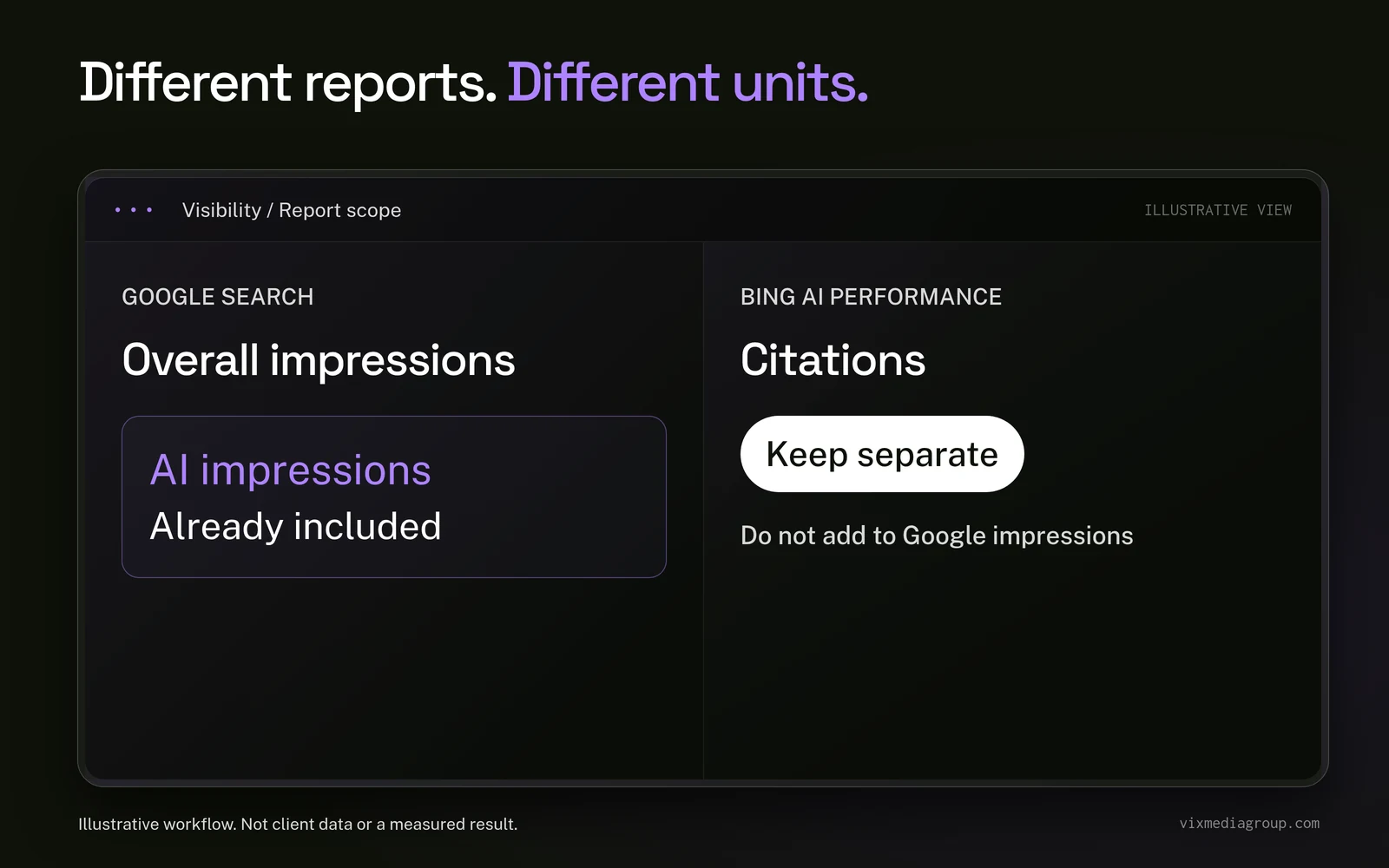
Google announced dedicated generative AI performance reports for a subset of websites in June 2026. Google’s generative AI performance announcement says the Search view covers AI Overviews and AI Mode while generative AI visibility remains included in overall Search performance.
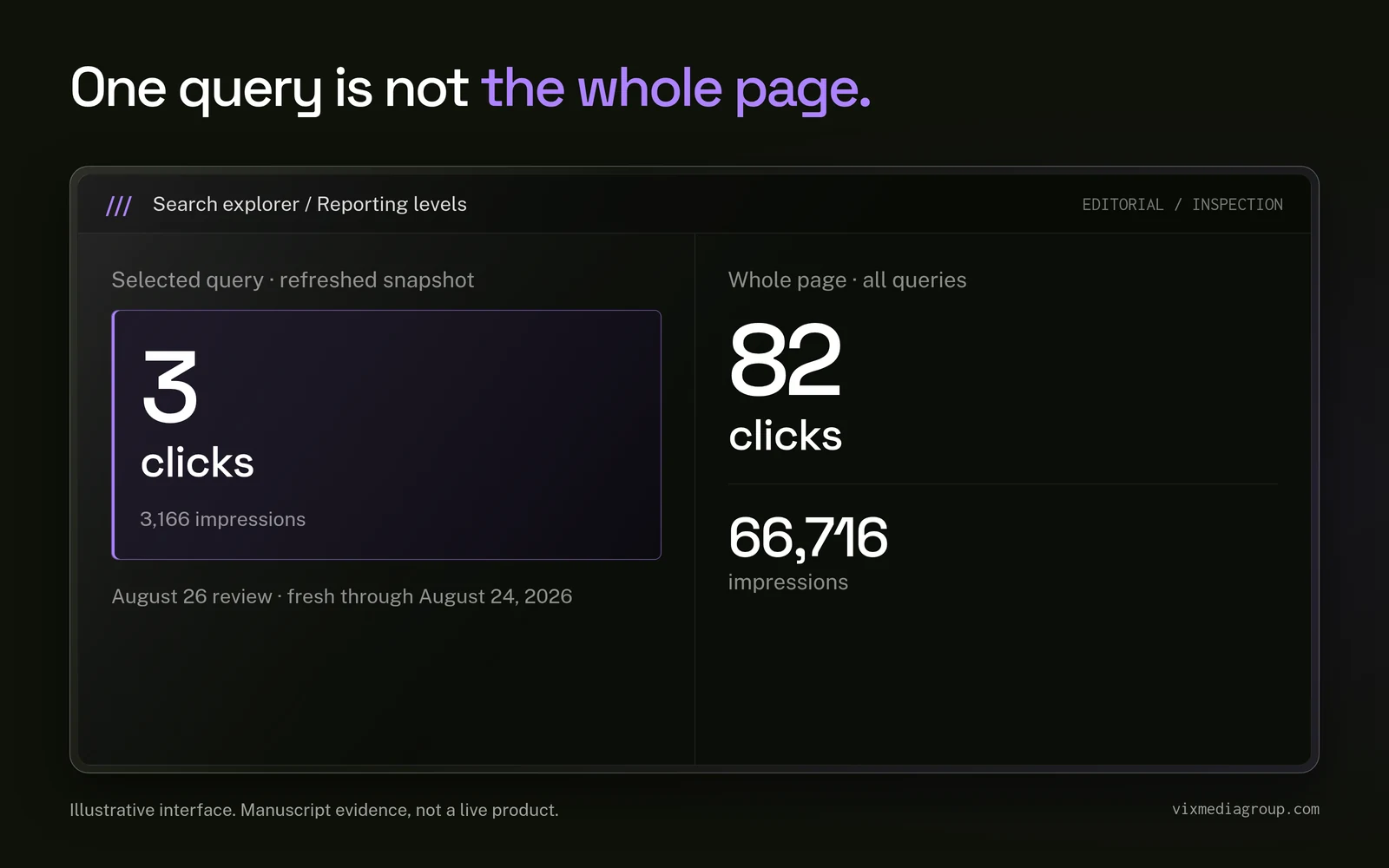
That inclusion creates an important accounting rule. We cannot add the dedicated generative AI report back to overall Search Console totals because doing so would double count visibility already present in the broader report.
Google’s generative AI report documentation describes impressions with page, country, date, and device dimensions. It also notes report and export limits that have to remain attached to the analysis.
Bing citations are not Google impressions
Microsoft describes Bing AI Performance in terms of citations, cited pages, sampled grounding queries, and trends. Its Bing AI Performance announcement also warns that citation counts do not indicate rank, placement, page authority, or a page’s role in an answer.
A Google impression and a Bing citation are not interchangeable units. We will analyze them in separate cohorts and separate charts. Adding them together would create a larger number that does not answer a coherent measurement question.
A citation is not a visit, and a visit is not a lead
We use four ledgers because AI search can influence more than one observable system:
- Visibility records platform-specific impressions or citations.
- Referral behavior records identifiable assistant sessions, search clicks, and landing pages.
- Conversion behavior records audited key events, qualified leads, or completed actions.
- Revenue records reconciled transaction value or documented downstream value.
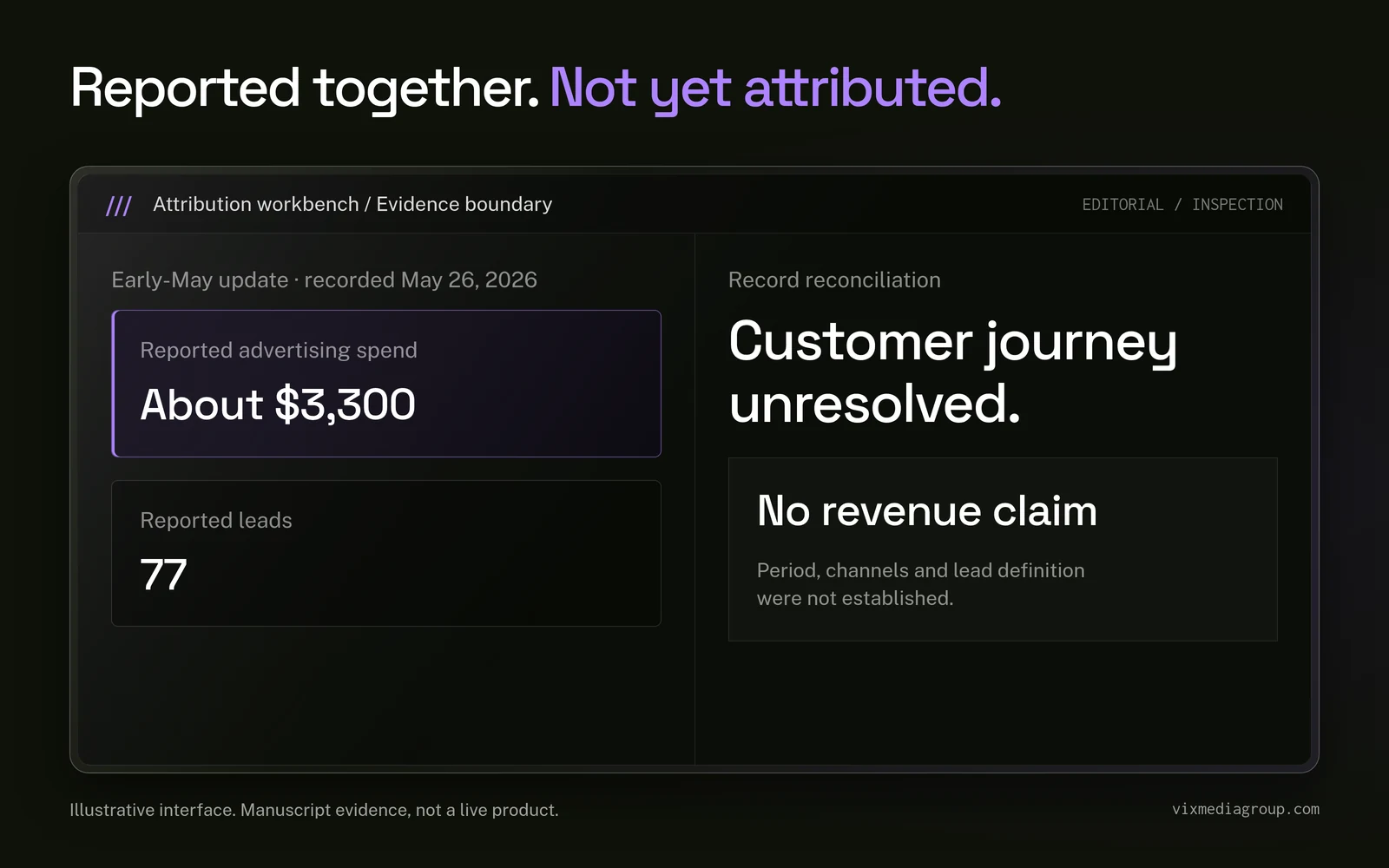
We keep the layers separate. A citation measures visibility, a visit measures arrival, a lead requires a recorded prospect, and revenue requires verified value. A later branded search click can follow an AI impression, but chronology does not establish causality.
Public relations, paid campaigns, offline activity, seasonality, existing brand demand, a website launch, and competitive change can move the same downstream measures. A useful study has to log those conditions before it interprets a pattern.
We designed the matched study around separate platform cohorts
The Google cohort will include only websites with a usable native generative AI report export, matched GA4 and Search Console properties, stable tracking, a frozen brand-query dictionary, and enough overlapping dates for analysis.
The Bing cohort will apply the same discipline but begin with Bing AI Performance coverage. It will not inherit eligibility from the classic Bing connector. Each website will receive a reason for inclusion or exclusion.
Our earlier AI referral access audit explains why property visibility and Command Center onboarding cannot substitute for a frozen production cohort.
We will freeze brand dictionaries before looking at change
Branded search classification can move a result if the dictionary changes after inspection. Before analysis, we will define brand names, common misspellings, approved product names, and exclusions for ambiguous terms. That dictionary will be versioned beside the query data.
For every eligible website, we will align daily records for:
- Google generative AI impressions or Bing citations.
- Search Console branded and nonbranded clicks and impressions.
- GA4 identifiable AI referral sessions.
- GA4 Organic Search and Direct sessions.
- Consistently configured key events.
- Verified revenue fields where instrumentation supports them.
The platform visibility units will remain separate even when downstream GA4 and Search Console measures share dates.
We will test timing without converting correlation into causation
A same-day comparison may miss a delayed decision. An open-ended search for any lag can manufacture a compelling relationship after the fact. We will therefore define same-week and limited lag windows before reviewing the results.
Each property will be standardized using indexed values or percentage change so a large website does not overwhelm a smaller one. Property-level patterns, medians, and distributions will appear beside pooled totals.
Confounders will be recorded before interpretation
The event log will include launches, migrations, tracking outages, paid campaigns, public relations activity, promotions, major content releases, and known seasonal effects. These records do not solve causal inference, but they stop us from presenting an obvious competing explanation as an AI effect.
We will use language such as “moved in the same week,” “followed by,” or “was correlated with” when the evidence supports it. We will not say that AI visibility caused branded search, Direct sessions, organic traffic, leads, or revenue without a design that can support that claim.
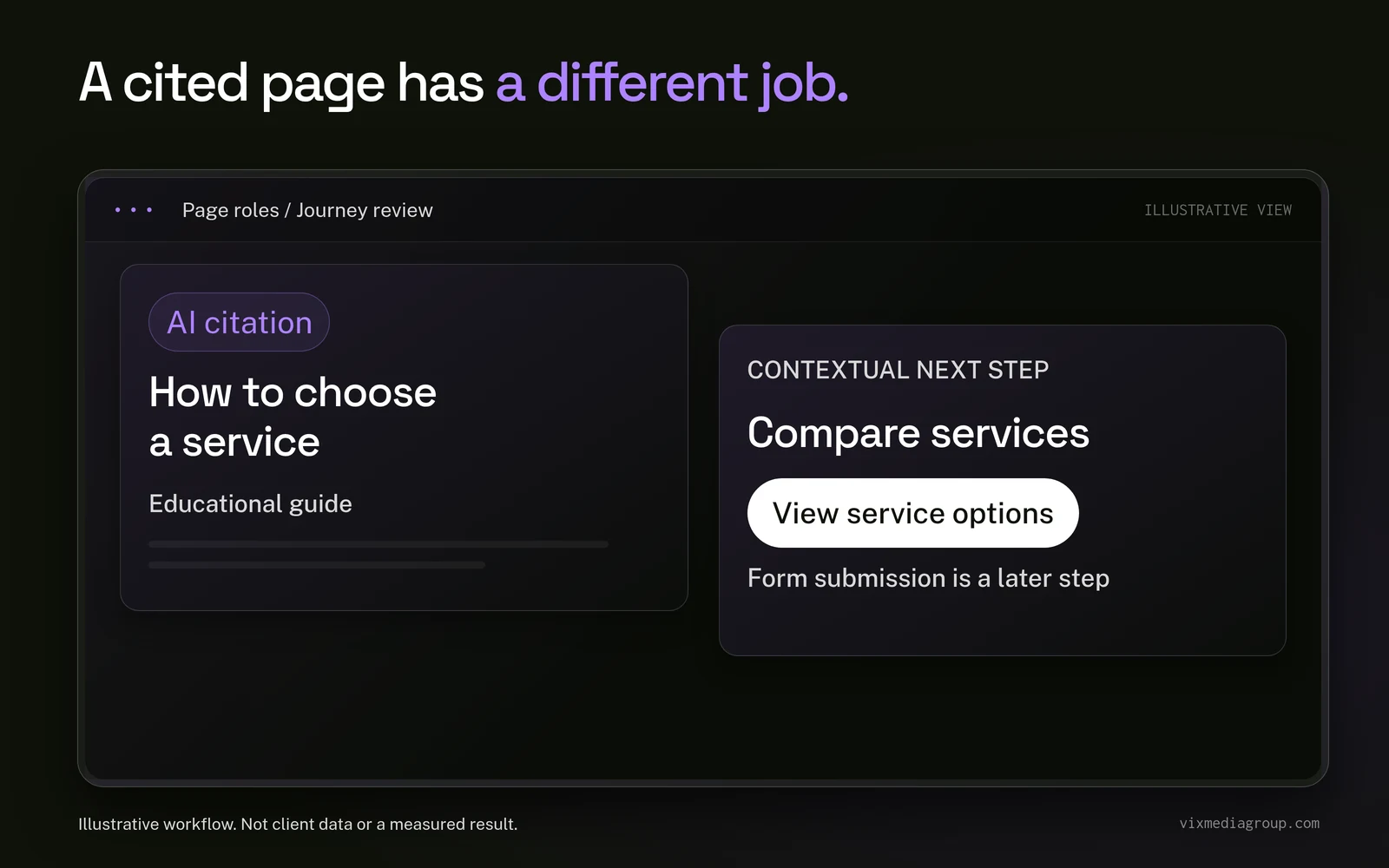
Page-level matching will be a separate analysis because the page surfaced by an AI system may not be the page a person later visits or uses to convert.
The output will make missing coverage visible
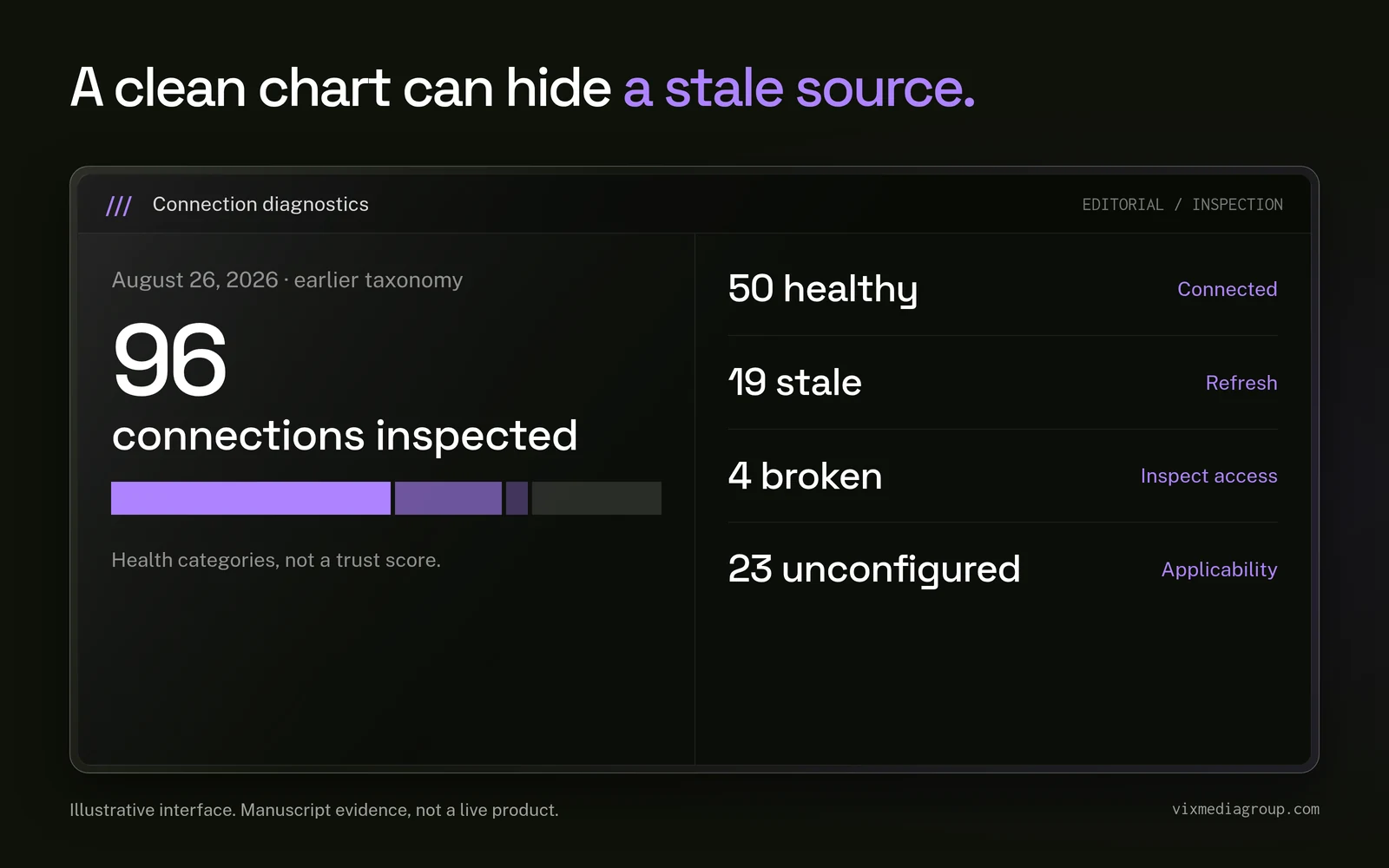
The final report will state the number of eligible websites for Google and Bing separately, the overlapping dates, the export limits, and every exclusion reason. A property without the native report will be labeled unavailable, not zero.
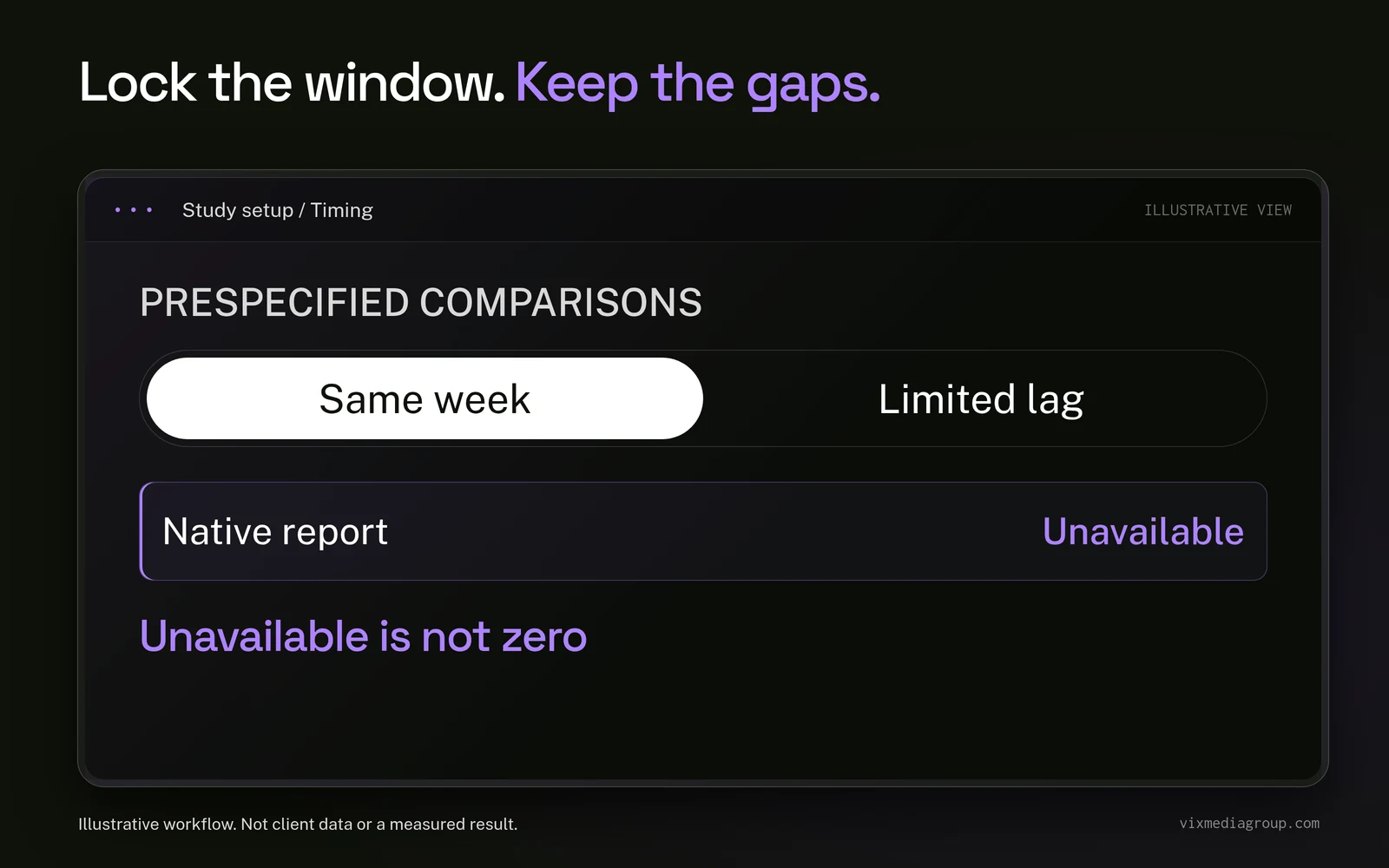
That distinction matters because a missing report can reflect rollout scope, insufficient visibility, permissions, or collection gaps. It does not prove the site had no AI exposure.
Any conversion comparison will require aligned event definitions. Any revenue comparison will require a verified ecommerce or CRM value. We will not estimate revenue from sessions or treat platform-attributed value as audited financial revenue.
What we would do differently before the next AI visibility study
We would collect native exports and the campaign event log continuously rather than reconstructing them when the editorial question arrives. The new reporting surfaces create a measurement opportunity, but only if their limits and dates are preserved at collection time.
Our revised operating sequence is:
- Discover the direct Google, Bing, GA4, and Search Console estate.
- Freeze platform-specific eligibility manifests.
- Export native AI reports without combining their units.
- Freeze brand dictionaries and downstream metric definitions.
- Record confounding events before reviewing correlations.
- Analyze property-level patterns before pooled totals.
- Publish missing coverage and limitations beside the findings.
That process gives us a report that can be refreshed when the platforms expand access or document new APIs.
How Vix connects AI visibility to measurable demand
Vix does not treat the native AI report as the end of the customer journey. Our public relations work builds credible third-party signals, while our attribution tracking work preserves the distinction between visibility, sessions, leads, and later outcomes.
The operating value comes from joining content, search, public relations, analytics, customer relationship management, and follow-up without pretending that one platform report proves the whole path.
We have not shown that AI search created an impression and Google received the resulting click. We have shown why that question needs native visibility exports, a matched cohort, frozen brand definitions, and a cautious interpretation of timing.
Until those inputs exist, the honest result is a research design, not a causality claim.

.svg)



Start Growing Your Dental Practice with SEO
Take the first step toward transforming your marketing. Whether you’re looking to boost engagement, improve your online presence, or grow your business, our team at Vix Media Group is here to help.
Let’s craft a strategy tailored to your goals.