.svg)
Agentic Ad Management Did Not Reduce Our Work. It Expanded What We Could Inspect
Our agentic ad workflow expands bounded inspection while keeping strategy and approval with people. Each authorized action is followed by a check of the resulting state.
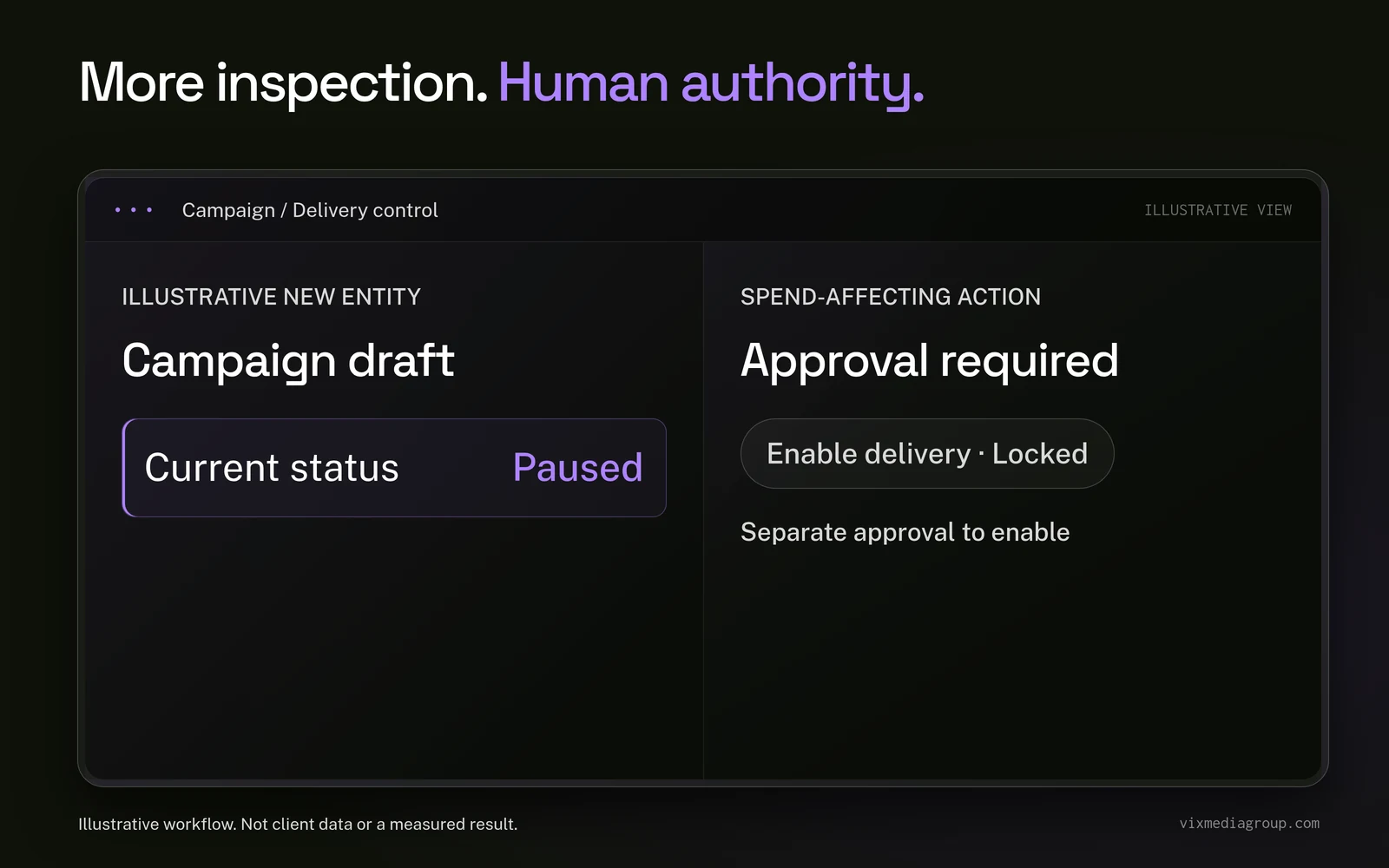
We designed agentic ad management around inspection, not headcount reduction
The obvious promise of agentic ad management is less work. Our operating experience points to a more useful outcome: more bounded questions can be inspected while strategy, approval, and accountability remain with our team.
That difference shaped the architecture. We did not connect an open-ended agent to a paid account and call the result autonomous management. Our pay-per-click advertising services still own the market, creative, measurement, and budget decisions around the tools.
The agentic layer reads native evidence, analyzes a defined question, proposes a bounded action, waits at an approval boundary, executes only what was approved, and verifies the resulting state. That sequence creates more inspectable work rather than making the work disappear.
The architecture separates six different responsibilities
A useful agentic workflow does not blur observation, interpretation, and spend-affecting action into one invisible step. We designed six distinct layers:
- Read native campaign configuration or performance evidence.
- Analyze a question with a defined account, entity, and date scope.
- Propose a bounded action in plain language.
- Require authorized approval for the exact write.
- Execute only the approved arguments.
- Read the affected entity again and verify its state.
Each layer produces a record the next reviewer can inspect. If the evidence is partial, the result stays partial. If the proposed arguments change, the earlier approval no longer authorizes the write.
This is agentic architecture, not platform automation
Google Smart Bidding can optimize bids at auction time. Performance Max can use native automation across bidding, budgets, audiences, creatives, and attribution. Those capabilities are substantial, but they are not the same as an external management layer that inspects evidence, proposes an account change, seeks approval, and verifies execution.
A conversion sync, scheduled report, recommendation engine, or automated bid strategy can be valuable without being agentic. We reserve the term for a system that can reason over a bounded task and move through explicit tool and control layers while preserving human authority.
Direct reads give us more than a dashboard summary
Vix’s documented Command Center contract includes direct Google Ads and Meta entity read paths. The Google read surface includes entity configuration, child entities, insights, and search terms. The Meta read surface includes entity and child-entity reads.
That capability does not prove that every client is mapped or every field is available in every deployment. Tool availability and client-account mapping have to be verified separately before an inspection begins.
Native configuration can answer questions an aggregate cannot
A dashboard can show that spend, clicks, conversions, or cost changed. A native entity read can show the campaign, ad group, ad, targeting, status, asset, or search-term context around that movement where the platform and deployed contract expose it.
The distinction matters because a performance change does not explain itself. The operator still has to compare configuration with the intended strategy, inspect competing causes, and decide whether any change is warranted.
Google’s Smart Bidding documentation reinforces the boundary. The platform performs auction-time optimization, but the advertiser still supplies conversion goals and business context. Google’s Performance Max documentation describes an even broader native automation surface, which gives our management layer more inputs and outputs to inspect.
Every inspection begins with a bounded question
We define the question before the agent reads data. A useful brief names the account scope, entity level, date window, comparison, evidence to preserve, and condition that requires escalation.
For example, an inspection can ask whether an entity’s current status and configuration match an approved plan, or whether a bounded search-term set contains an exception that needs operator review. It should not ask an agent to “optimize the account” without limits.
Facts and explanations remain separate
A configuration value is evidence. A search term is evidence. A performance change is evidence. The explanation for that change remains a hypothesis until the team tests alternatives.
The output needs to show:
- What the system successfully read.
- What fields were unavailable or incompatible.
- What changed during the comparison window.
- What interpretation the evidence supports.
- What competing explanations remain.
- What action, if any, is proposed.
This structure lets an operator reproduce the source read, reject a weak inference, or narrow the task without trusting a polished summary blindly.
Our guide to managing a PPC campaign describes the recurring monitoring and decision work that gives these bounded inspections their operating context.
The approval boundary is part of the product
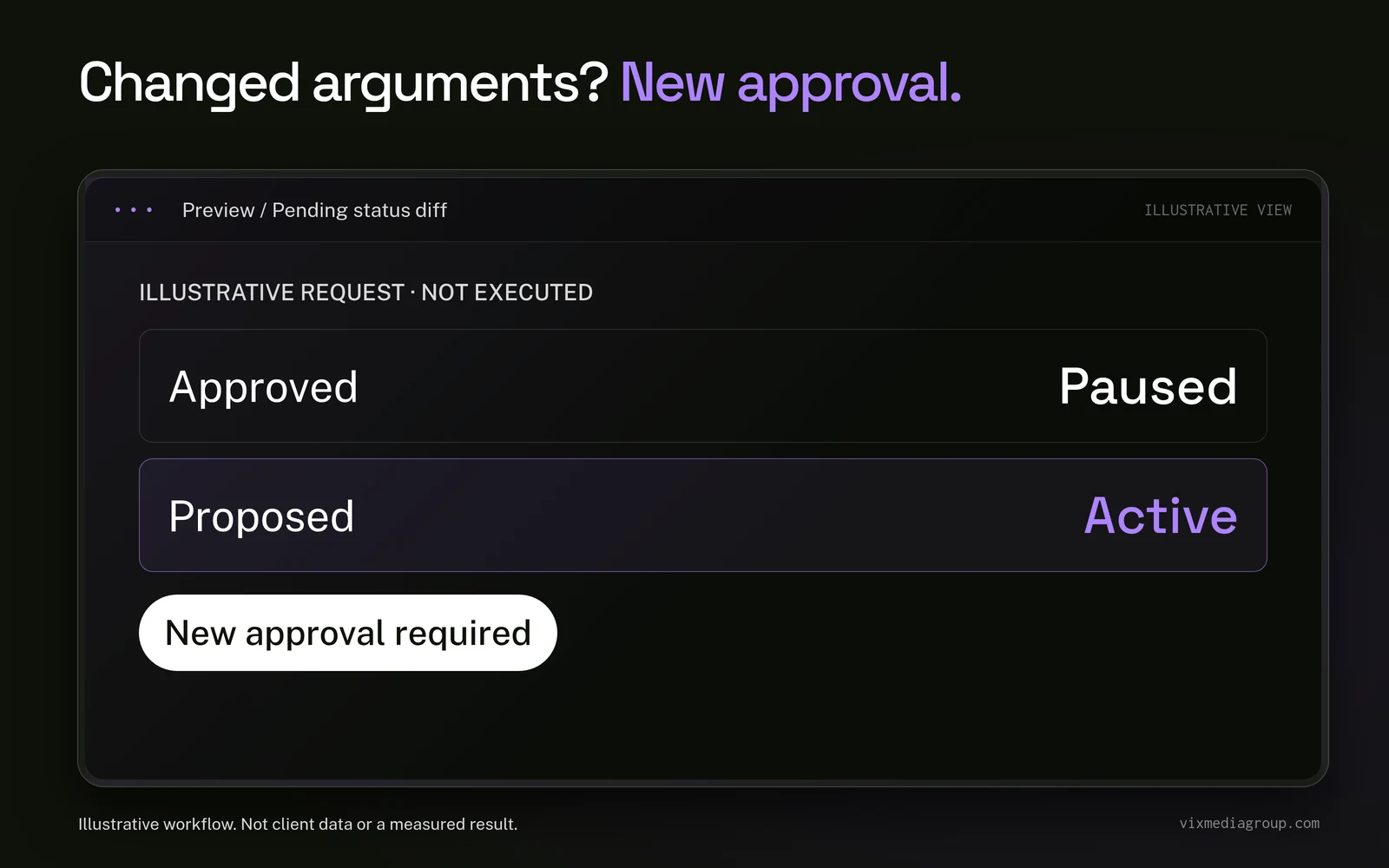
Our documented Google and Meta write contracts use preview and confirmation controls. A proposed write produces a plain-English diff and a confirmation token. Execution requires explicit approval for the same operation and arguments.
If the payload changes after a validation error, the corrected request needs a new preview and new approval. Similar intent does not make changed arguments equivalent.
New entities are forced paused
Creates are forced into a paused state. Enabling delivery is a separate spend-affecting action that requires its own preview and approval.
That control is deliberate. Creating an ad object and making it eligible to deliver are different decisions. A system should not use approval for one to imply approval for the other.
The same logic applies to budget, status, targeting, and creative changes. Approval has to match the exact object and action the system will execute.
Post-write verification closes the control loop
A successful write response is not the end of the task. The workflow reads the affected native entity again and verifies its identifier, status, assets, final URL, budget or targeting fields, and policy state where those fields are available.
Individual asset approval and the overall ad policy summary can update on different timelines. The verification record must distinguish those states instead of treating one response as final platform clearance.

This control loop is what turns tool use into managed execution:
- Preserve the approved diff.
- Execute the exact operation.
- Re-read the native object.
- Compare the observed state with the approval.
- Report mismatches or unavailable fields.
- Confirm that a new entity remains paused unless a separate enable action succeeded.
The agent can help carry that sequence. An authorized operator still owns the decision and the response to any exception.
More inspection capacity created more useful work
The agentic layer widened the number of bounded checks the team could frame, preserve, and revisit. We describe this as expanded inspection capacity, not a quantified productivity multiplier.
We have not published a before-and-after count of inspections, jobs, accounts, or hours. The architecture proves that more questions can be routed through a repeatable process. It does not prove a universal percentage increase or a reduction in labor.
The useful workload appears in four places
Agentic management creates more work in the parts of advertising that benefit from evidence and judgment:
- Inspecting narrower campaign and configuration questions.
- Comparing native state with intended strategy.
- Escalating exceptions for human review.
- Verifying approved changes after execution.
It also creates raw evidence, exception records, and audit artifacts that need storage and review. That is a feature when the alternative is an untraceable recommendation or an invisible account change.
Our autonomous ad platforms comparison explains why native automation, vendor orchestration, human approvals, and agentic execution need separate labels.
Capability does not prove universal deployment
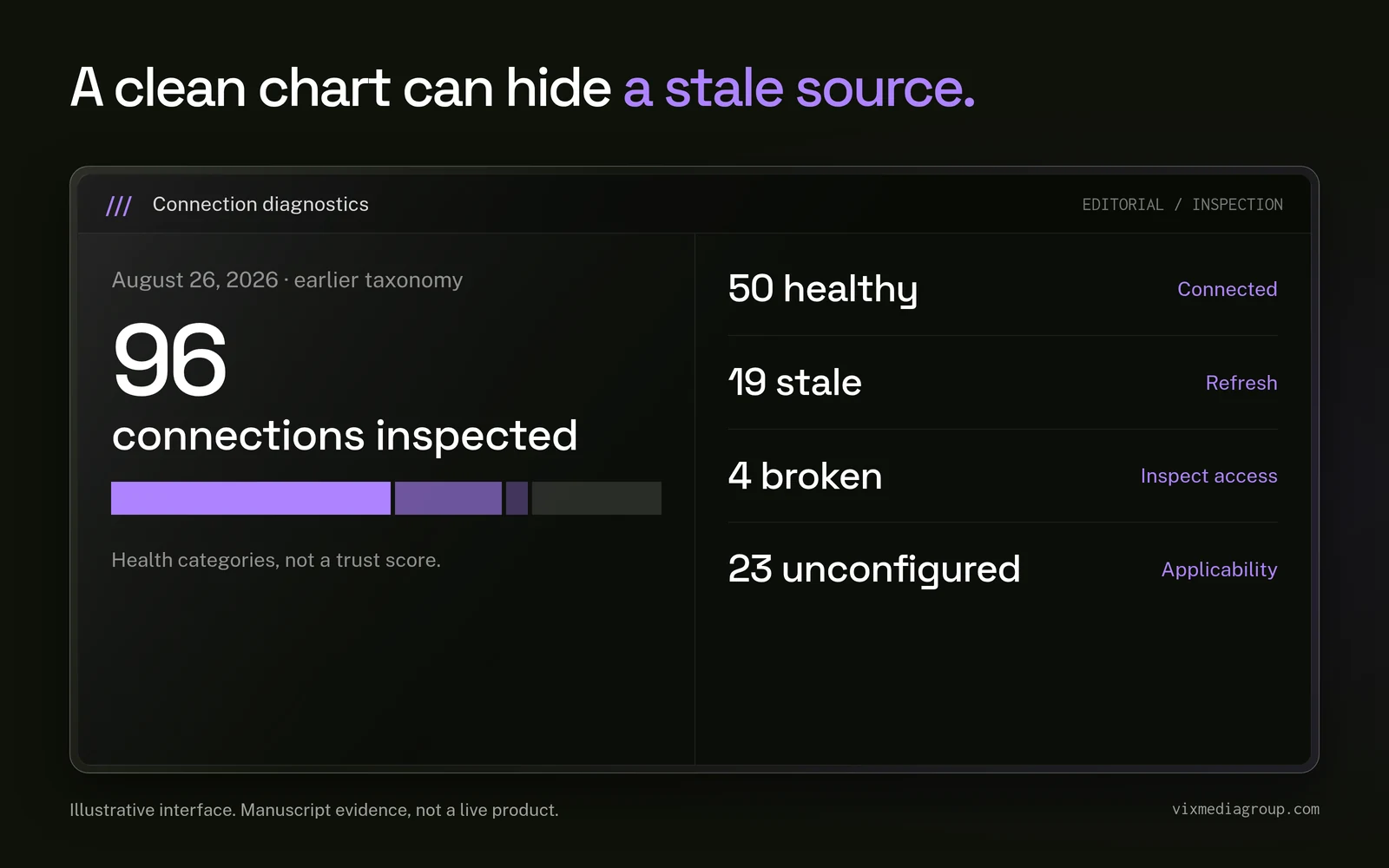
A tool appearing in a manifest does not prove that every client is connected, every identifier is mapped, or every native field can be read. We verify both the tool contract and the client-account mapping before relying on the result.
If a configuration read fails because a field is incompatible with the deployed platform version, the inspection can continue only through working native reads while naming what remains unverified. A partial read cannot be presented as a complete account audit.
We also avoid exposing customer identifiers, campaign identifiers, credentials, confirmation tokens, internal endpoints, or security-sensitive implementation details in public reporting.
Outcome feedback is another bounded layer. Returning eligible offline outcomes to a platform can improve measurement and bidding inputs, but it does not replace strategy or prove that every account has a complete CRM connection.
What we would do differently as the system expands
We would establish the inspection inventory and realized usage baseline before making any future productivity claim. Architecture can show what a system is capable of doing. Only job records and a stable definition can show what it actually did over time.
Our next measurement plan would record:
- The number of eligible and mapped accounts.
- The number and type of completed inspections.
- The number of partial or failed reads.
- The number of proposed, approved, rejected, and executed changes.
- The number of post-write mismatches or exceptions.
- The operator time required for review and correction.
- The business metric definition attached to each workflow.
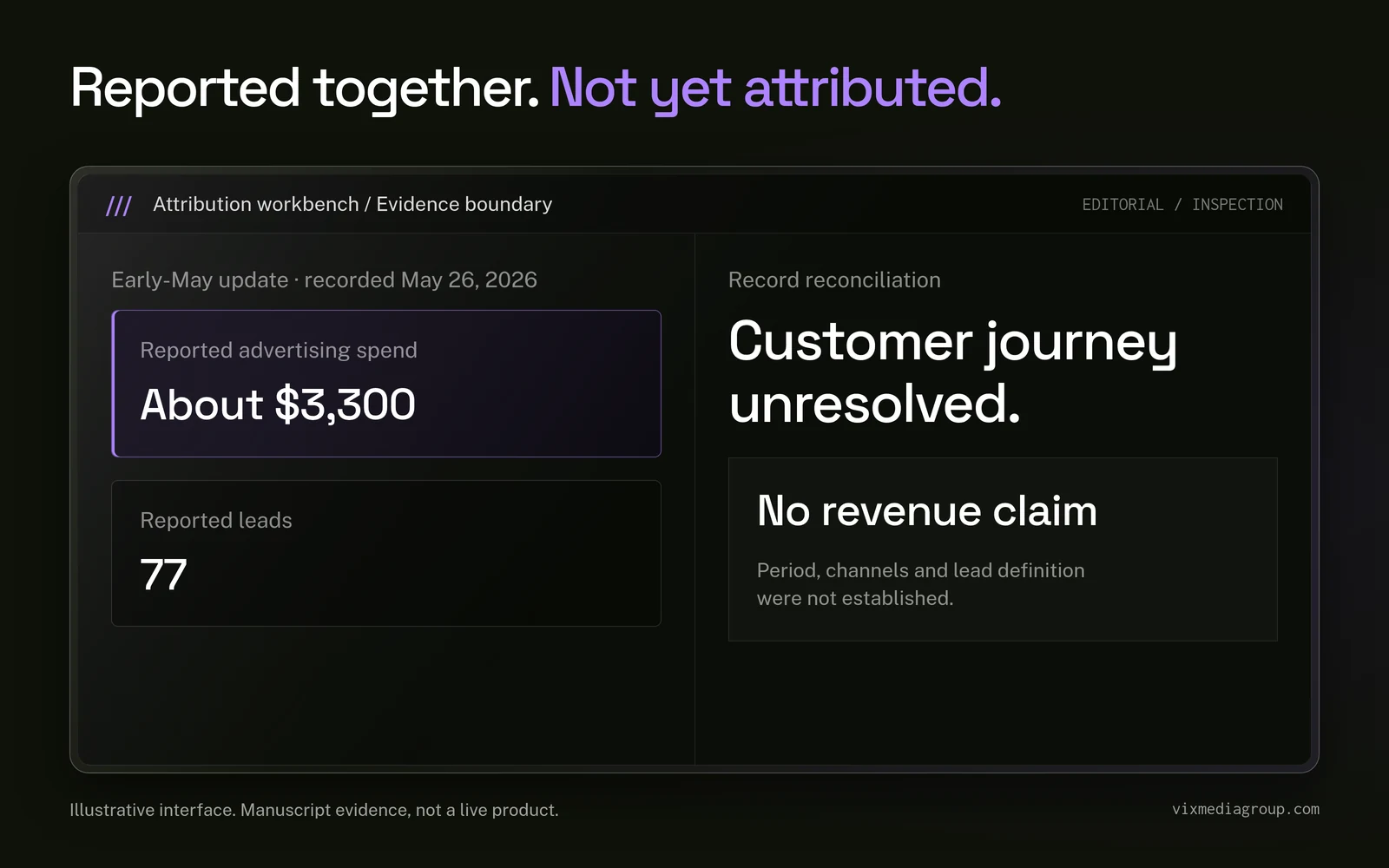
Our form fill to sale attribution framework shows why campaign activity, web events, qualified leads, and revenue must remain separate when the inspection moves beyond platform delivery.
How Vix uses agents without surrendering accountability
Vix uses agents to widen the field of view. Our data unification approach connects native campaign evidence with the systems that hold later customer outcomes, while our paid-media operators retain the authority to approve or reject changes.
We do not claim that agents eliminated management work. They made more bounded inspection possible, produced more evidence to review, and made the approval and verification sequence explicit.
That is the commercial value of agentic ad management for us. More accounts and platform decisions can be inspected with a repeatable control design, but strategy, approval, and accountability remain human responsibilities.
The system expands what we can see and verify. It does not remove the need to decide what deserves action.

.svg)



Start Growing Your Dental Practice with SEO
Take the first step toward transforming your marketing. Whether you’re looking to boost engagement, improve your online presence, or grow your business, our team at Vix Media Group is here to help.
Let’s craft a strategy tailored to your goals.