.svg)
AI Citations and Customer Visits: How We Would Test Whether the Surfaced Page Matches the Visited Page
We outline a test comparing AI-surfaced pages with customer visits, explaining why an overlap percentage needs matched evidence rather than an assumed shared journey.
We found a page-matching problem before we found a portfolio result
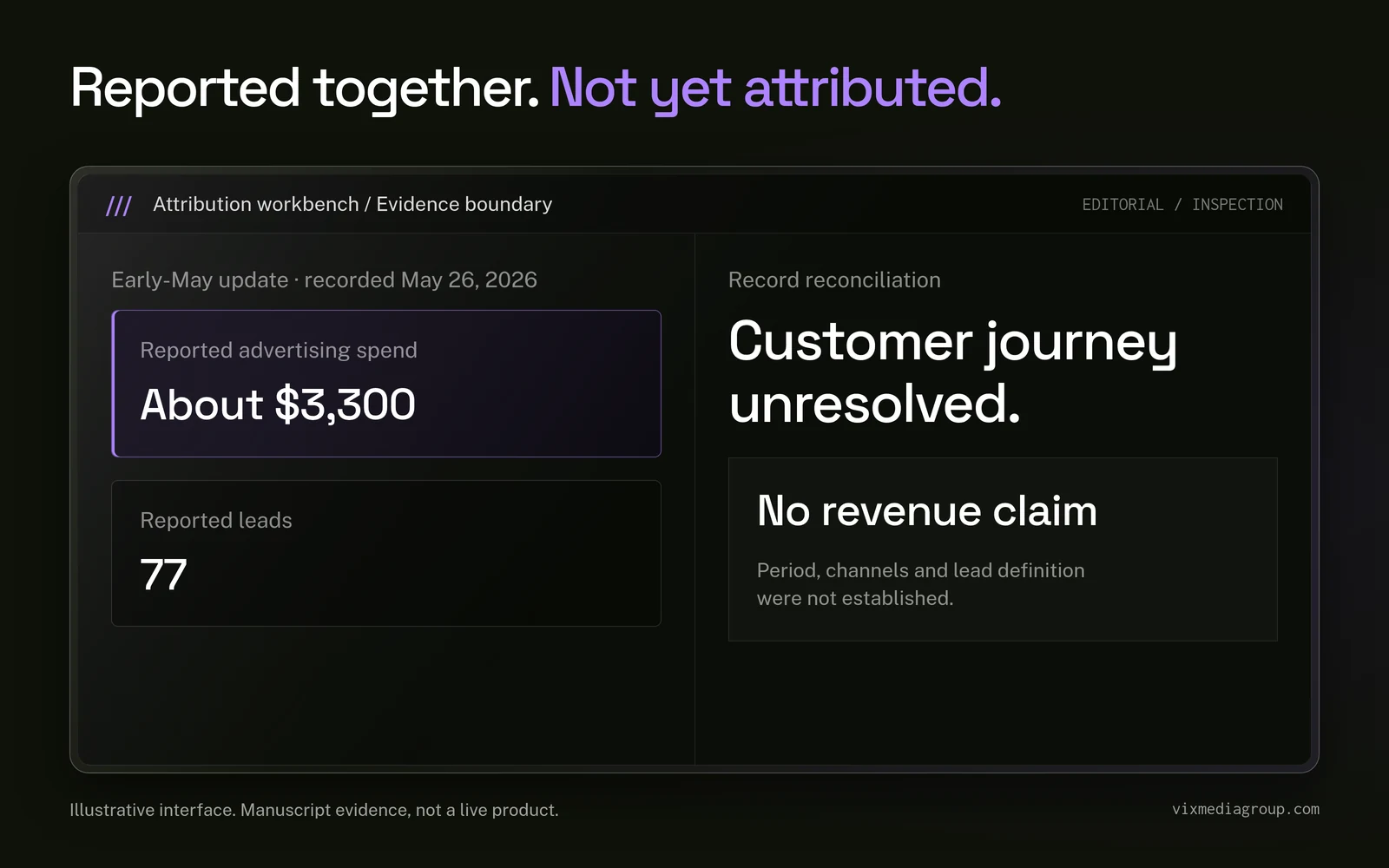
We wanted to compare pages surfaced by AI systems with pages customers actually visit and use. The obvious output was an overlap percentage. The evidence available to Vix did not support one.
Our access review showed broad Google and Bing connectivity, but it did not include the portfolio-wide native AI page exports, canonical mapping, and audited conversion definitions required for a defensible comparison. Our search engine optimization services can build authority pages and commercial pages, but we cannot claim how often they overlap in AI systems until both sets are measured.
That gap became the operator story. Before comparing pages, we had to define what a cited page, referral landing page, event page, and revenue-producing journey each meant.
The obvious page comparison collapsed four different jobs
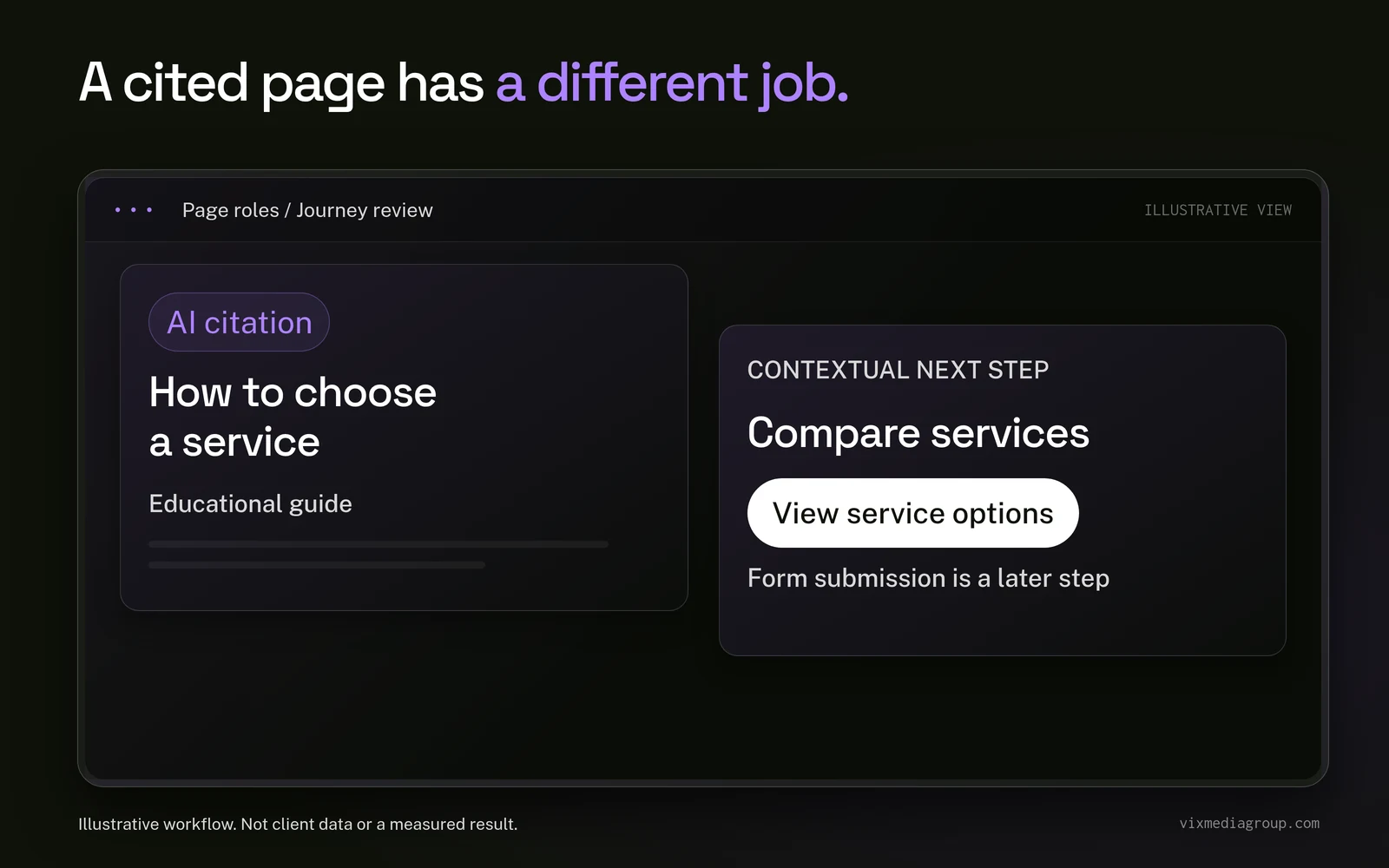
An AI system can cite an educational guide without sending a referral. A person can later land on that guide, select a contextual link to a service page, and submit a form on a third page. A qualified opportunity or sale can appear later in a customer relationship management system.
Calling the cited guide a conversion page would collapse the journey into the wrong URL. Calling the form page the only valuable page would erase the authority and navigation that brought the person there.
We separated the page inventories before calculating overlap
Our study design maintains four explicit sets:
- AI-surfaced pages from Google generative AI impressions or Bing citations.
- AI referral landing pages from identifiable assistant sources in GA4.
- Organic landing pages from conventional search sessions.
- Outcome pages where an audited key event occurred.
Revenue remains a separate downstream record. It requires consistent ecommerce value or a verified CRM connection and cannot be assigned to a page merely because an event fired there.
Native AI reports have platform-specific limits
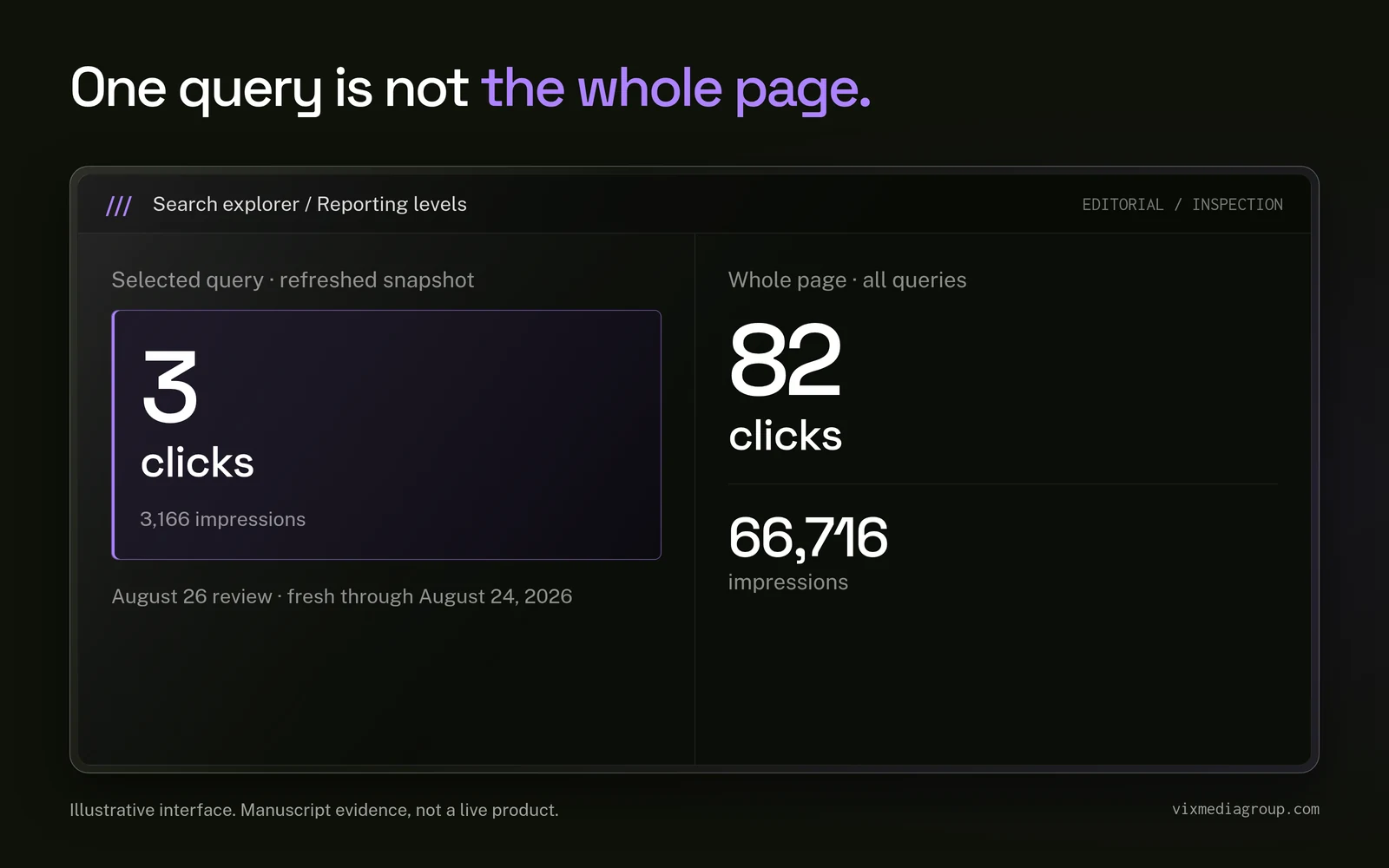
Google’s generative AI report documentation says most report data is assigned to canonical URLs. It also explains that property-level chart totals and page-table totals use different aggregation and that the usual 1,000-row report limit applies.
Those details prevent a simple export-and-sum workflow. A page table may omit rows, and its total may not equal the property-level chart because the two views aggregate differently. We will preserve both the export scope and a missing-data flag instead of describing a partial table as the entire property.
Bing citations do not indicate rank or importance
Microsoft’s Bing AI Performance announcement describes page-level citation activity and sampled grounding queries. Microsoft also states that citation counts do not indicate placement, importance, authority, rank, or the role a page played in an answer.
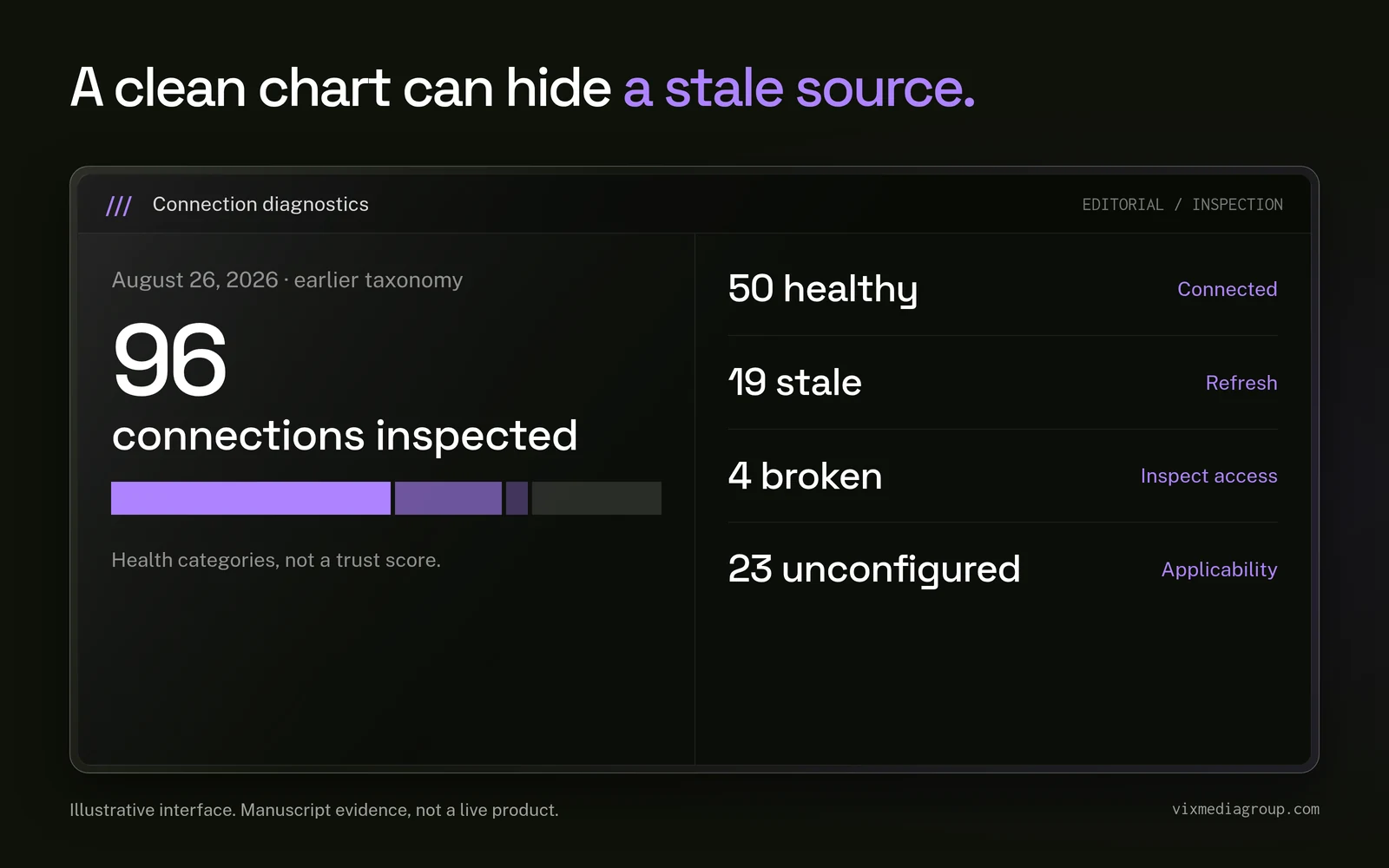
The current Vix Bing connector exposed classic Webmaster data, not AI Performance. No native Bing page export was available for this portfolio analysis. We therefore did not infer citations from classic search clicks, rankings, or query records.
Google impressions and Bing citations will remain separate page sets because their units and platform behavior differ.
Our AI search measurement framework also keeps Google impressions and Bing citations separate from branded search, Direct sessions, and identifiable assistant referrals.
We did not have the exports needed for a percentage
The source ledger required two native collections: Google generative AI page exports where the report was available and Bing AI Performance page exports where that dashboard was available. Neither collection existed across a publishable matched cohort.
That means we cannot support a claim such as “only a stated percentage of AI-cited pages were conversion pages.” We also cannot claim that cited pages generally differ from visited pages based on one platform description or a small unreported sample.
Our AI referral access audit established the same denominator discipline at the property level. Visible platform records are an access inventory until production websites, dates, and exclusions have been reconciled.
Canonical URL mapping determines whether two pages are the same
A page can appear under several technical forms without representing different content. Protocol, `www`, trailing slash, fragments, tracking parameters, redirects, and canonical tags can turn one resource into several rows.
We will normalize those forms before set comparison. Meaningful query-string pages will remain distinct only when they represent genuinely different content or application state.
Redirects and canonicals need separate records
A redirected URL may have received a historical visit while the native AI report assigns visibility to the final canonical URL. Collapsing those records without preserving the mapping can hide the path a visitor actually used.
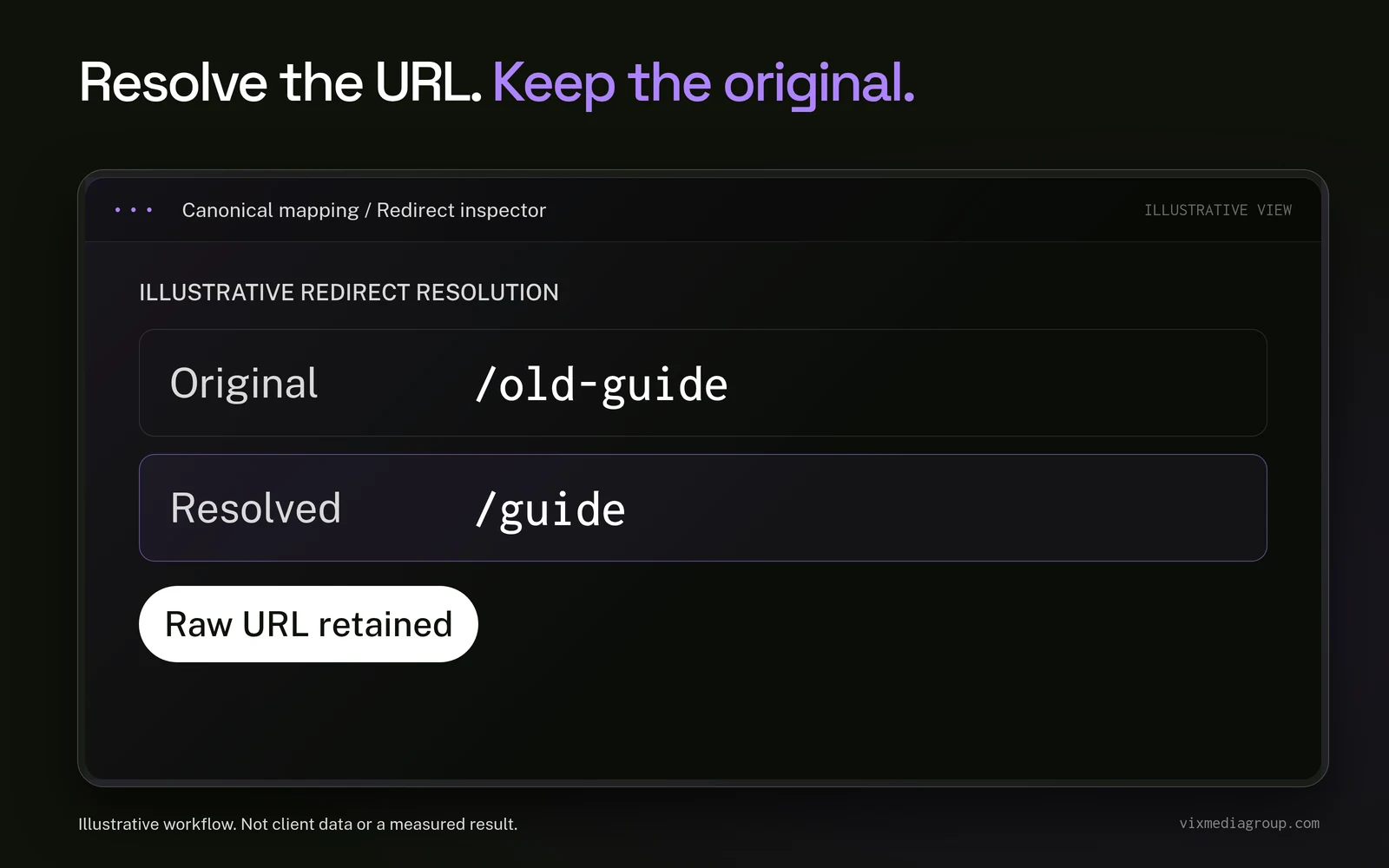
For every normalized page, the working table will retain:
- The original reported URL and source platform.
- The final resolved URL where available.
- The declared and observed canonical.
- The content type and funnel role.
- The reporting window and export limit.
- The landing, event, and assisted-page labels.
This mapping lets us compare page roles without losing how each platform originally reported the record.
A page where an event fired is not always a conversion landing page
GA4 can record a key event on a form confirmation, checkout, scheduling screen, or another page reached after the landing. If we label every event page as a conversion landing page, the analysis overstates direct overlap.
We will therefore distinguish:
- Landing pages where a session began.
- Event pages where a configured key event occurred.
- Assisted pages viewed earlier in the measured path.
- Commercial pages designed to receive a handoff.
Key-event definitions also vary by property. A click, scroll, form start, form submission, qualified lead, and purchase are not equivalent outcomes. Each website needs an event-definition audit before it enters a pooled comparison.
The page labels cannot collapse. A cited page, visited page, lead-producing page, and revenue-linked page represent four different states in the customer journey.
We designed the overlap calculation around set membership
For each eligible website, we will calculate set sizes, intersections, citation-only pages, visit-only pages, key-event-only pages, and pages shared across visibility and outcome sets. Jaccard similarity will describe the intersection relative to the union without pretending that every page has equal commercial importance.
The Google and Bing calculations will remain separate. Property-level results will appear before any portfolio summary so one large site or one extensive export does not dominate the conclusion.
Manual inspection provides the commercial explanation
A similarity score can show that two sets differ, but it cannot explain whether the difference is a problem. Our team will inspect the leading citation-only and conversion-only pages by content type, funnel role, engagement, navigation, proof, and call to action.
An educational guide does not fail because it is not a checkout page. It fails commercially when the next step is absent, irrelevant, or unmeasured. A conversion page does not fail because an AI system did not cite it. It may depend on authority pages to establish the context that makes the commercial page useful.
This inspection turns the overlap study into a handoff audit rather than a contest to make every page perform every job.
What we would change after finding a broken handoff
We would not force a sales pitch into every authority page. We would repair the path between the informational answer and the appropriate commercial action.
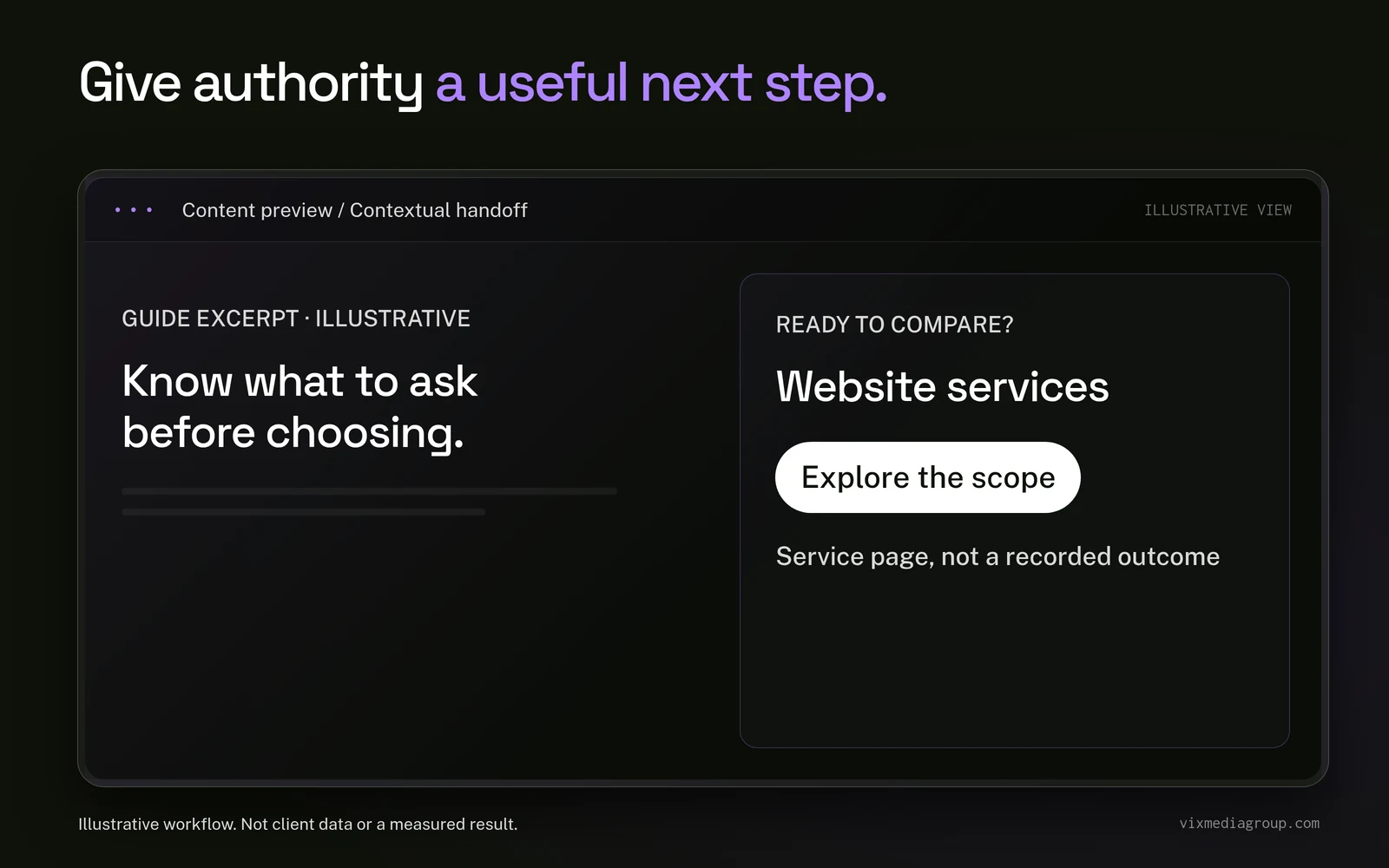
Depending on the evidence, that work can include:
- Adding contextual internal links that match the question being answered.
- Clarifying the next step for readers who are ready to compare options.
- Adding proof where a commercial page asks for trust without earning it.
- Repairing navigation or redirects that interrupt the intended route.
- Aligning forms and event definitions with the actual conversion action.
- Preserving source and landing-page fields through the CRM handoff.
Our website development work supports this bridge because page architecture, routing, analytics, and content cannot be repaired independently.
What we would do differently before the next page study
We would collect native page exports on a fixed cadence and preserve their platform metadata at ingestion. We would also complete canonical and event audits before calculating overlap, not after a surprising percentage appears.
The revised sequence is straightforward:
- Freeze separate Google and Bing eligibility manifests.
- Export native AI page data where each report is actually available.
- Resolve redirects and canonical forms without discarding raw URLs.
- Audit GA4 landing and key-event definitions per property.
- Calculate property-level overlaps before pooled results.
- Inspect page roles before calling a mismatch a failure.
- Connect qualified outcomes only where CRM instrumentation supports them.
That order keeps a technical URL problem from becoming an editorial conclusion.
How Vix connects authority pages to customer action
Vix treats an AI citation as the beginning of a measurement question. Our conversion-focused attribution tracking distinguishes landing behavior from event behavior, while our CRM configuration carries qualified records beyond the web session.
The wider operating system connects search, content, development, analytics, and follow-up. That is how an authority page can perform its actual role without being mislabeled as a sale.
We have not published an overlap percentage because the native exports and event audit do not exist across a defensible cohort. What we can support is the architecture of the study and the operating implication: authority assets and conversion assets need a designed, measurable bridge.
The pages AI systems surface may differ from the pages customers visit or use. The next responsible step is to measure those sets separately, normalize them carefully, and inspect the handoff before assigning commercial meaning.

.svg)



Start Growing Your Dental Practice with SEO
Take the first step toward transforming your marketing. Whether you’re looking to boost engagement, improve your online presence, or grow your business, our team at Vix Media Group is here to help.
Let’s craft a strategy tailored to your goals.