.svg)
What a Realistic First 90-Day Marketing ROI Plan Should Measure Before It Promises Payback
Our first 90-day marketing plan prioritizes instrumentation, learning, and scaling decisions, with explicit costs and conversion delays—not a promise of payback by day 90.

The launch model had a date but no shared definition of return
We reviewed a launch plan that had a website date but no shared definition of demand, sales capacity, conversion delay, contribution margin, or cash collection timing. The schedule looked precise. The first 90-day marketing ROI expectation did not.
We do not use 90 days as a universal payback rule. No verified source in our review establishes that every launch should become profitable within that window. Our ROI calculator can support scenario planning, but the result is only as useful as the assumptions, attribution, and cost scope entered.
We use the first 90 days for instrumentation, learning, and scaling decisions. The promise is disciplined measurement, not positive ROI by a fixed date.
Why was the obvious launch forecast incomplete?
The obvious forecast multiplied leads by an expected close rate. That can be a useful scenario, but it is not observed ROI.
The model still needed to answer when leads would close, whether sales had capacity, which costs and revenue belonged in the calculation, how refunds would be handled, and how attribution would be reconciled.
Leads and booked calls are not return
Leads, replies, and booked calls are progression metrics. They can help diagnose whether acquisition and follow-up are working, but they do not equal profit.
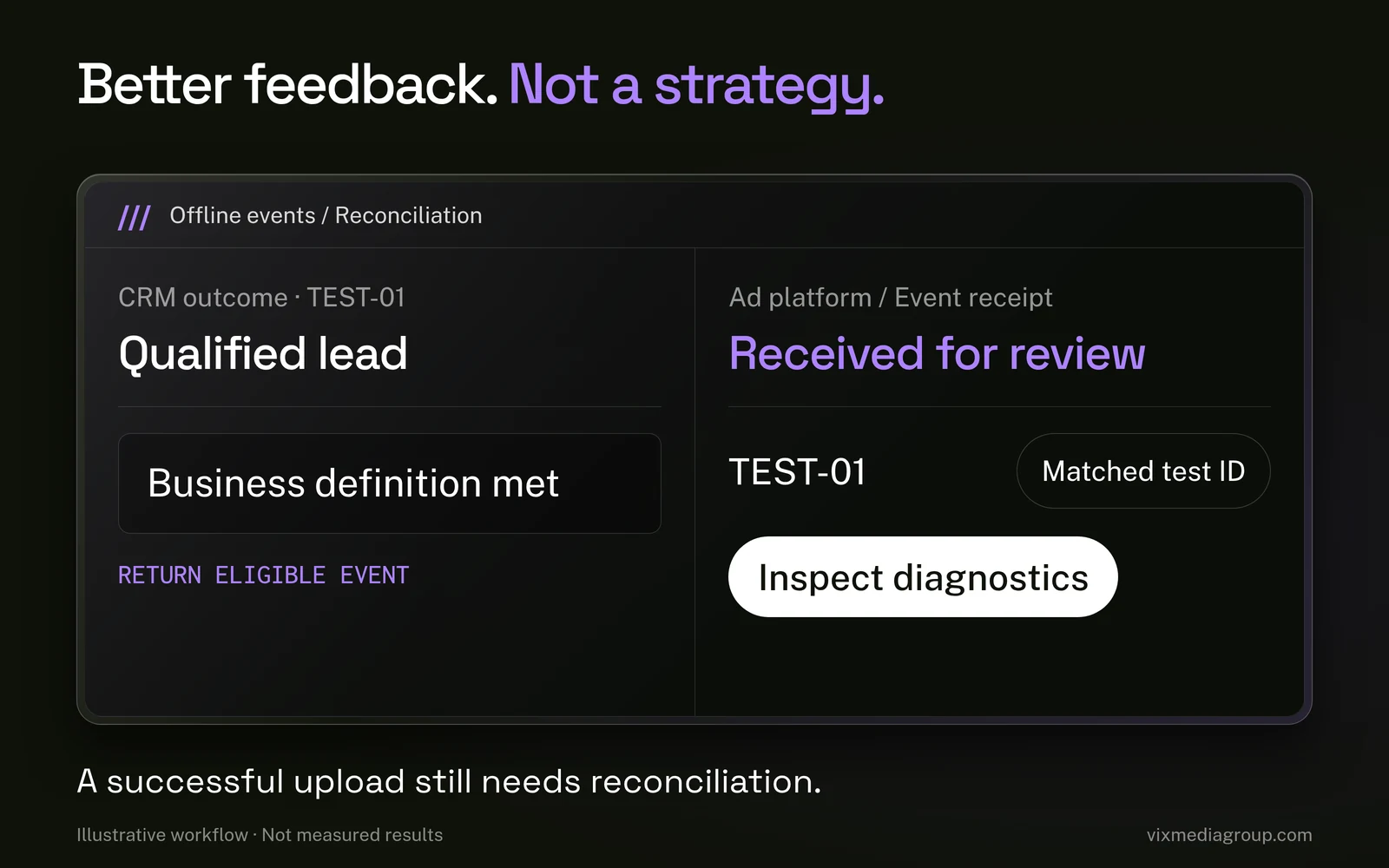
Platform-reported revenue can also differ from CRM or financial records because the platform applies its own attribution model, window, identity rules, and available signals. We keep that report visible without treating it as audited financial truth.
Our marketing attribution from spend to leads framework explains why spend and leads reported together do not, by themselves, establish causation or return.
How should a team define marketing ROI?
Marketing ROI needs an explicit numerator, denominator, attribution method, cost scope, and reporting period. If any of those fields remain implicit, two people can use the same label for different calculations.
A defensible planning model states:
- Whether the numerator is collected revenue, gross profit, or contribution.
- Whether the denominator includes media, creative, technology, agency, sales, fulfillment, and launch costs.
- Which attribution model assigns credit and which channels are included.
- How conversion delay, refunds, cancellations, and bad debt are handled.
- Which CRM and financial records reconcile the result.
- Whether the report follows a launch cohort or a calendar period.
- Which assumptions remain forecast values rather than observed results.
We do not recommend one cost scope for every decision. A campaign optimization review may focus on incremental media and contribution. A full launch payback review may include broader brand, website, technology, and delivery costs. The report must name the scope so the conclusion can be interpreted.
What should happen during the first 90 days?
We divide the horizon into three operating gates. The gates can overlap because sales cycles and data volume differ, but each gate has a distinct job.
The instrumentation gate tests whether the evidence can be trusted
The instrumentation gate confirms that the conversion path preserves the information needed for later decisions. We test:
- Form acceptance and durable primary capture.
- CRM contact creation or update.
- Permitted source fields and click information.
- Duplicate handling and lifecycle definitions.
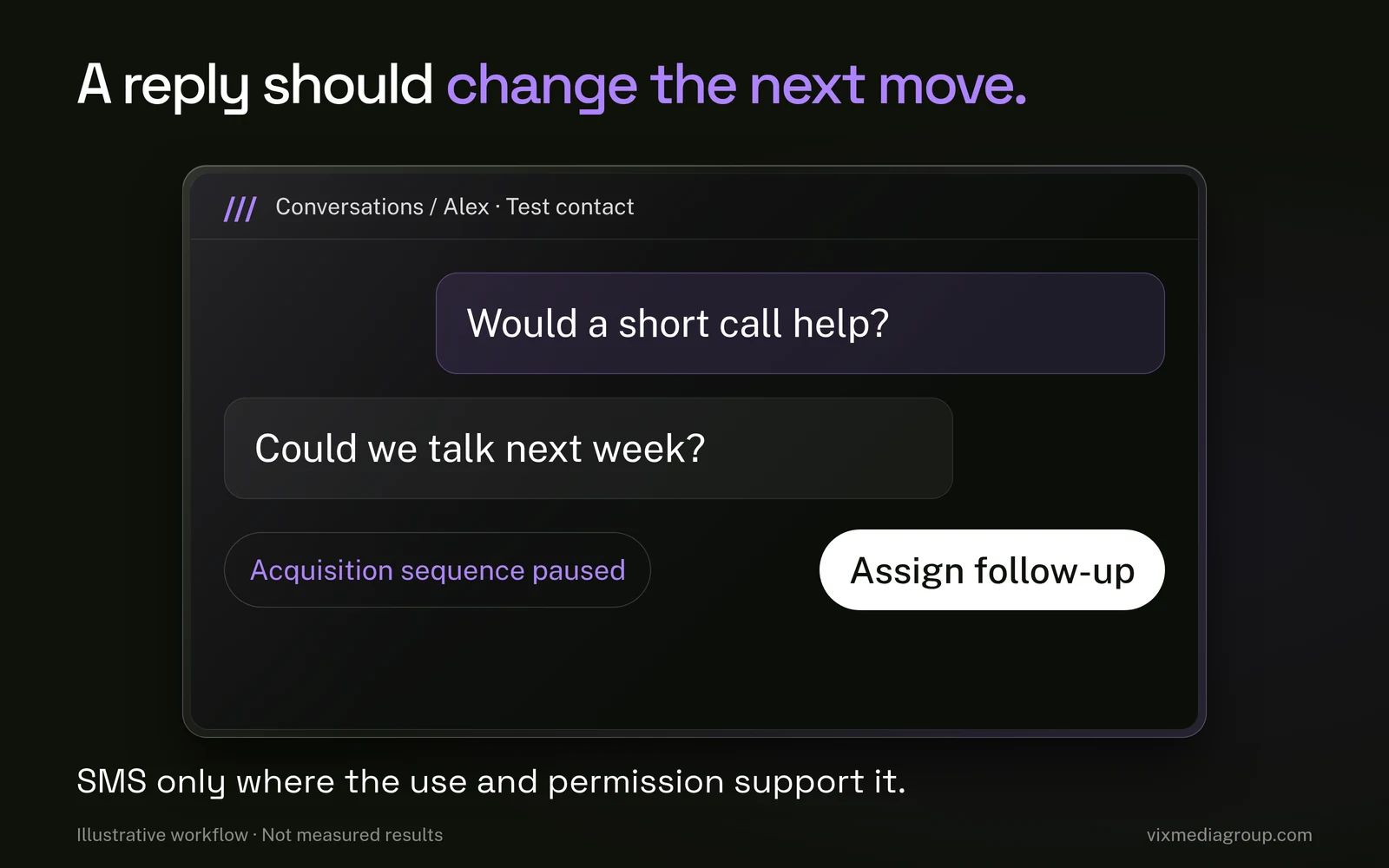
- Response routing, ownership, and fallback.
- Revenue, refund, and reversal fields.
- Reporting windows and reconciliation procedures.
A campaign can generate activity before every issue is resolved. The gate tells leadership which metrics are usable and which remain provisional.
Our form fill to sale attribution framework provides the event and reconciliation chain behind this gate. It keeps accepted forms, CRM progression, sales outcomes, and financial records distinct.
The learning gate tests the market, message, and process
The learning gate evaluates search terms, audience response, creative evidence, lead quality, sales feedback, response timing, conversion delay, and unit economics.
We ask whether the campaign is reaching the intended problem, whether the offer can earn a next step, and whether sales can convert that next step under the current process. We also examine whether low volume reflects weak demand, narrow reach, limited investment, creative constraints, or a measurement failure.
The purpose is not to defend the original forecast. It is to identify which assumption the evidence supports or rejects.
The scale gate decides whether to increase exposure
The scale gate increases investment only when tracking integrity, operational capacity, lead progression, and contribution assumptions support the decision.

Leadership chooses among three actions:
- Continue a bounded test when evidence is still developing inside an approved risk limit.
- Fix a defined constraint before adding more traffic or spend.
- Scale within a stated capacity and risk boundary when the evidence supports it.
A stop decision can be evidence of sound management. The plan exists to improve decisions, not to defend sunk cost or force a positive narrative by day 90.
What does platform learning tell us about business payback?
Platform learning tells us about platform calibration, not universal business break-even.
Google says a bid strategy's learning period can take up to three weeks or one to two conversion cycles and may be faster when more conversion data is present. Google's Smart Bidding measurement guidance also highlights conversion delay when evaluating performance.
Those sources do not establish a 90-day marketing ROI rule. A campaign can finish a learning period while the company still lacks sales capacity, favorable margins, sufficient demand, or collected revenue. A business with a long sales cycle can also have promising leading indicators without enough elapsed time for a reconciled payback conclusion.

We keep the two clocks separate:
- The platform clock concerns data, calibration, bidding behavior, and conversion delay.
- The business clock concerns qualification, sales, fulfillment, collection, reversals, margin, and cost recovery.
Confusing the clocks turns a technical status into a financial promise.
Which launch advantages should teams test?
We use three planning hypotheses to structure scenarios. They are not an exhaustive or empirically ranked list.
Existing demand can shorten the path to meaningful tests
A brand with a known audience, active customer base, search demand, referral relationships, or an established founder can begin with more observable intent than a brand starting without those assets.
Existing demand does not guarantee profitable conversion. The offer, sales process, capacity, and economics still determine what the business can do with the attention.
Sufficient investment and execution capacity can support faster iteration
A team needs enough investment to generate interpretable tests and enough operating capacity to act on what those tests reveal. Media without creative production, landing-page work, sales follow-up, or measurement can produce activity without useful learning.
More spending is not automatically better. The planning question is whether the approved budget can test the relevant variables without exceeding the organization's ability to respond and deliver.
Strong distribution can accelerate qualified reach
Founder attention, partnerships, public relations, owned audiences, trade relationships, and sustained content can create routes to discovery that do not depend on one advertising platform.
Distribution quality matters. A poorly matched audience can generate reach without qualified demand. The plan identifies what evidence will show whether attention progressed.
Sales readiness and unit economics cut across all three
A brand can have existing demand, launch investment, and strong distribution while still missing payback because response time, close rate, capacity, margin, collection, or retention fails.
We therefore model sales readiness and unit economics as cross-cutting conditions. The three advantages help organize planning. They are not a universal law that guarantees or prevents positive ROI.
What should leadership review each month?
Leadership should review a compact decision table rather than a success narrative. The table separates observed results from assumptions and keeps known data limitations visible.
We include:
- Spend and the exact cost scope.
- Tracking exceptions and unresolved attribution gaps.
- Lead validity and qualification quality.
- First-response time and ownership failures.
- Stage progression and conversion delay.
- Booked, collected, refunded, and reversed outcomes where available.
- Gross margin or contribution assumptions.
- Sales and fulfillment capacity constraints.
- The next approved test and risk limit.
If margin is estimated, the report labels it. If revenue is booked but not collected, both values remain visible. If attribution relies on a platform model, the report names that model rather than presenting the figure as reconciled financial truth.
Our seven follow-up systems provide one operating lens for response, nurture, suppression, and recovery. Seven is a Vix framework, not a universal optimum, and passing the checklist does not promise return.
How do we model conversion delay without hiding it?
We use cohort reporting alongside calendar reporting. A launch cohort follows leads from a shared start through later stages. A calendar view shows what occurred during a month, including outcomes from earlier acquisition.
The model states how long records remain open and which leading indicators can be used before sales mature. For a longer sales cycle, the first 90 days may produce enough evidence to assess tracking, response, qualification, and pipeline progression while remaining too early for a complete payback calculation.
We resist the temptation to annualize a small early sample or treat booked pipeline as collected profit. Forecasts can inform capacity and cash planning, but the report labels them as forecasts.
What happened after the first review?
The available evidence supports the planning gaps and the Vix gate framework. It does not support a quantified claim that launches with one of the three advantages become ROI-positive within 90 days.
A stronger claim would require a defined portfolio cohort, consistent day zero, reconciled spend and costs, qualified outcomes, collected revenue, margin, conversion delay, exclusions, and client approval. It would also need medians and ranges rather than selected success stories.
We will not replace that missing research with confidence. The useful conclusion is that leadership can make better first-quarter decisions when the model states what it knows, what it assumes, and what has not had time to mature.
What would we do differently before the next launch?
We would define the economic and measurement model before selecting a payback date.
Our preferred sequence is:
- Define day zero, cohort rules, attribution, and cost scope.
- Document demand, distribution, sales capacity, and offer assumptions.
- Test forms, CRM capture, routing, lifecycle stages, and revenue fields.
- Set leading indicators that do not masquerade as ROI.
- Model conversion delay, refunds, margin, and collection timing.
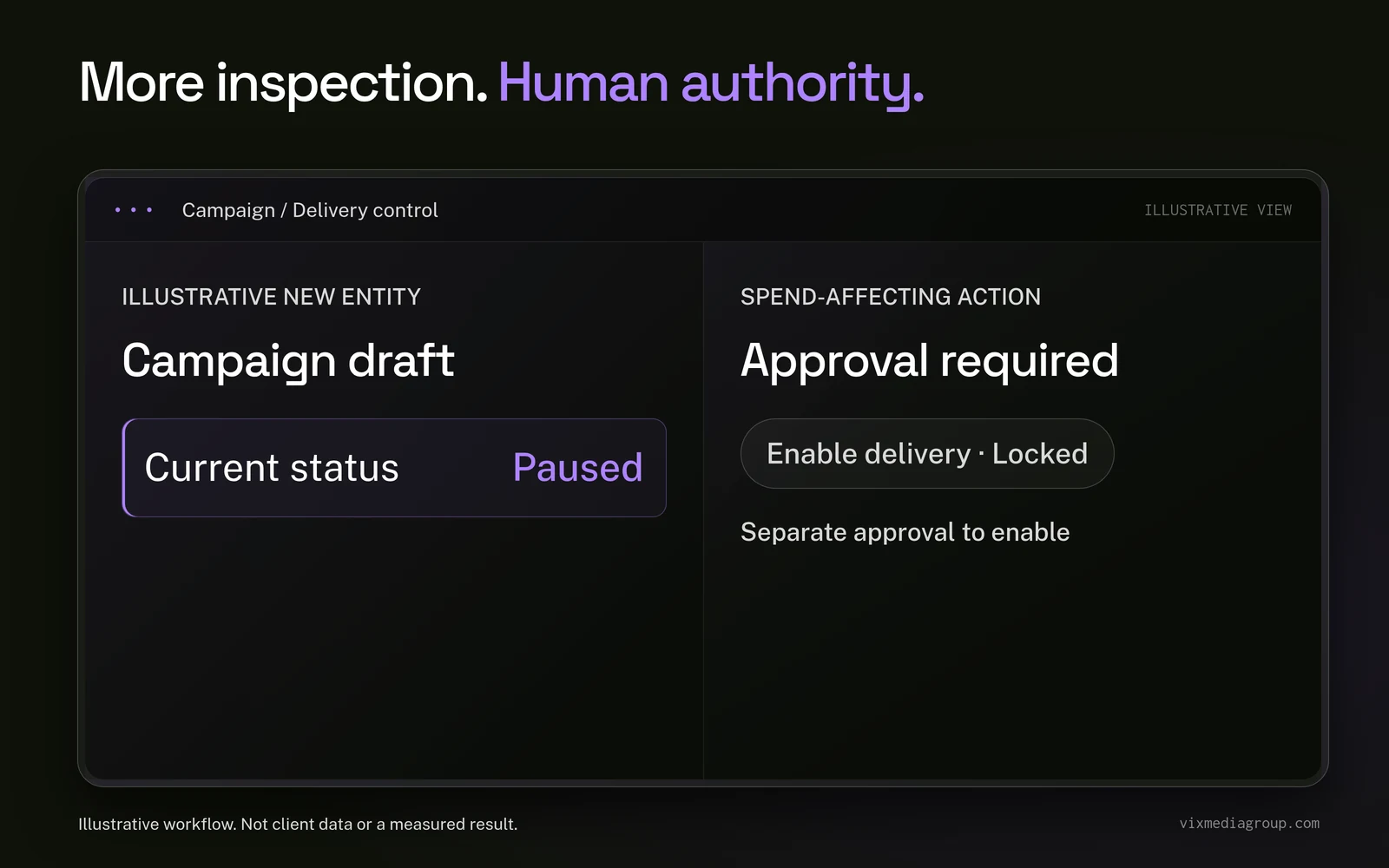
- Approve a bounded test budget and operating capacity.
- Schedule stop, fix, continue, and scale gates.
- Reconcile platform, CRM, and financial records as outcomes mature.
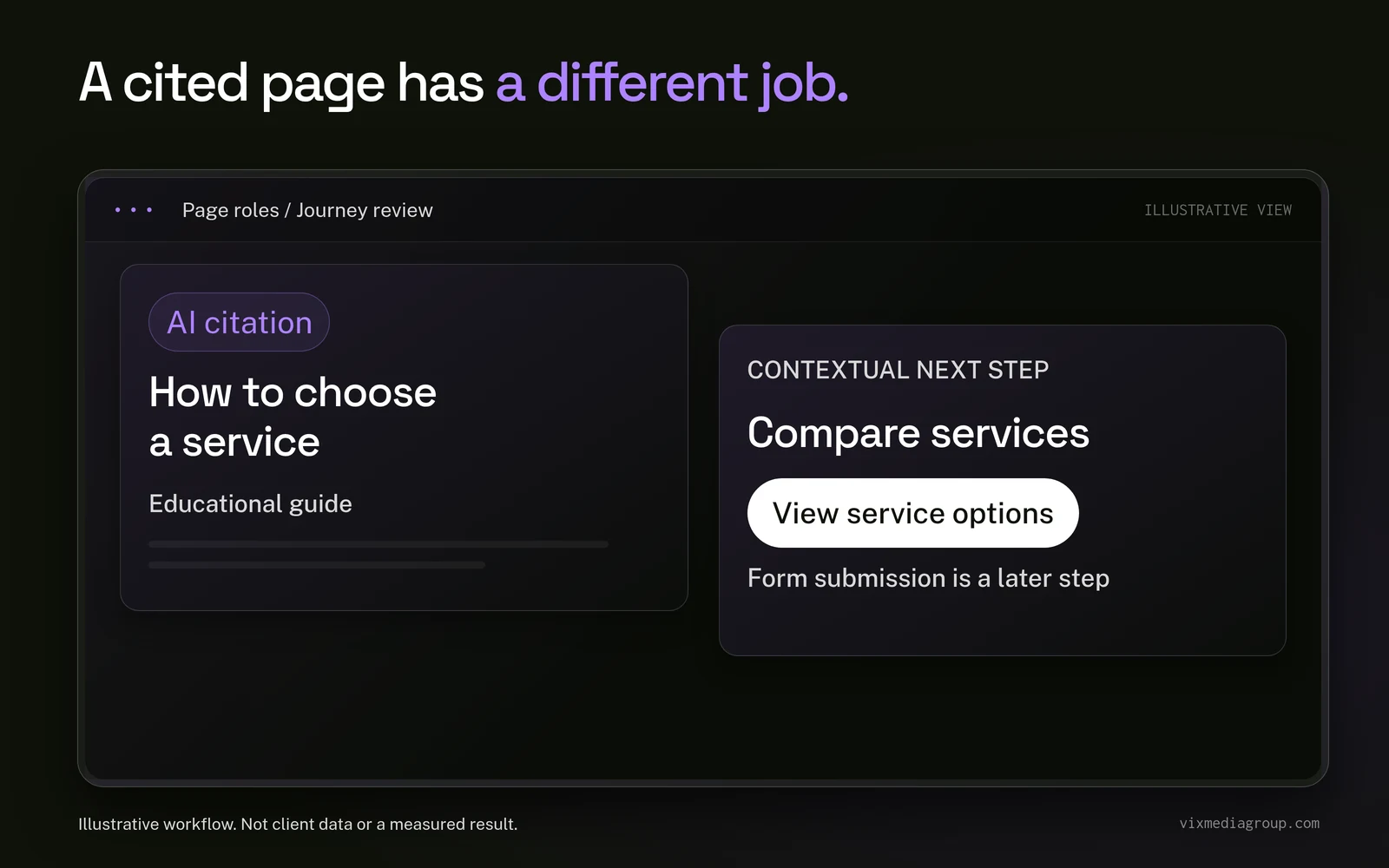
Our go-to-market system framework shows why the website date is only one part of launch readiness. Demand, capture, response, nurture, sales ownership, authority, and revenue feedback need owners before the model can support a commercial conclusion.
How Vix builds a realistic first 90-day marketing ROI plan
Vix connects acquisition, attribution, CRM, creative, website conversion, sales-process measurement, and leadership reporting. Our pay-per-click advertising services manage bounded tests and campaign learning. Our CRM configuration services establish the stages, owners, and source records needed for later reconciliation.
We do not promise positive ROI in 90 days. We build a scenario model so leadership can see whether the system is instrumented, whether the market is responding, whether sales can work the demand, and whether the economics justify the next dollar.
The first 90 days should end with better evidence and a clearer decision. Sometimes that decision is to scale. Sometimes it is to fix a constraint, continue a bounded test, or stop. A realistic plan makes each outcome possible without changing the definition of success after the evidence arrives.

.svg)





Start Growing Your Dental Practice with SEO
Take the first step toward transforming your marketing. Whether you’re looking to boost engagement, improve your online presence, or grow your business, our team at Vix Media Group is here to help.
Let’s craft a strategy tailored to your goals.