.svg)
Form Fill to Sale Attribution: How We Trace Every Step Without Pretending the Record Is Complete
We trace the evidence from form acceptance through CRM handoffs and sales outcomes, keeping missing identifiers, incomplete records, and reconciliation gaps visible.

The lead dashboard could not tell us which records became customers
We could see form fills in the acquisition dashboard, but that view could not answer which records became qualified opportunities, appointments, customers, or collected revenue. The ad had started a measurable journey. It had not completed the operational record.
That is why we use “how we trace” instead of claiming that every step is complete in every implementation. A complete named claim would require a current field map, event dictionary, reconciliation result, and approved anonymization. Our attribution tracking services build a defensible chain while keeping missing data visible.
The goal is not to force one perfect story onto every sale. The goal is to know what each system proves, where the record changes hands, and which gaps still limit the conclusion.
Why was the obvious attribution answer incomplete?
The obvious answer was to credit the platform that reported the form. That answer was useful for one question and incomplete for several others.
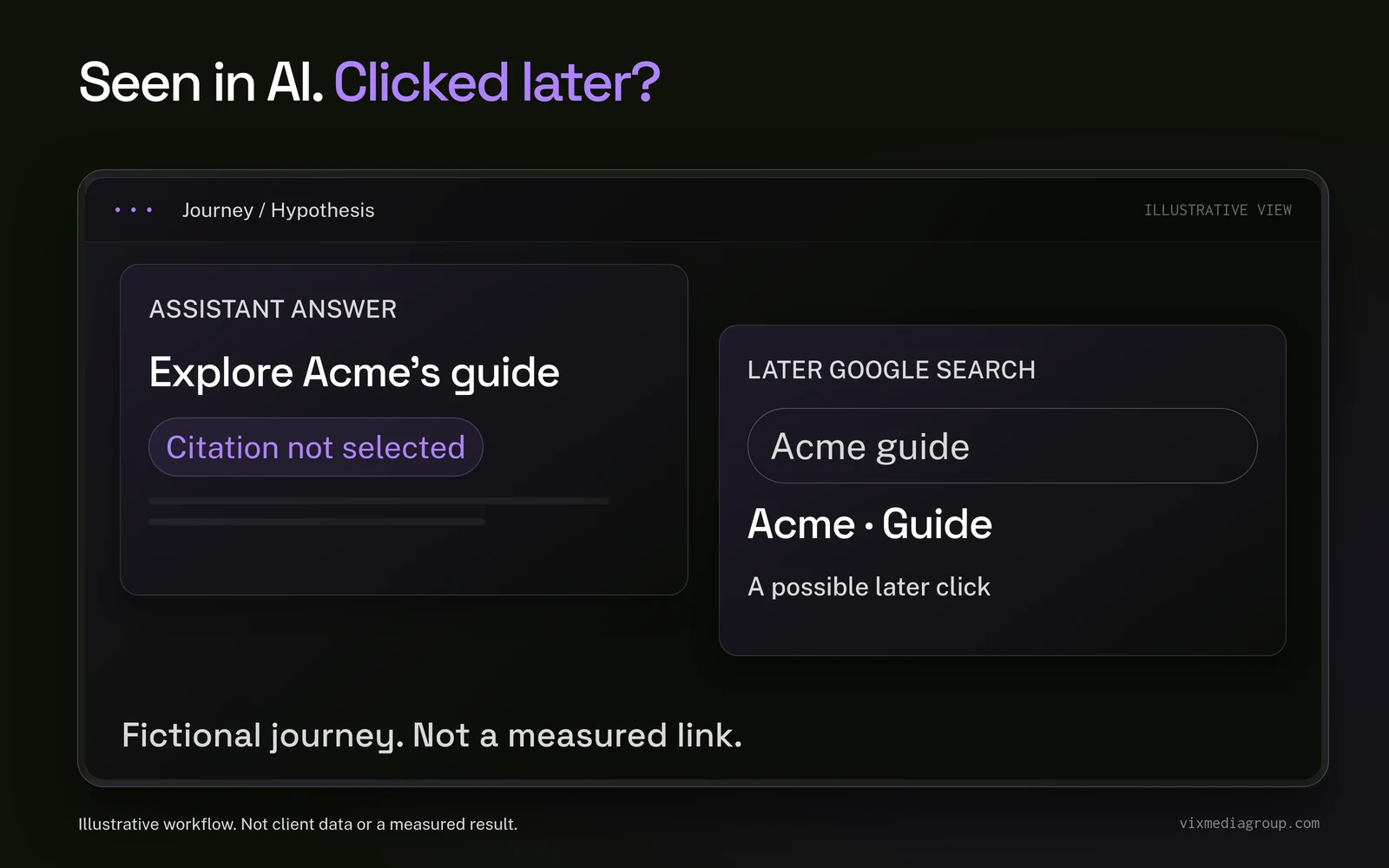
A platform event can show that a measured action followed an interaction under a selected model and window. It does not automatically prove durable CRM capture, sales acceptance, customer identity across devices, collected revenue, or audited financial contribution.
A success message proves only the response it follows
A visitor can see a thank-you state even when a downstream integration fails. We therefore make the primary intake path responsible for acceptance, then separately verify storage, CRM forwarding, routing, notifications, and approved readback.
This distinction protects the visitor experience and the reporting record. If the CRM is temporarily unavailable, the site still needs a durable primary capture path and a controlled recovery process. It should not claim success based on a notification request that no system preserved.
Our marketing analytics dashboard audit applies the same principle to reporting. A clean visualization cannot compensate for a disconnected or ambiguous source.
What chain do we trace from form fill to sale?
We map the journey as a sequence of evidence. Each step has a system, timestamp, identifier, definition, owner, and expected relationship to the next step.
- Ad interaction records campaign metadata under the platform's measurement rules.
- Landing session preserves permitted source and click information.
- Form acceptance confirms that the primary submission path received the inquiry.
- Durable storage preserves the record even if a downstream destination fails.
- CRM creation or update establishes the operational contact.
- Deduplication determines whether the record is new, merged, or related to an existing contact.
- Routing assigns an owner, deadline, and fallback.
- Qualification records whether the inquiry meets the written commercial definition.
- Scheduling and attendance capture progression through the next decision event.
- Opportunity stage records the active sales state and expected next action.
- Won, lost, canceled, refunded, or deferred outcomes close or redirect the journey.
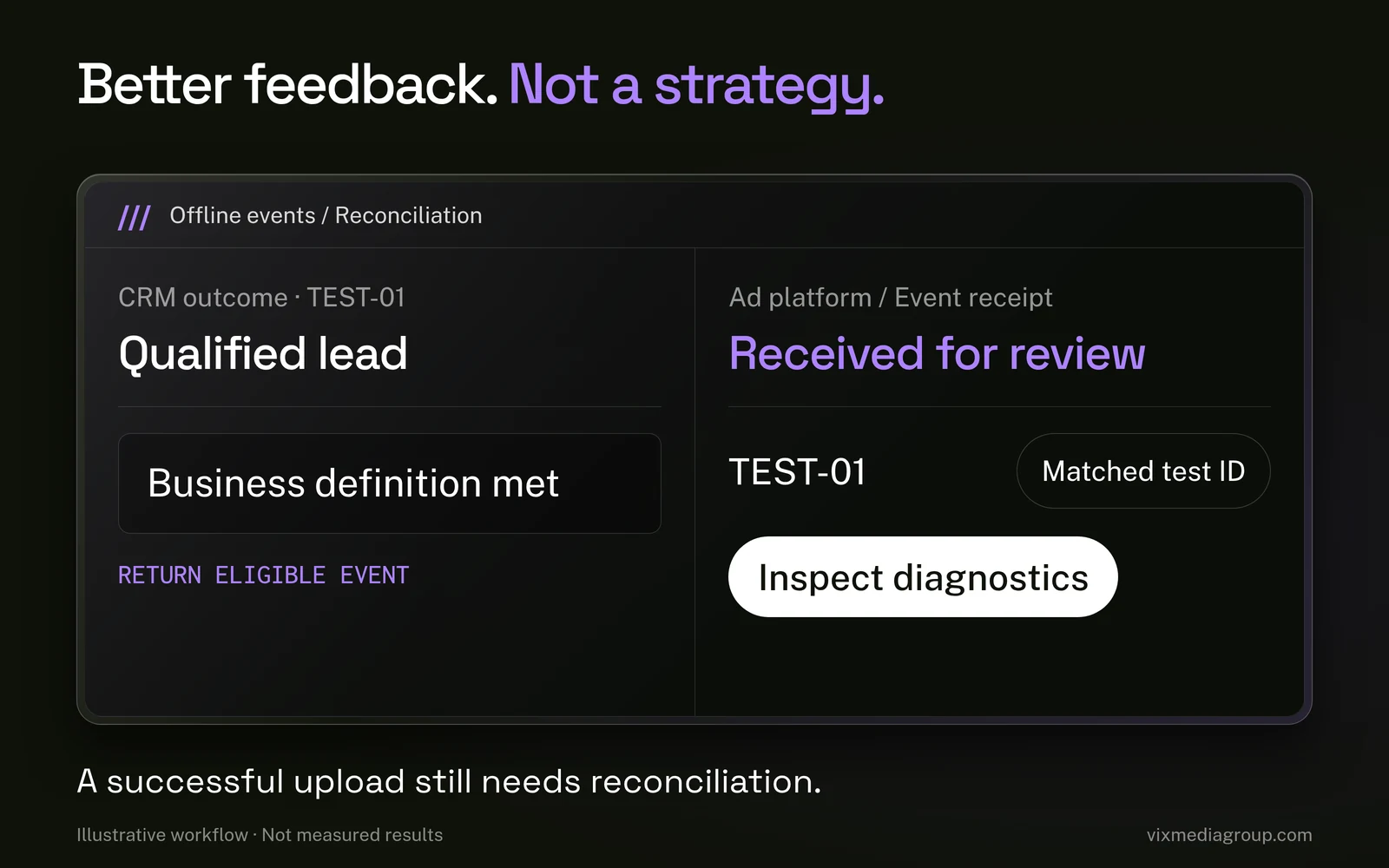
- Eligible offline feedback returns selected later outcomes to advertising systems.
The list is a tracing framework, not proof that every implementation contains all 12 points. Some businesses have different buying processes. What matters is that the team names its actual events and can explain how evidence moves between them.
Where does attribution most often lose continuity?
Continuity can break through duplicate capture, missing source fields, inconsistent stage updates, or channels that do not share stable identifiers. The break may be technical, procedural, or both.
We create an exception taxonomy before reconciliation:
- Duplicate submission or duplicate CRM contact.
- Missing UTM or click identifier.
- Ambiguous direct, referral, code, or partner source.
- Untracked phone call or offline conversation.
- Missing sales note or owner activity.
- Stale lifecycle stage.
- Invalid or disqualified inquiry.
- Cross-device or cross-channel journey.
- Refund, cancellation, or reversal missing from reporting.
- Reporting-window or timezone mismatch.
The taxonomy keeps the team from hiding every discrepancy under “tracking issue.” Each category has a different owner and remedy.
Stable identifiers help, but they do not solve every journey
A deduplication key, contact identifier, event timestamp, and source-of-truth field can preserve continuity across systems. They reduce avoidable ambiguity.
They do not make identity complete. People change devices, use different email addresses, call after browsing, convert through a partner code, or share contact information. Privacy choices and platform restrictions also limit what can be joined.
We therefore state the matching rule and the unmatched population. A record that cannot be reconciled remains unknown rather than being assigned to the most convenient source.

Why do first touch, last touch, and revenue reports disagree?
They disagree because they answer different questions. HubSpot documents multiple attribution report types and models, including first touch, last touch, contact create, deal create, and deal revenue attribution.
First touch can describe the earliest recorded discovery point. Last touch can describe the final recorded interaction before a selected conversion. Contact-create reporting focuses on the creation event. Revenue attribution allocates value according to a chosen model and the records available to it.
None is the single objectively true source for every sale. The report must name the model, window, included channels, event definition, and known gaps.
Our marketing attribution from spend to leads framework explains how we keep reported activity, attributed outcomes, and causal claims separate. Attribution can support a decision without resolving every influence on the buyer.
How do we reconcile the website and CRM?
We begin with a bounded reporting period and agreed event definitions. We compare accepted website submissions with durable records, CRM contacts, qualified leads, scheduled events, attended events, opportunities, and closed outcomes.
Differences become an exception list. We do not force totals to match by deleting records or changing definitions after seeing the result.
Cohort and calendar views answer different timing questions
A lead created near the end of a month may become revenue later. A sale recorded this month may come from acquisition spend in an earlier period.
A cohort view follows records from a shared starting event through later outcomes. A calendar view reports activity that occurred during the period regardless of when the record began. Both can be useful, but combining them without explanation can make conversion rates and payback look more immediate than they were.

We state which view we use and how long outcomes remain open. We also distinguish booked revenue, collected revenue, gross profit, and contribution when the economic analysis requires those fields.
Reversals belong in the same reporting design
Refunds, cancellations, no-shows, duplicate sales, and corrected stages can change the meaning of an earlier conversion. The event dictionary defines whether and how those reversals return to analytics, advertising, and financial reporting.
A system that records wins but never corrections can become progressively more confident and less accurate.
How do later outcomes return to advertising platforms?
Eligible offline feedback can reconnect later stages to campaign measurement. Google documents offline conversion imports. Meta describes its Conversions API as a connection from sources such as servers and CRMs to systems used for measurement and optimization.
These connections can improve the signal available to the platform when definitions, eligibility, and records are sound. They do not make attribution objective or complete.
Our offline conversion tracking strategy explains the boundary in detail. Returning a qualified or won event can strengthen a bidding input, but it does not establish the broader market, offer, creative, sales, or data-rights strategy.
We also avoid describing hashing as anonymization. The implementation still requires a review of source, purpose, platform eligibility, sensitivity, retention, and applicable counsel questions.
What does sales need to record for attribution to remain usable?
Sales needs definitions that fit the real process and are simple enough to apply consistently. More fields do not automatically produce better evidence.
We prioritize:
- Current lifecycle or opportunity stage.
- Stage-entry timestamp.
- Named owner.
- Qualification outcome and bounded reason.
- Scheduled and attended status where relevant.
- Won, lost, deferred, canceled, or reversed outcome.
- Approved source-of-truth revenue fields.
- Next action or closure reason.
Our CRM configuration services connect those fields to ownership, queues, validation, and reporting. The system should make the correct update easier than leaving the record stale.
How do we verify the trace without exposing customer data?
We validate the architecture with synthetic or controlled records where possible. Production reconciliation uses authorized access and reports aggregate exceptions rather than copying personal information into planning documents.
The acceptance evidence shows:
- The test input and source state.
- The expected identifier and field mapping.
- The observed CRM record and owner.
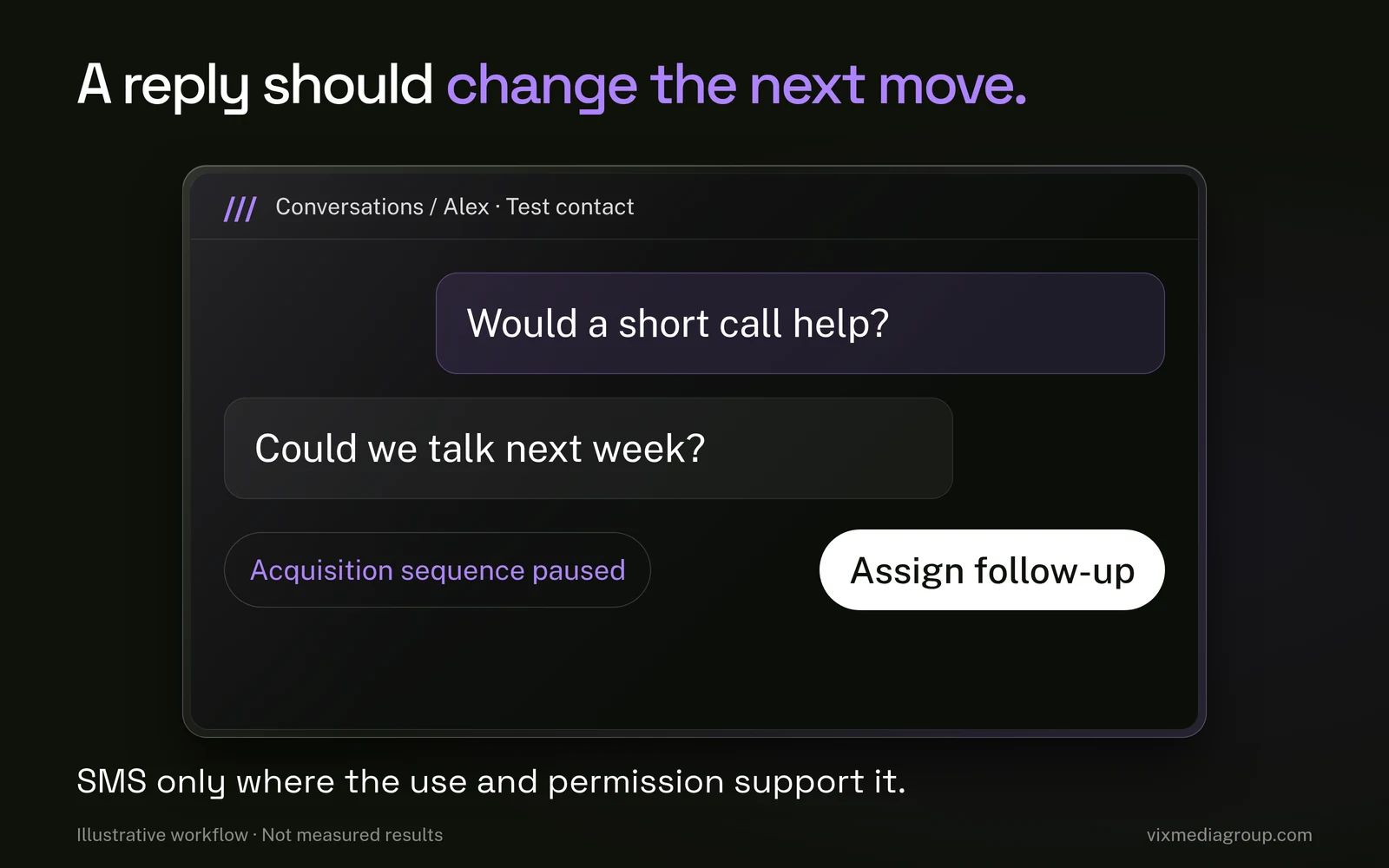
- The expected branch after reply, booking, or stage change.
- The offline event eligibility decision.
- The exception owner and remediation result.
We protect customer PII, click identifiers, phone data, health information, and raw CRM notes. Reviewers need enough evidence to assess the system, not unrestricted access to the underlying identities.
What happened after the trace?
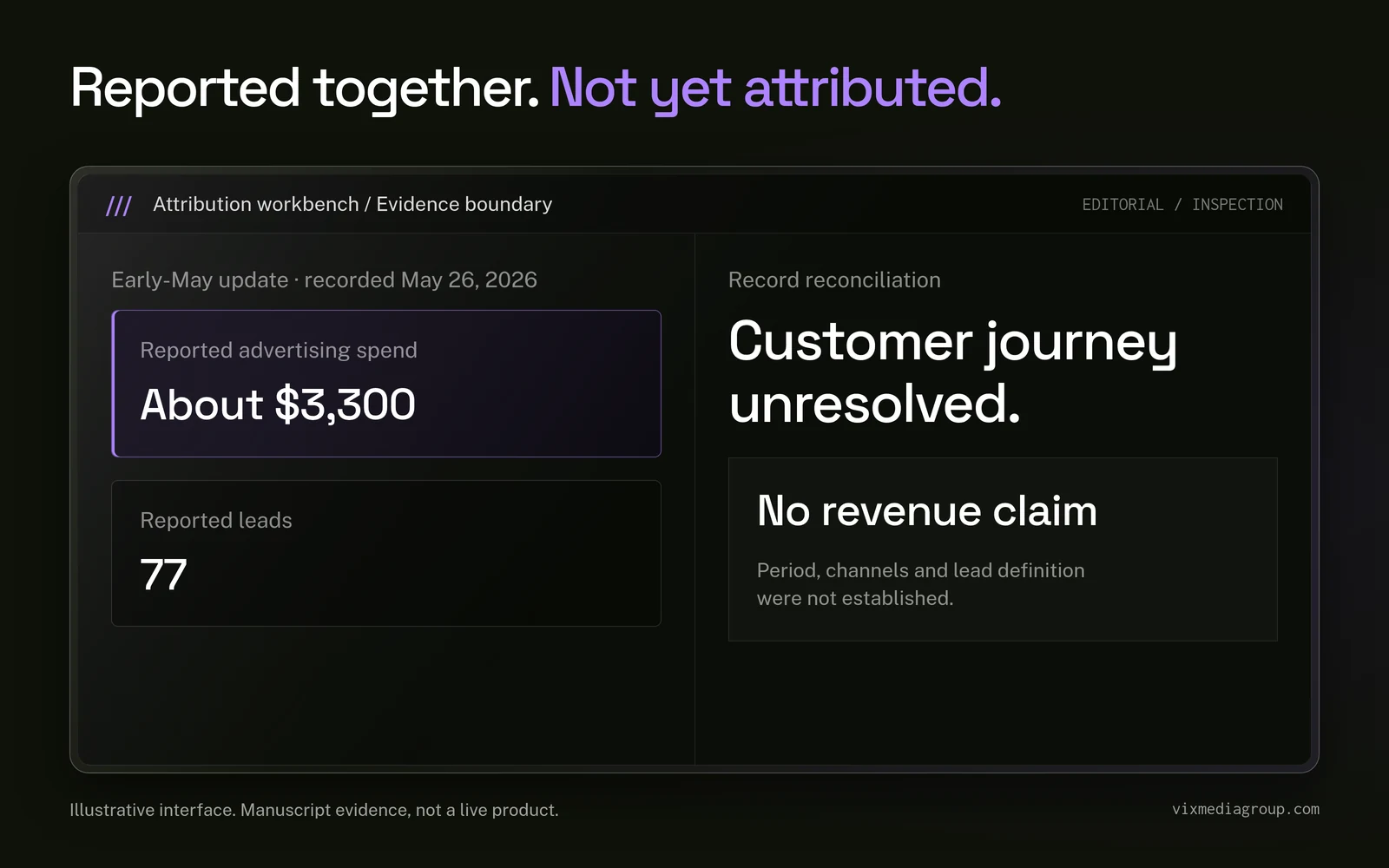
The available operating evidence supports the failure patterns and the tracing method. It does not support a publishable claim that one named implementation traced every step or that reconciliation produced a specific lift, revenue amount, or causal result.
We will not invent that ending. A defensible operator story can show what we inspect, how we classify exceptions, and what the evidence would need to support a stronger claim.
The next proof point should come from a current field map, event dictionary, bounded reporting period, exception result, and approved anonymization. Until then, “how we trace” is more accurate than “we traced every step.”
What would we do differently on the next implementation?
We would design the measurement chain alongside the form and CRM, not after campaigns begin.
Our preferred sequence is:
- Define the conversion journey and the questions each report must answer.
- Assign systems of record, identifiers, timestamps, and owners.
- Build durable primary capture and downstream recovery.
- Define deduplication, lifecycle stages, and reversals.
- Test routing and behavior branches with controlled records.
- Reconcile website, CRM, and platform totals before scale.
- Add eligible offline events only after event quality passes review.
- Schedule recurring exception and outcome reconciliation.
Our seven follow-up systems provide the related action layer. Attribution becomes more useful when the organization can route, nurture, suppress, and recover a record according to its actual stage.
What should form fill to sale attribution accomplish?
Form fill to sale attribution should produce a model-specific view with explicit definitions, known gaps, and regular reconciliation. It should help the team find where leads disappear, where stage quality fails, and where campaign signals no longer match business outcomes.
Vix connects web development, CRM configuration, sales process, advertising, and reporting. Our lead nurturing services turn verified lifecycle states into appropriate next actions. The ad is the beginning of the measurable journey. Operational discipline determines how much of that journey remains visible, and evidence discipline determines what we are willing to claim about it.

.svg)




Start Growing Your Dental Practice with SEO
Take the first step toward transforming your marketing. Whether you’re looking to boost engagement, improve your online presence, or grow your business, our team at Vix Media Group is here to help.
Let’s craft a strategy tailored to your goals.